


Start Slideshow


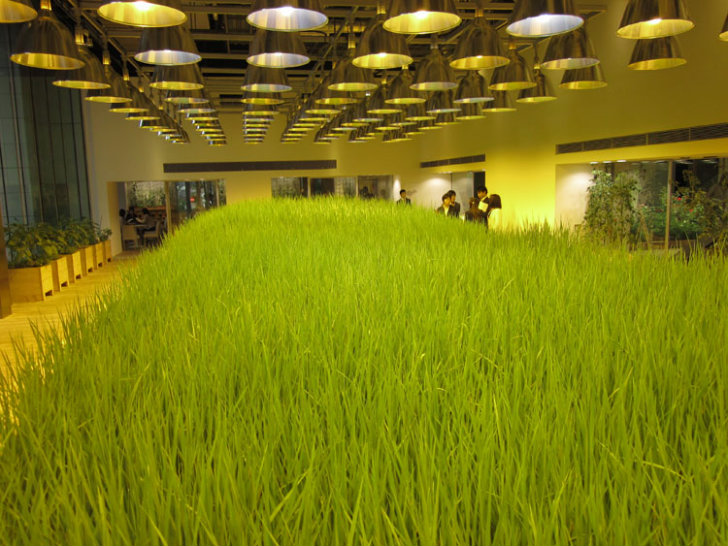


 Pasona HQ-Kono DesignsHere at Inhabitat, we've written about several <a href="http://inhabitat.com/tag/vertical-farms" target="_blank">vertical farms</a> that could solve the problem of providing fresh food in urban environments with minimal transportation. Many of these are merely concepts waiting for funding, but the <a href="http://www.pasonagroup.co.jp/english/service/" target="_blank">Pasona</a> HQ office building in Tokyo is one project that is already growing food for its employees. In what could be the first farm-to-desk project of its kind, the rehabilitated building designed by <a href="http://www.konodesigns.com/" target="_blank">Kono Designs</a> grows most of its own food -- from rice to broccoli, squash, tomatoes and much more. The <a href="http://inhabitat.com/tag/vertical-garden" target="_blank">living green skin</a> on the exterior is more than just a pretty facade; it's also part of the elaborate urban farming scheme and it also helps reduce energy use, too. Through their urban farm and headquarters, the recruitment company is also supporting the education of Japan's next generation of farmers who work in internships to learn about food production.1
 Pasona HQ-Kono DesignsLocated in downtown Tokyo, <a href="http://www.pasonagroup.co.jp/english/" target="_blank">Pasona HQ</a> is a nine-story high building for the Japanese recruitment company. Rather than build a brand new building, the company took over a 50 year old structure and renovated it into the urban farm and eco office you see now.2
 Pasona HQ-Kono DesignsThe exterior was drastically renovated with a <a href="http://inhabitat.com/tag/vertical-garden" target="_blank">living facade</a>, which grows with seasonal flowers and orange trees in 3' deep balconies.3
 Pasona HQ-Kono DesignsOther renovations inside the building sought to improve the energy efficiency and comfort of the employees including new lighting and an enhanced climate control system.4
 Pasona HQ-Kono Designs<a href="http://www.pasonagroup.co.jp/english/" target="_blank">Pasona</a> dedicated themselves to creating this urban farm in part because of the growing reliance of foreign food.5
 Pasona HQ-Kono DesignsWith a <a href="http://en.wikipedia.org/wiki/Agriculture,_forestry,_and_fishing_in_Japan#Land_shortage" target="_blank">shortage of arable land in Japan</a> (roughly only 12%, compared to 20% in the US and over 50% in Denmark), the country's food supply is highly unsustainable. By having this urban farm, Pasona is working to encourage and educate new farmers, while exposing urban people to food while it is growing.6
 Pasona HQ-Kono DesignsEmployees of the farm are also encouraged to take part in the care and cultivation of its crops, which are eaten on site in the office cafeteria.7
 Pasona HQ-Kono DesignsEmployees can be seen working in the rice paddy or broccoli field, pruning fruit trees, tending to lettuces and harvesting veggies.8
 Pasona HQ-Kono DesignsEmployees working in the rice paddy.9
 Pasona HQ-Kono DesignsThe office has created 43,000 square feet of farmland with 200 species or fruits, vegetables and rice.10
 Pasona HQ-Kono DesignsThe rice continues to grow.11
 Pasona HQ-Kono DesignsHarvesting the rice.12
 Pasona HQ-Kono DesignsComparison of food production in Japan versus inside Pasona HQ.13
 Pasona HQ-Kono DesignsComparison of Pasona HQ floor plan to typical floor plan.14


