


Start Slideshow


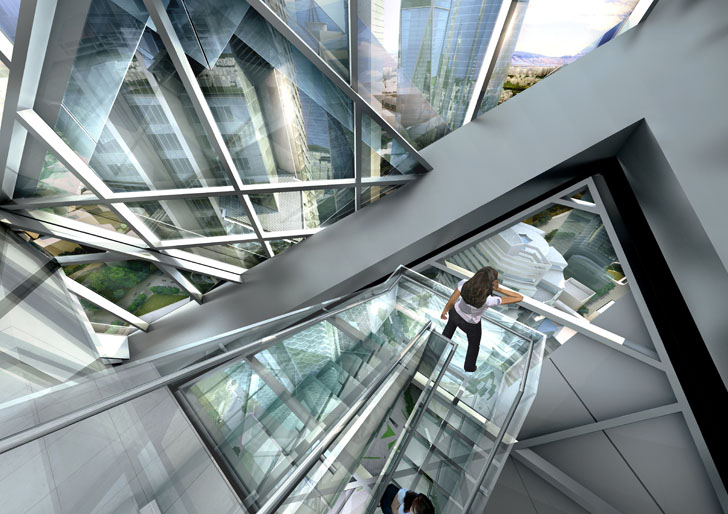
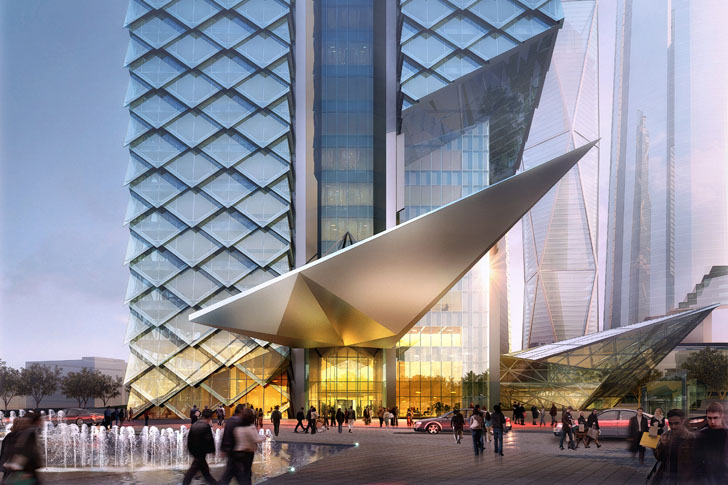
 Danging Dragons Adrian Smith + Gordon GillWhen architects <a href="http://inhabitat.com/tag/adrian-smith/">Adrian Smith + Gordon Gill</a> design a new building, people tend to pay attention. With projects like the <a href="http://inhabitat.com/tag/burj-khalifa-tower/">Burj Khalifa</a> and <a href="http://inhabitat.com/tag/kingdom-tower/">Kingdom Tower</a> under their belt, the firm is one of the world's leading skyscraper designers. So naturally, we perked up today when <a href="http://inhabitat.com/tag/adrian-smith-gordon-gill-architecture/">AS + GG</a> unveiled Dancing Dragons, a pair of striking supertall skyscrapers that will reshape the skyline of Seoul, South Korea. Inspired by mythical Korean dragons, the 88- and 77-story towers feature a breathable scale-like skin through which air can circulate.1
 Danging Dragons Adrian Smith + Gordon GillWe get the dragon part, but what about the dancing? "There's a sympathetic and complementary relationship between the two masses at the level of the cuts, almost as though they were dancing," explains <a href="http://smithgill.com/">Adrian Smith</a> in a press release.2
 Danging Dragons Adrian Smith + Gordon GillThe design team also includes Chicago-based energy and engineering firm <a href="http://www.pepractice.com/">PositivEnergy Practice</a>, which is providing consulting on the two towers' energy-efficient systems.3
 Danging Dragons Adrian Smith + Gordon GillWith operable 600-mm vents through which air can circulate, the towers' scale-like skin is actually a performative element that will be used for ventilation.4
 Danging Dragons Adrian Smith + Gordon GillThe landscape architecture, which was designed in collaboration with Martha Schwartz Partners, will echo the towers' geometric aesthetic.5
 Danging Dragons Adrian Smith + Gordon GillThe buildings will include residential, "officetel" and retail elements.6
 Danging Dragons Adrian Smith + Gordon GillSome of the green features will include <a href="http://inhabitat.com/solar-power/">photovoltaic arrays</a> on the roof surfaces, radiant heating, fuel-cell cogeneration units at the basement level, and triple-glazed windows to minimize heat loss.7


