


Start Slideshow


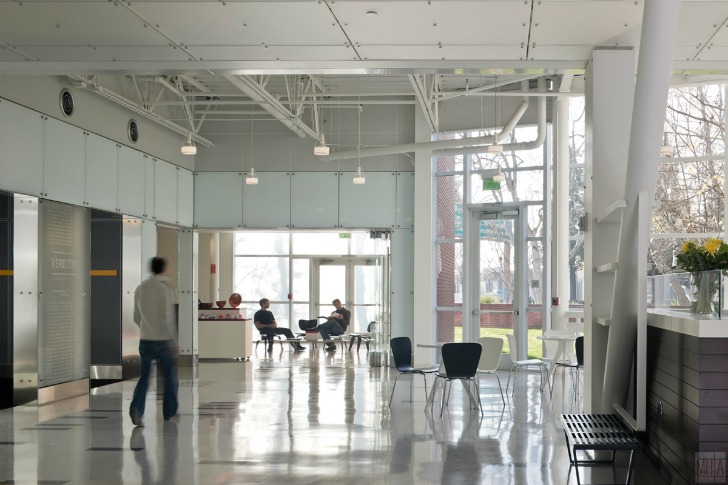
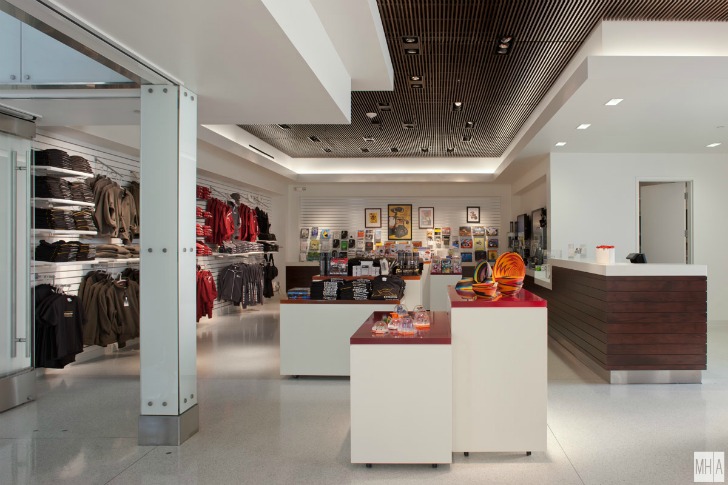


 Computer History Museum-Mark Horton ArchitectureIt should come as no surprise in this day and age that there is a museum dedicated to the evolution of the computer and the cadre of intelligista who invented everything from the Babbage Engine to the iPad. The itinerant museum, which was originally founded in Massachusetts, finally has a home worthy of its impressive computational collection thanks in part to <a href="http://www.mh-a.com/architecture" target="_blank">Mark Horton Architecture</a>. Located in the heart of Silicon Valley and surrounded by Google, HP, Cisco and hundreds of other high tech firms, the <a href="http://www.computerhistory.org/">Computer History Museum</a> took over the former headquarters of Silicon Graphics and <a href="http://inhabitat.com/category/green-renovation">renovated</a> it into a futuristic, bright and spacious building, which now holds the world's largest collection of computer artifacts.1
 Computer History Museum-Mark Horton ArchitectureThe museum got its start back in the 1960s when Gordon and Gwen Bell first exhibited their personal collection of computing devices in the lobby of the Digital Equipment Corporation in Boston.2
 Computer History Museum-Mark Horton ArchitectureFrom there the museum evolved and grew scooping up memorabilia and important artifacts and computing devices along the way.3
 Computer History Museum-Mark Horton ArchitectureThe <a href="http://inhabitat.com/tag/museum">museum</a> and its collection was relocated to Silicon Valley in 1999 and renamed as the Computer History Museum.4
 Computer History Museum-Mark Horton ArchitectureIt wasn't until 2002 though that the museum found its home, fittingly, in the former headquarters of <a href="http://en.wikipedia.org/wiki/Silicon_Graphics">Silicon Graphics</a>, a computer hardware and software manufacturer that catered to the graphics industry.5
 Computer History Museum-Mark Horton ArchitectureBut, the former high tech building was ill-suited as a museum and after a round of fundraising, the museum was able to do a major renovation.6
 Computer History Museum-Mark Horton ArchitectureMark Horton Architecture led the two year, $19 million <a href="http://inhabitat.com/tag/green-renovation">renovation</a> with the help of Van Sickle & Rolleri, Ltd. to upgrade the exhibits.7
 Computer History Museum-Mark Horton ArchitectureThe renovation now includes a lobby, a cafe, a gift shop, a theater, multiple exhibitions spaces, event space and administrative spaces.8
 Computer History Museum-Mark Horton ArchitectureThe original lobby, which was a confusing series of smaller spaces, was opened up and made into a grand public space that is brilliant and <a href="http://inhabitat.com/category/daylighting">naturally daylit</a>.9
 Computer History Museum-Mark Horton ArchitectureThe museum is home to most significant and varied collection of computing hardware, software, documents and ephemera in the world.10
 Computer History Museum-Mark Horton ArchitectureThis includes everything from a Babbage Difference Engine (designed in 1821), the first Google server, three examples of the rare Cray-1 supercomputer, all the way to a Pong game console, Palm Pilots, and even the <a href="http://inhabitat.com/tag/ipad">iPad</a>.11
 Computer History Museum-Mark Horton ArchitectureThe museum also plays host to a significant <a href="http://www.computerhistory.org/exhibits/" target="_blank">online collection</a> of photos, information, videos and anything that may have to deal with the history of computing.12
 Computer History Museum-Mark Horton ArchitectureWhen the museum reopened in January of 2011, it also opened its signature exhibition: <a href="http://www.computerhistory.org/revolution/" target="_blank">Revolution: The First 2,000 Years of Computing</a>.13
 Computer History Museum-Mark Horton ArchitectureThe Babbage Difference Engine.14


