


Start Slideshow

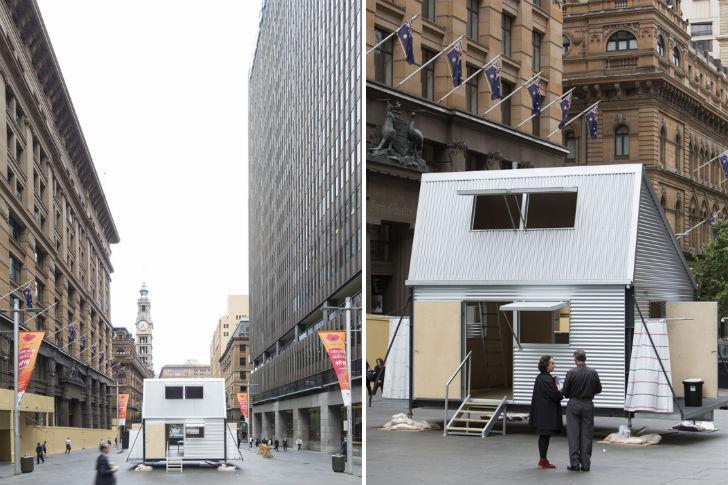
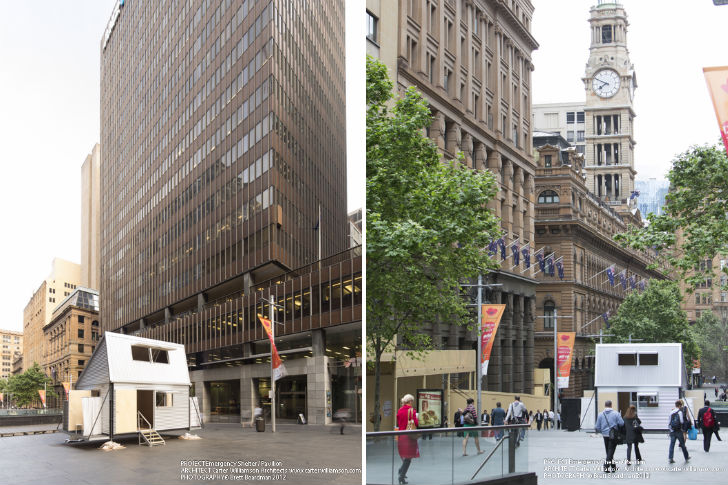
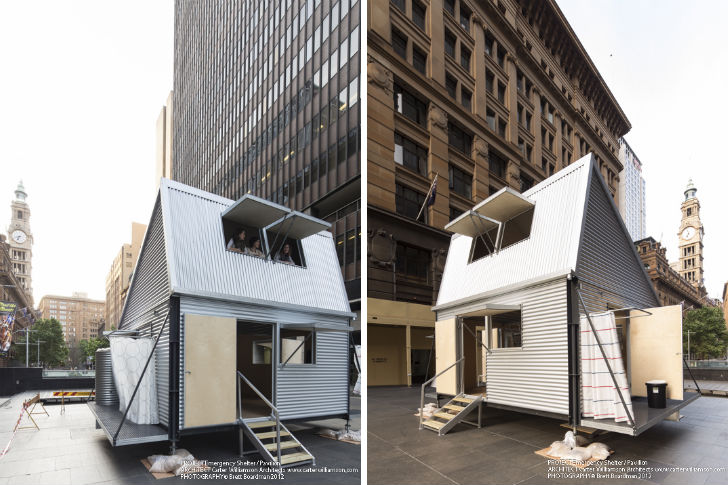

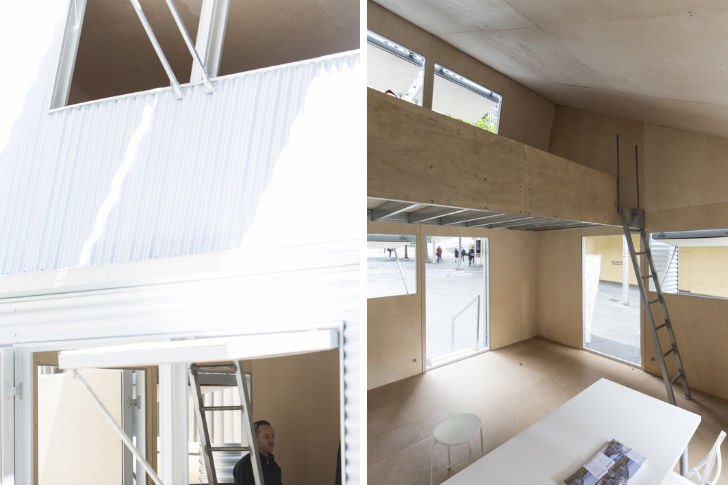
 Emergency Shelter-Carter WilliamsonAustralian firm <a href="http://carterwilliamson.com/" target="_blank">Carter Williamson</a> recently debuted its prototype for an innovative flat-packed emergency shelter in Sydney's Martin Place. The sustainable housing shelter is prefabricated and packed for transport to any location, and telescoping feet allow for a secure placement on uneven terrain. For water and energy, the home features rainwater collection and a photovoltaic systems, enabling it to be self-sufficient. The shelter can be assembled in one day, and it can house up to 10 people.1
 Emergency Shelter-Carter WilliamsonCarter Williamson's Emergency Shelter, also known as Grid, is based on a concept a system of a standard 2.4 meter material lengths and truck-load capacity.2
 Emergency Shelter-Carter WilliamsonThese standard lengths allow it to be flat-packed and shipped via truck to the location it is needed.3
 Emergency Shelter-Carter WilliamsonUpon arrival, the materials are unloaded and easily assembled by four unskilled workers in less than a day.4
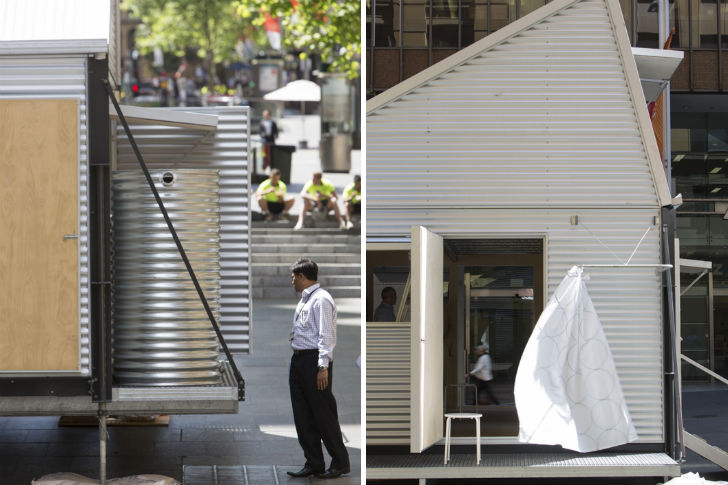
 Emergency Shelter-Carter WilliamsonTo maintain a solid foundation on uneven terrain, the shelter makes use of inverted Acrow props, which are traditionally used for scaffolding.5
 Emergency Shelter-Carter WilliamsonIn this case the telescoping feet can accommodated for differences in height and devastated locations.6
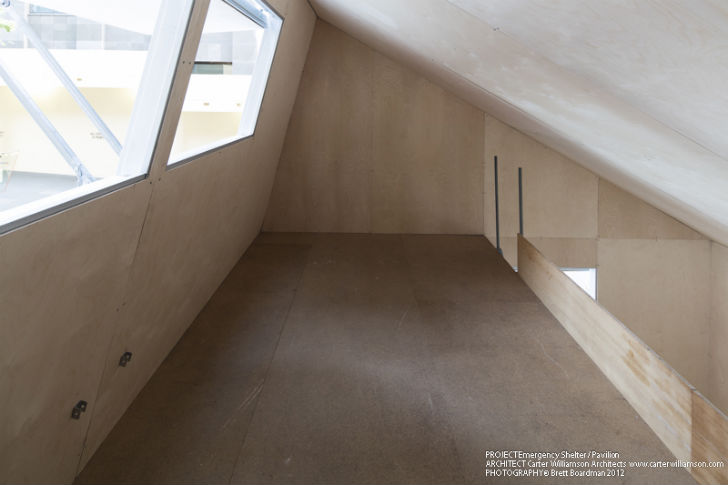
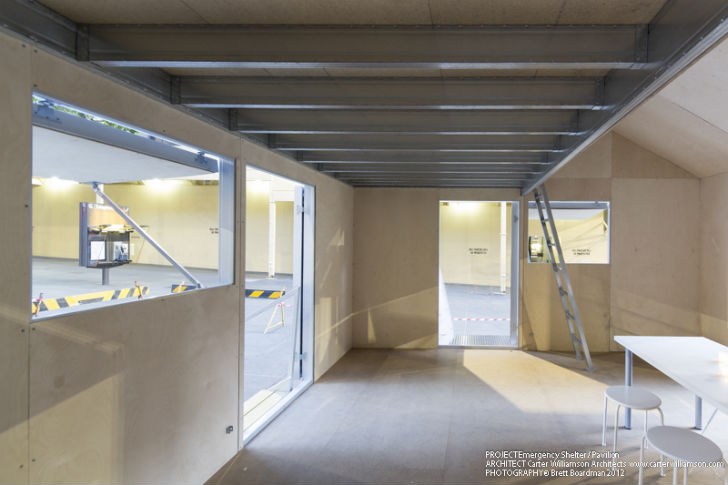
 Emergency Shelter-Carter WilliamsonThe shelter features a large open floor plan interior with a mezzanine loft for sleeping.7
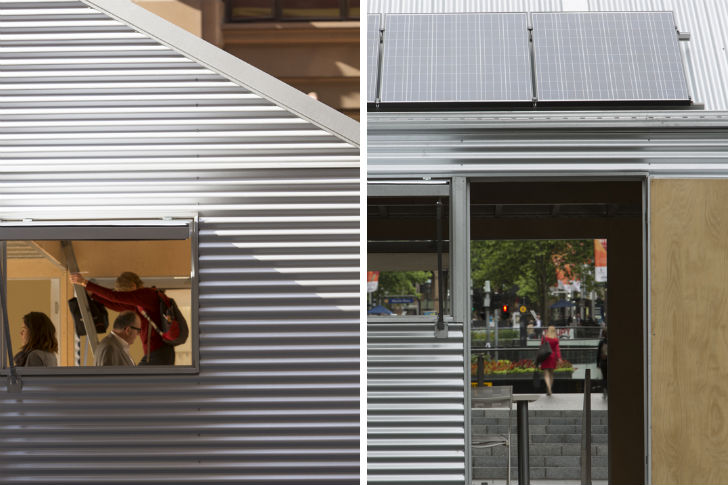
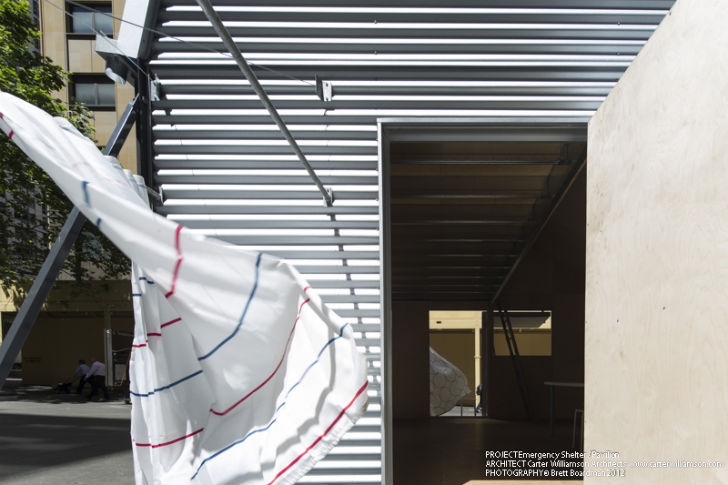
 Emergency Shelter-Carter WilliamsonBarn door style window shades open to allow for natural ventilation and can be closed to protect from inclement weather.8
 Emergency Shelter-Carter WilliamsonThe roof collects rainwater in two 950 liter cisterns on the back, a solar hot water system makes hot water and a 1.5 kW photovoltaic system generates off-grid power.9
 Emergency Shelter-Carter WilliamsonAn deck can be attached to the house to provide extra space as well as a spot for an outdoor shower and a composting toilet.10
 Emergency Shelter-Carter WilliamsonCarter Williamson's design is also modular and the shelters can be combined in larger groups to aid a collection of people.11


