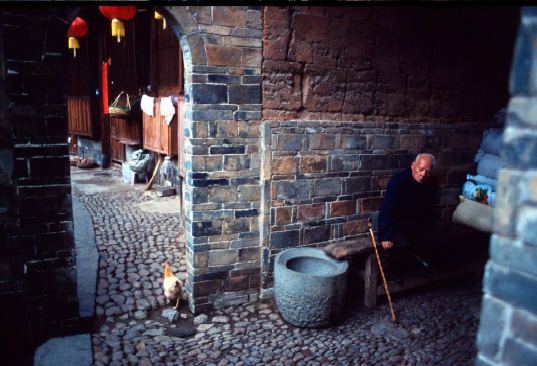
Settled in the mountainous southwest of the Fujian province, these communities are known as Tulou and are essentially fortresses built in either square or round shapes. Structures typically had only one entrance way and no windows at ground level, and a building could withstand a protracted siege by being well-equipped with food and an internal source of water; they also often had their own sophisticated sewage systems.

Built from either stone bricks or more commonly rammed earth, these spectacular structures have walls up to six feet thick and measure three to four stories in height. The largest houses covered over 430,000 sq feet and today it is not unusual to find surviving houses of over 110,000 sq feet, each able to house up to 80 families.
The Tulou are a true testament to the richness that can be found in China, and an example of the efficiency, value and benefit that can be derived from a collective style of habitation. In 2008, UNESCO granted the Tulou “apartments” World Heritage Status, citing the buildings as exceptional examples of a unique and functional building tradition.
Via Global Post