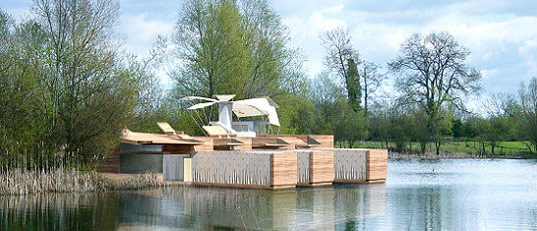
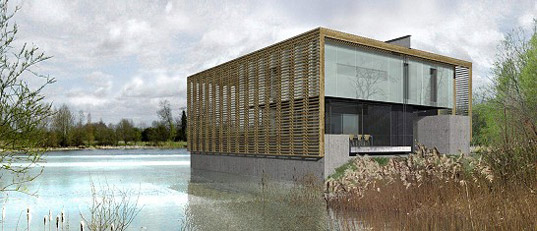
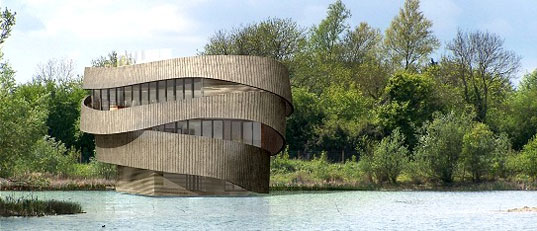
The English Cotswolds are well-known around the world for being a place of picturesque natural beauty, and now this tourist-favorite is about to become home to stunning architectural beauty as well, with the development of Lower Mill Estate, a collection of modern eco-homes. Lower Mill Estate in Gloucestershire, England is a development of luxury waterside eco-homes featuring Britain’s biggest collection of architect-designed modern homes. Custom designs by over 22 architects, including Richard Reid, Will Alsop and Sarah Featherstone, 48 houses combine with a beautiful natural setting to create a unique living experience that is connected to nature.
Related Posts
-
It’s not all doom and gloom for the UK property market: in the face of the country’s slowing or depreciating prices, Sarah Featherstone’s cutting-edge green
-
Urban Reserve is a modern sustainable community situated on fourteen hilly acres of land on the urban edge of Dallas. Envisioned as “a neighborhood where
-
Next up on the list of fabulous, environmentally-conscious prefab: Living Homes. With an immanent launch in Santa Monica, Living Homes is preparing to debut a
6 Responses to “Designer Eco-Reserve in the Cotswolds, England”
-
Featured Author
-
Read Inhabitat
-
Search Categories
-
Recent Posts
-
Recent Comments
-
Browse by Keyword
follow inhabitat on:
popular today
all time
most commented
more popular stories >
© Inhabitat.com 2012 | About Inhabitat | Contact Us | Advertising with Inhabitat | Terms Of Use | Privacy Policy | Inhabitat, LLC


Um… beavers? Alas, that’s one beast that probably won’t benefit from the gravel pit nature reserves. They’ve been extinct in England for centuries.
Shame, also, that these are second homes. Plenty of gravel pits are being converted for biodiversity without indulging City types with showcases for their own wealth.
They’re reintroducing Beavers into the UK – I know there was a site down south and one in Scotland a few years ago, this might be another site. I expect the regeneration of the gravel pits is effectively being funded by these homes, otherwise they might not have built them – I can only imagine there’s a very strong case for these homes being built in the middle of the countryisde, which would go against a number of planning policies.
I heard about this a year or so ago but didn’t know the designs were in… I’ll have a good look at this. I’m interested to see Sarah Featherstone’s work, she’s produced some great stuff recently.
OK, the images are nice, viewed individually. Put together however, “Britain’s biggest collection of architect-designed modern homes.” is a theme park. I appreciate using development to pay for landscape restoration, but I am willing to bet the project would be paid for somewhere short of the 22 homes. And turning off standby appliances is not really the determining factor of an eco-home. I am sure there are other features planned, but it would be good to hear about them as well. I am not sure the beavers are going to be too popular either when they start cutting down lakeside trees to build their dams and lodges. The battle of the architects! Natures architects versus ego-designers?
Hum, let’s see. Funding a natural rehabilitation of gravel pits with 22 modern (quite temporary design) “green” second homes. I bet this is just a posh yuppey project for people with too much money. The gravvel pit is put back into natural service for the benifit of the 22 second home owners. Though I like the modern architecture and the environment the project’s in, I doubt the honesty of the initiative.
[...] Via [...]
[...] the edge of the rolling hills of England’s Cotswolds, developer Westmorland Ltd has gotten the OK to build a green service station that sets aside space [...]