


Start Slideshow


 Alef of Life by Yves BeharHere at Inhabitat we’re generally quite taken by artwork that makes use of recycled materials, so we were excited to learn that the <a href="http://www.thecjm.org/">Contemporary Jewish Museum</a> in San Francisco is hosting a new exhibit that focuses on the environment. The three-part exhibit, <a href="http://www.thecjm.org/index.php?option=com_ccevents&scope=exbt&task=detail&oid=58">Do Not Destroy: Trees, Art, and Jewish Thought</a>, explores the role of the tree in Jewish tradition through the lens of contemporary art using a variety of different media, including reclaimed wood.1
 Welsh Oaks #2 by Rodney Graham'Welsh Oaks #2' is a photograph of inverted trees by the Canadian photographer Rodney Graham.2
 Reclaimed Time by Terry Berlier'Reclaimed Time' by Terry Berlier is one of more than 50 works on display at the Contemporary Jewish Museum that are made from reclaimed wood.3
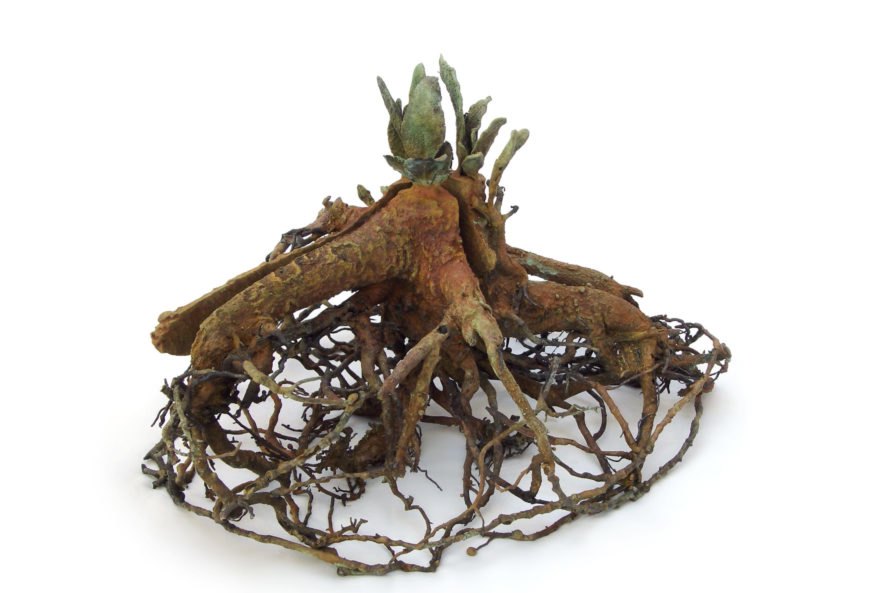
 Aspen Roots for Tu B'Shevat by Yoshitomo Saito'Aspen Roots for Tu B'Shevat' by Yoshitomo Saito is a bronze cast of the unique root structure of an aspen tree, which allows whole stands of trees to grow from one root system.4
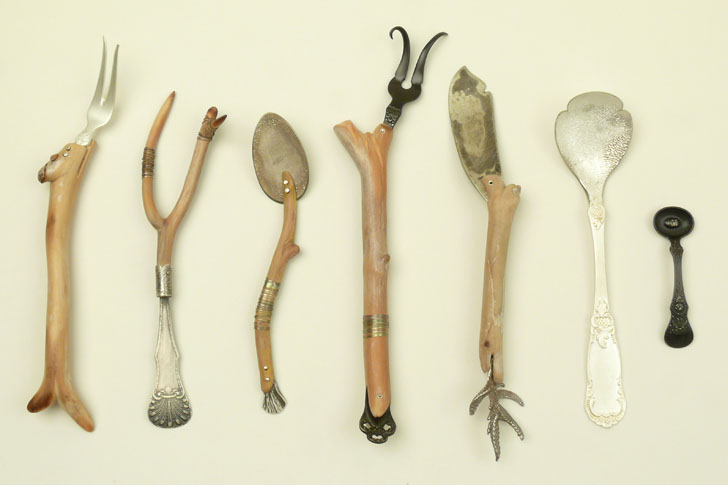
 Hand Me Down by Deborah Lozier“I collect things from walks and use them for inspiration in what I refer to as translations," writes artist Deborah Lozier of her work, Hand-Me-Down. "A few years ago during a trip on a small island in the Oslo Fjord, I found these beautiful sticks along the water’s edge. What struck me about them was how much they evoked the beginnings of utensils left dormant and unfinished. I added the grass wrappings on an impulse and brought them home. After reading about the Tu B’Shevat references to rebirth and the botanical analogue, I became inspired to create an extension rather than a translation."5
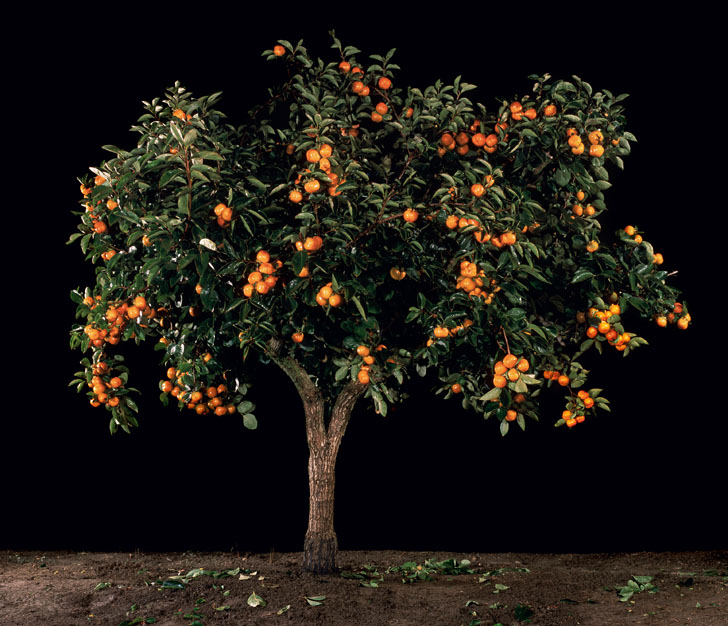
 Shochat-PersimmonFor this series of photos, photographer Tal Shochat carefully cleaned every inch of fruit trees and photographed them out of context, in front of a sharply-contrasting black background. An artificially constructed forest of fruit trees ironically alludes to an idealized vision of Eden, where nature was preserved from human intervention.6
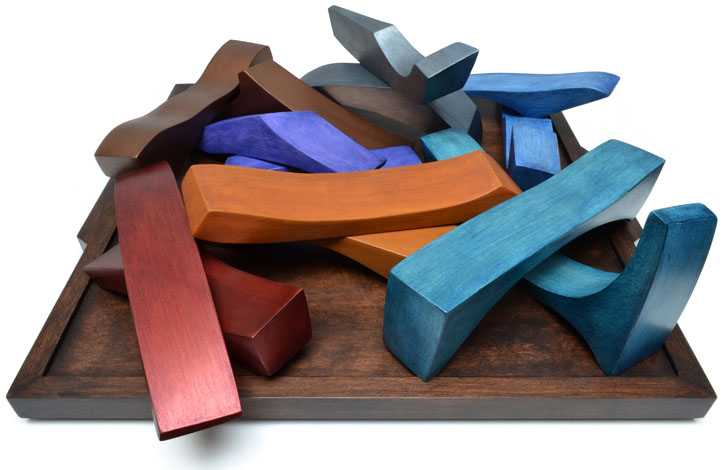
 YLANH by Tobi KahnThis colorful assemblage is a ceremonial tray with seven bridges to hold fifteen fruits. "The bridges link winter to spring, earth to trees, the latent fertility that precedes the holiday and the burgeoning beauty that follows it," writes artist Tobi Kahn. "Salvaged remnants from other projects, these materials have been given a new life for their own new year. They are also a bridge from the evident world of tactility to the mystical one of pardes, the kabbalistic orchard that is paradise.”7
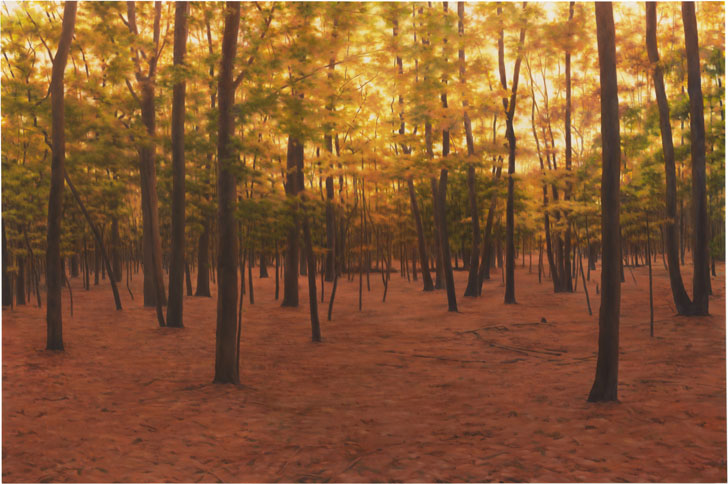
 Light in the Woods by April GornikTrees occupy a very powerful place in Jewish art, a tradition that is continued in this exhibit. The title of the exhibit, Do Not Destroy (Bal Tashchit in Hebrew), comes from a commandment in the Torah forbidding the “wanton destruction of trees during wartime,” according to the museum wall text.8
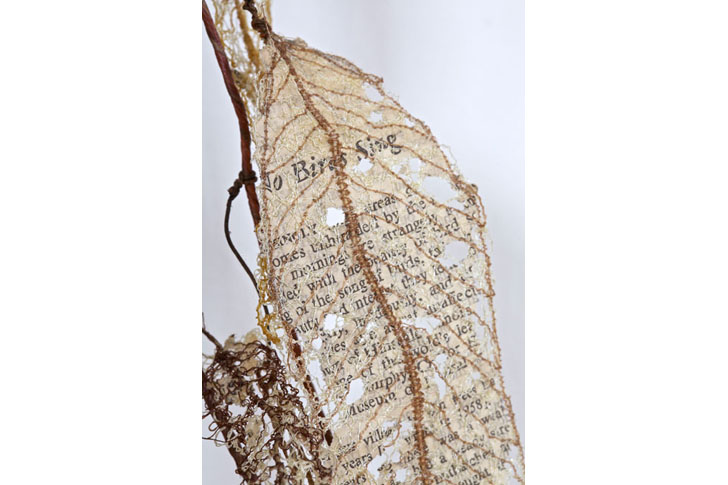
 Kokin-Lisa-Fauxliage'Fauxliage' by Lisa Kokin is a fake leaf and branch made from the pages from Rachel Carson’s 1962 book 'Silent Spring'.9
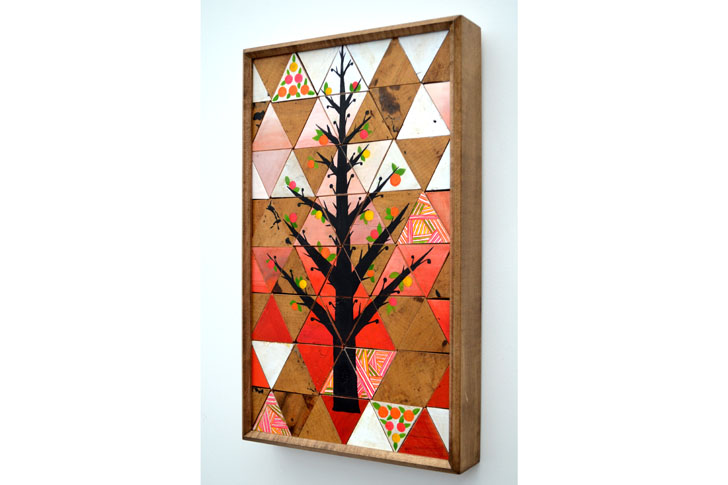
 Connected by Lisa Congdon'Connected' by Lisa Congdon represents the Tu B’Shevat seder with rows of triangles of reclaimed wood representing the ceremonial progression of wine from white to red. A sturdy tree, representing renewal, grows in the middle.10


