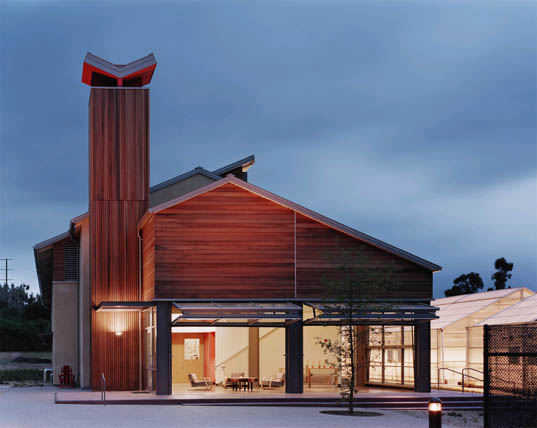
When the Global Ecology Research Center at Stanford University required a new headquarters, they decided to build a facility to reflect their current research priorities: biodiversity, water use and climate change. Designed by EHDD Architecture, the result is a beautiful building which has been named as one of the American Institute of Architects top ten green projects of 2007.
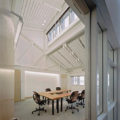
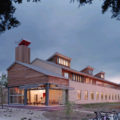

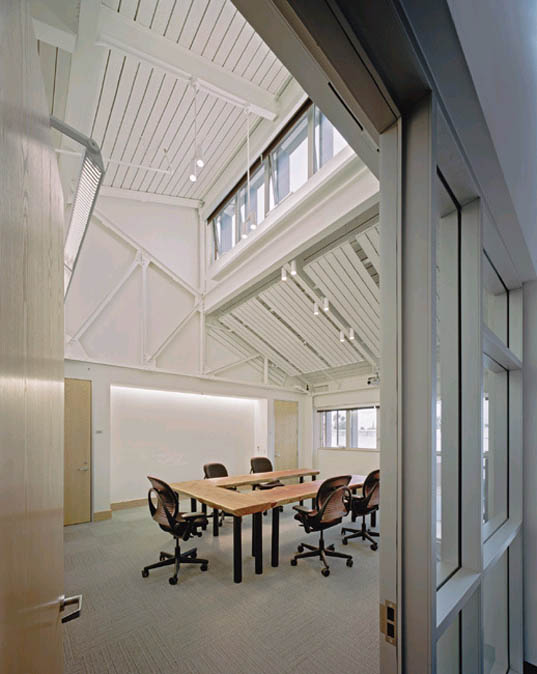
So, what has this building achieved in terms of sustainability? Well, for starters, the building uses recycled materials as much as possible throughout the entire structure. The facade of the building is made out of timber, which was obtained from old wine tanks, from the wineries nearby. The use of this material meant that no paints or sealants was required due to the tight-grained nature of the hardwood, which had the added benefit of giving the building a nice warm feel to it. The concrete used in the construction uses fly-ash as an additive, as well as gravel remnants and recycled boulders for gravel to increase its recycled content, and reduce its carbon footprint. Even the tables used in the workstations come from recycled materials, having been obtained from the previously unused doors from a separate project by the builder.
The Ecology Research Center has all the features that you would expect from a building of this nature. The interior spaces are all illuminated naturally during the day, thanks to the narrowness of the design. All the paints, finishes and carpets in the building are of low VOC content. The mild California climate allows for most of the workspaces to be naturally ventilated with all the windows, including the clerestory, being operable by the occupants.

One of the most interesting and innovative systems introduced to the building was the use of a hydronic system to cool down the the building. The process works like this: water is sprayed thinly on the roof at night. During the coolness of the night, the water is chilled as it runs down the roof loosing heat to the night sky. It is then stored into a highly insulated water tank, where it is later used for the cooling system of the building during the day providing an energy saving of around 90% from that of a typical chilled water system.
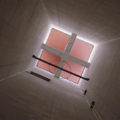
Because of the nature of the building, it was important to create a workspace which could adapt quickly and efficiently to changes. The design team worked hard to ensure that all the spaces allowed for the expansion and contraction of any space, should the researchers require it. Sometimes, even the simplest and lowest tech solutions made the most sense in the design of this building. The clerestory windows, standing far above anyone’s reach, can be hand-cranked open with a cable and a pulley when needed, rather than using a motorised system, thus saving on electricity. As an interesting side note, the building’s designers were so confident about their results that they decided to forgo a LEED rating, as it would add to the cost of the development. They had reason to be, as the building has performed so well, that it was named one of the top ten green buildings of 2007.