
Site Meter
Kristi Bernick

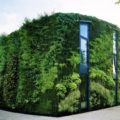
Gorgeous Green House Wrapped in a Vertical Garden

by , 04/30/11

Related Posts

11 Responses to “Gorgeous Green House Wrapped in a Vertical Garden”

  1. renschede renschede says:

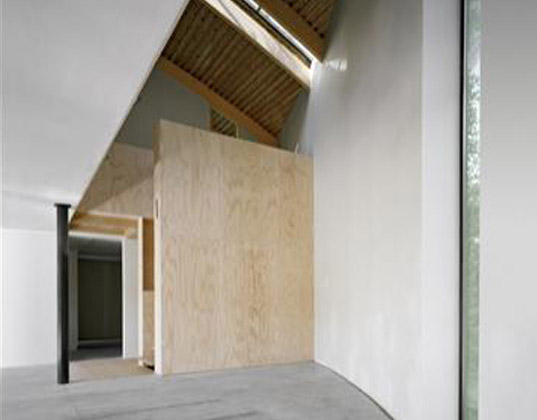
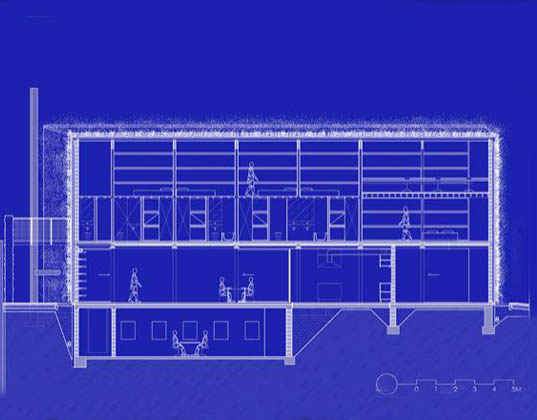
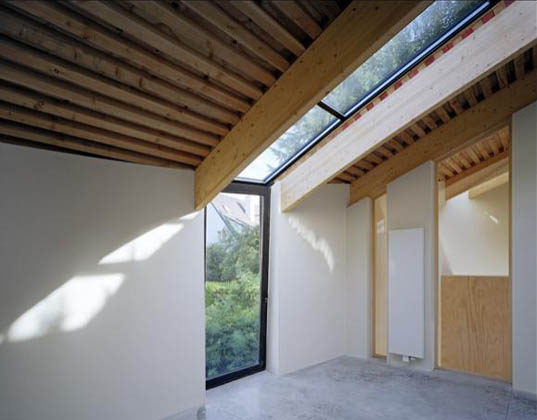
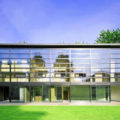
    This is a beautiful house, and the Patrick Blanc walls are as always moving, but I am astounded to discover that this house faces WEST! What a tremendous shame! Curtains are NOT a solution – they are a band-aid over a fundamental mistake. I assumed at first glance that the house had been designed to incorporate direct gain passive solar heating – indeed, if his house had been rotated to face south it would have heated itself from the sun’s rays through the glass. Instead, all that glazing will hemorrhage energy in the winter, and it will be an oven in the summer… We CANNOT continue to make such mistakes if we are to reduce energy use in a meaningful way.

    It is tremendously discouraging to see my professional colleagues continue to display their ignorance of basic climate response (sun position summer vs. winter) and equally discouraging for a great blog like Inhabitat to minimize the mistake – we both (designers and media) have to work together if we are to combat ignorance in the design world and “change the world”.

    Ryan Enschede, sustainable architect, Brooklyn NY

  2. Rebecca Sama urban sherp says:

    Am obsessed with vertical gardens, and this one is amazing. Thanks so much for sharing this find. Curious as to how the maintenance is for the long term since I struggle to maintain the 6 square feet of garden I have….
    Here are some smaller scale vertical gardens I have been wanting to test out:
    http://www.urbansherp.com/how-does-your-garden-grow

    Would love to hear from people who have had success with vertical gardens!

  3. davidwayneosedach davidwayneosedach says:

    I love that house! Pity is – it must need a lot of water. Couldn’t afford it in San Diego.

  4. Debra Lee Baldwin Debra Lee Baldwin says:

    Fascinating. The concept of a green roof gone vertical. And you could have it in San Diego (where I live, too) if you used low-water plants (such as succulents) and drip irrigation. A case in point was the succulent cube room at this year’s San Francisco Flower & Garden Show.

  5. Ryan Enschede

    I agree with your comments and I at first also had similar feelings of disappointment. This is a sustainable publication and our goal is to provide the world with sustainable design and concepts. Considering the position of the house was not optimal for passive solar design I believe that the architects made a conscious decision to focus on the client’s privacy instead. I would also like to make a point that the design of this house evolved over an 8 year period. The design was not driven by sustainable concepts until after original plans were already established. With that in mind I would like to congratulate Samyn and Partners for taking the extra time to edit existing plans and “greening” a specific part the house.

  6. renschede renschede says:

    Hi Kristi,

    I agree, the architects should be certainly credited for a beautiful design and for their willingness to modifify plans that had already been prepared. And I too am inspired by the potential paradigm shift green roofs and walls could bring to the separation of “manmade” and “natural” environments, however I am increasingly alarmed at the ever-increasing levels of global energy consumption – no doubt you are as well. I hope you do not feel I am over-emphasizing this point, and perhaps this discussion would be best continued outside of this forum, but my concern is that your description of “optimal heating and cooling control” obscures the significant energy impact of a tremendously common mistake, and perpetuates the myth that unwanted solar heat gain can be effectively controlled inside the glass. Why not credit the architects for their achievements and willingness to modify the design, but take the opportunity to educate your readers about these pervasive mistakes?

    Sincerely,
    Ryan Enschede

  7. renschede renschede says:

    Hi Kristi,

    I agree, the architects should be certainly credited for a beautiful design and for their willingness to modify plans that had already been prepared. And I too am inspired by the potential paradigm shift green roofs and walls could bring to the separation of “manmade” and “natural” environments, however I am increasingly alarmed at the ever-increasing levels of global energy consumption – no doubt you are as well. I hope you do not feel I am over-emphasizing this point, and perhaps this discussion would be best continued outside of this forum, but my concern is that your description of “optimal heating and cooling control” obscures the significant energy impact of a tremendously common mistake, and perpetuates the myth that unwanted solar heat gain can be effectively controlled inside the glass. Why not credit the architects for their achievements and willingness to modify the design, but take the opportunity to educate your readers about these pervasive mistakes?

    Sincerely,
    Ryan Enschede

  8. soulesmj soulesmj says:

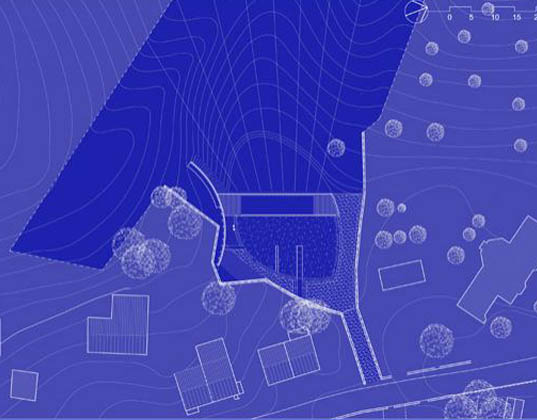
    Please review the article and photos again before you criticize the orientation. This was an existing building and if you look at the site plan, there are buildings directly to the south, and open land to the west, so privacy & clear access to light are major issue here. Sometimes compromises must be made due to existing conditions.

  9. renschede renschede says:

    Given the orientation, my criticism is with the response – I am not convinced that this response was the only solution available. To be effective, west-facing glass should be shaded on the outside – in this case it is my impression that it is inside, or am I mistaken? Many beautiful solutions are possible – If you like Rudolph or Corbusier, they created many… It seems to me that for this house the aesthetic conception was prioritized over energy efficiency. Alternatively, a different aesthetic strategy could be chosen and the west-facing wall could be partially opaque – even 50% open provides plenty of view access, and I suspect it would be far more comfortable to live with. If access to light is the concern, South-facing clerestory windows almost always have access to great light.

    Sincerely,
    Ryan.

  10. [...] waxed lyrical about botanical walls, green roofs and living treehouses on Inhabitat for years – is the next logical step a home [...]

  11. welz welz says:

    Orientation aside, I want to ask the question about water. I think the idea of living walls is great. But the question remains. Is the wall using potable water? If so then the sustainability of the project is a sham. Drinking water is a high energy product. One of the highest.

    Idea – Connecting a septic drain field to a living wall. Drain fields use soils to do the finish processing of home sewage. If the green wall were used in this process then energy saving and water quality would be maximized. Maybe not doable in urban settings but re-claimed water is available for those situations.
    http://www.ecolandscapegroup.com

Leave a Comment

Please keep your comments relevant to this blog entry. Email addresses are never displayed, but they are required to confirm your comments.

Please note that gratuitous links to your site are viewed as spam and may result in removed comments.

Add your comments

NEW USER

CURRENT USERS LOGIN

Lost your password?

get the free Inhabitat newsletter

Submit this form
popular today
all time
most commented
more popular stories >
What are you looking for? (Solar, HVAC, etc.)
Where are you located?