


Start Slideshow


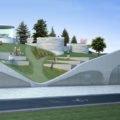 Kyoai Gakuen University BuildingThis elegantly sloping green-roofed center was recently proposed as an extension to the recreational grounds at Kyoai Gukuen University in Japan. Rather than replace the open space with a standard building, Japanese firm <a href="http://inhabitat.com/2010/02/11/circular-pod-tea-house-is-heated-by-compost/" target="_blank">Bakoko</a> worked with architect Hikaru Hattori to design an elevated green roof that keeps the open space while providing spectator seating for a nearby playing field. Daylighting, natural ventilation, and the insulating benefits of the <a href="../green-roof/" target="_blank">green roof</a> make the project a beautiful example of energy-efficient architecture.1
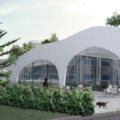 Kyoai Gakuen University BuildingBakoko worked with architect Hikaru Hattori to design this university building to provide recreational space while serving as an important educational building.2
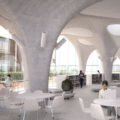 Kyoai Gakuen University BuildingInside, natural daylight streams down from skylights in the vaulted roof.3
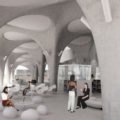 Kyoai Gakuen University BuildingNatural ventilation is provided from openings in the bays of the vaulted arches.4
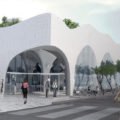 Kyoai Gakuen University BuildingCovered entrances and outdoor patios protect the inner building from the elements and mitigate solar gain during the summer.5
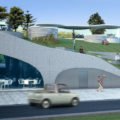 Kyoai Gakuen University BuildingThe green roof is slanted towards an adjacent sports field to provide spectator seating, which was not previously available.6
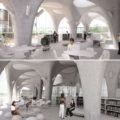 Kyoai Gakuen University BuildingThe university has a Christian affiliation, so the vaulted arched ceiling alludes to traditional Christian and Catholic architecture.7
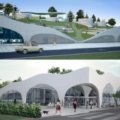 Kyoai Gakuen University BuildingThe green roof provides insulation to the building and filters and infiltrates stormwater.8
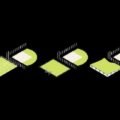 Kyoai Gakuen University BuildingBakoko's design allows additional educational space without the loss of important recreational and green space.9
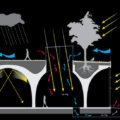 Kyoai Gakuen University BuildingSome of the bays at the tops of the arches draw in natural daylight and ventilation through specialized "wind catcher" caps. The arched columns are partially hollow, allowing for trees and plants with deeper roots to be planted.10
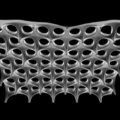 Kyoai Gakuen University BuildingA diagram showing the arches and columns. The curved form optimizes the structure's compressive strength while keeping it permeable to air and light.11
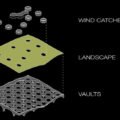 Kyoai Gakuen University BuildingSome of the bays contain wind catcher caps, while the rest use artificial light, which is reflected and diffused by the double-curved ceiling panels.12
 Kyoai Gakuen University BuildingThis diagram shows the landscaping and location of the wind catcher caps.13
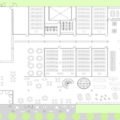 Kyoai Gakuen University BuildingFloorplan of the green roofed educational building.14














