


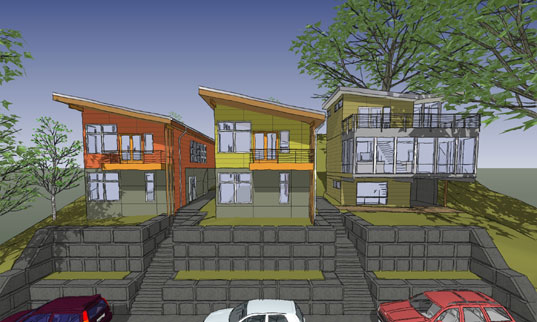

Here at Inhabitat, we’ve covered many green building concepts, highlighted specific green homes, shown the latest in pre-fab projects, and introduced programs such as EcoBroker, LEED-Homes, Built Green and Energy Star. But it’s also important to acknowledge the people who help us future homeowners find and be aware of these green homes. This is the first in a series of green real estate highlights—firms from around the country that are helping homebuyers choose green. Our first stop is Seattle, a hotbed for green housing, where GreenWorks Realty is supporting a vision to create a more sustainable world.
GreenWorks’ sustainable home guru Eva Otto guided me around this exciting market. What may surprise you is that their primary focus is not new green homes. While more new spaces are hitting the market all the time, they only comprise a small percent of GreenWorks’portfolio. To complement this area, GreenWorks offers its “Healthy Home Package” free to all its homebuyer clients. This service both educates and helps new owners make any home green. Cheers to that since restoration is one of the greenest you can do—re-using resources and occupying already developed land.

If you buy a house with GreenWorks, they’ll set you up with an inspection and assessment to diagnose any indoor air quality and energy efficiency issues. Along with a set of renovation recommendations, homebuyers receive a binder of coupons and resources for continuing a green life. To execute this, GreenWorkshas partnered with several local and national organizations including the Environmental Home Center, Flexcar, Pioneer Organics, and Chinook Book.
This service and other aspects of the company are products of the corporate values instilled from the very beginning by the farther-son founding duo of Louie and Ben Kaufman. GreenWorks employees bring many disciplines to the real estate industry including environmental studies, public policy, urban planning, and permaculture. Many are community activists and sit on a variety of boards. The firm also works with builders to evolve their green practices. GreenWorks agents will even help you with carbon off-setting and may also help you find a piece of land that can receive a green pre-fab project.
Lastly, GreenWorks has been hard at work within the real estate industry itself. The Northwest multiple listing service (NWMLS) is used by firms throughout the region, and GreenWorks has pushed a green agenda. They are working with groups such as Built Green to add selections for recognized home certifications and other green criteria.
E-mail Jared at jared [dot] silliker [at] gmail [dot] com if you have suggestions for other real estate firms to feature in this series. + GreenWorks Realty
