


Start Slideshow


 FLOAT - Koen OlthiusWorld-renowned architect <a href="http://inhabitat.com/interview-koen-olthius-of-waterstudionl/" target="_blank">Koen Olthuis</a> is the leading designer of <a href="http://inhabitat.com/the-citadel-europes-first-floating-apartment-complex/" target="_blank">floating structures</a> -- he has built a number of floating houses all over the world and has designed for the likes of Dubai and other metropolises. Koen Olthuis of <a href="http://www.waterstudio.nl" target="_blank">Waterstudio</a> and David Keuning of <a href="http://www.mark-magazine.com" target="_blank">Mark Magazine</a> have also authored a book, called <a href="http://www.amazon.com/Float-Building-Combat-Congestion-Climate/dp/907717429X/ref=sr_1_1?s=books&ie=UTF8&qid=1291570296&sr=1-1" target="_blank">FLOAT!</a>, which is a compendium of his knowledge on floating architecture. He details historical projects, discusses the practical uses for floating architecture, explores scenarios for a future world with higher sea levels, and rallies behind sustainability as a necessity for future development on the water. In between his busy travel schedule, Koen was able to take some time to answer a few questions about the future of hydrocities and building on the water - <b>read on for our exclusive interview</b>!1
 FLOAT - Amphibious Villa de Hoef<strong>Q. As sea levels rise, do you think we will realistically see billions people who live on the waterfront transitioning into housing that floats , rather than relocating away from the water line?</strong> <em>A. Urbanization will grow in the coming years and 90% of the metropolises are located near the water, so it is just logical that cities will find a way to live with the water instead of going away. Look at the Dutch -- we are living below sea level for hundreds of years instead of leaving for higher Europe. Nobody wants to leave <a href="http://inhabitat.com/category/newyorkcity/" target="_blank">New York</a>, Tokyo or London. We'd rather deal with the sea level rise by using the space in the cities on water.</em>2
 FLOAT - Cruiseterminal<strong>Q. What is the largest or tallest building you believe can be constructed as a floating structure?</strong> <em>A. I believe technically we can build even beyond imagination, but making a feasible structure on water you have to mirror with offshore technology. Floating oil rigs that are 100 meters high and cruise ships that are 700 meters long show the possibilities for floating structures; we only have to add new functions and respect needed comfort targets for living on water.</em>3
 FLOAT - Floating City<strong>Q. How do you imagine that city/country? A series of floating platforms with canals as streets?</strong> <em>A. A city on water will not look so different from a normal city as we are used to today. The foundation will be floating on a combination of large mega floats, but on the platforms itself you will find normal structures as housing, offices, parks, roads etc. The extra advantage of a floating city are the city apps. Floating functions can easily be added to the city by placing them on the water. A floating sport stadium, a floating golf course, floating housing units, roads etc. So with these city apps you could easily adapt the city to its changing needs. Planning for change is what it's all about.</em>4
 FLOAT - Floating Tower<strong>Q. Are there are any floating projects currently built that are completely off-grid, powered by renewable energy and self-sufficient?</strong> <em>A. There are <a href="http://inhabitat.com/embassy-of-drowned-nations-floating-city-for-rising-tide-victims/" target="_blank">ecocities on water</a> on the drawing board now for China and the Maldives. The urge for sustainable urban solutions is very high, and water provides new ways of providing energy. It is logical that this will be used for off-grid urban communities on water, in or outside the city.</em>5
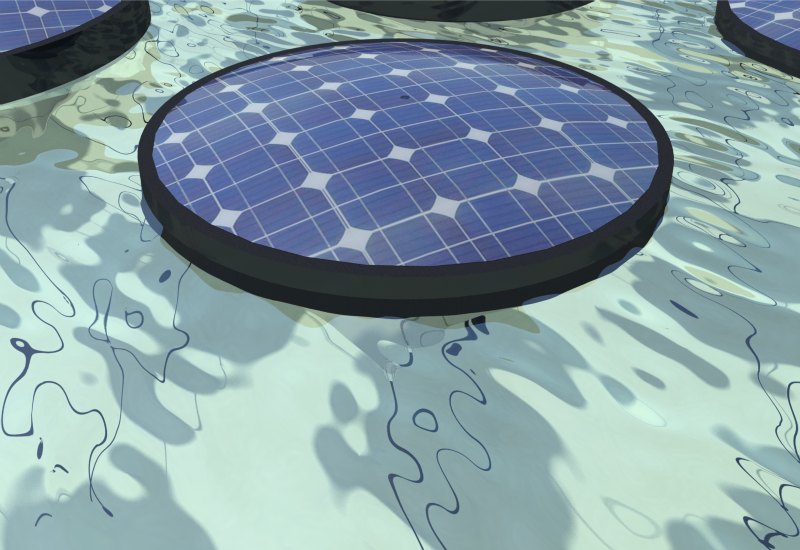
 FLOAT - Solar Blanket Field<strong>Q. How can we use floating architecture to improve water quality and reduce our environmental impact?</strong> <em>A. Floating developments can be scarless developments, leaving no carbon footprint during their lifetime and no physical footprint after their lifespan. Sustainaquality provides us with new possibilities to make more effective sustainable developments. The temperature on the water in hot countries is always better than on land. Water-cooling and wind cooling are new forms of energy sources that will open the road for cities on water with less environmental impact.</em>6
 FLOAT - Solar Blanket Field<em>Cities are dynamic and we should provide cities with dynamic floating components to change and adapt when needed without impacting the environment.</em>7


