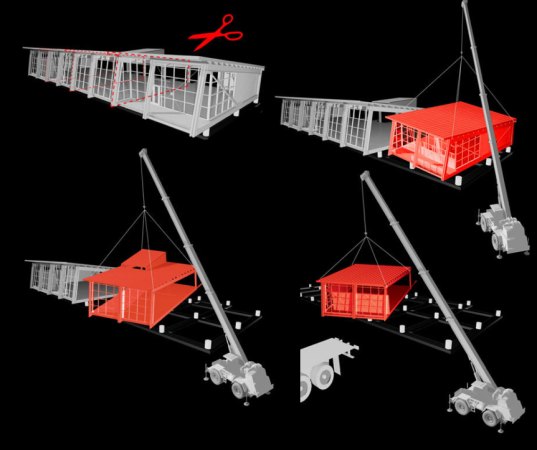
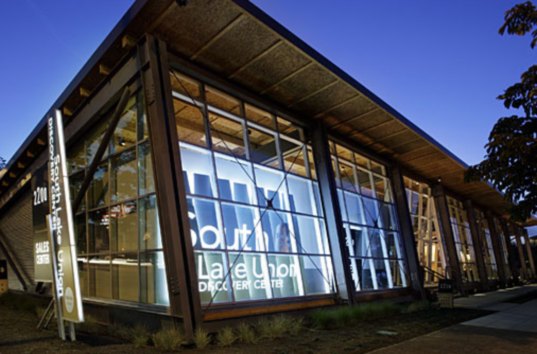
The winners for the Lifecycle Building Challenge were just announced last week with Seattle’s ‘Pavilion in the Park’ building taking top honors, and for good reason. The building, designed by Miller|Hull, is green in purpose and material, but sets itself apart in its cradle-to-cradle nature- it can be completely disassembled and transported to a whole new location! The system exemplifies the issues of construction and deconstruction with minimal waste that the Lifecycle Building Challenge hoped to address.


All too often we think of sustainability as simply materials and energy efficiency rather than taking into account the entire impact over time. With that in mind, efficient use of resources and designing for deconstruction are just some areas which were tackled by the competitors of the Lifecycle Building Challenge. The competition was looking for innovative building creation techniques that would allow buildings to be completely disassembled and reused rather than completely destroyed. The categories were divided into students and professionals, with both built and proposed buildings being considered.
The built professional category winner was ‘Pavilion in the Park,’ an 1,000sqm (11,100sf) building located in Seattle’s South Lake Union neighbourhood. It currently serves as an open plan exhibition center showcasing the neighbourhood in which it is settled.
But what settles it apart from other buildings, and the reason it took top honors, lies in the fact that it was created to be completely demountable from its conception. The client wanted an adaptable building which could be moved and reused throughout the region for a long period of time. The designers’ solution was to create a building which could be broken into four separate modules. Each of these modules can then be transported and reassembled in a new location. Furthermore, the building can be expanded or reduced as needed. And keeping with the philosophy of the lifecycle challenge, all the materials of the building are environmentally-responsible materials, putting emphasis on recycled content and durability. + Lifecycle Building Challenge + Miller|Hull