


Start Slideshow


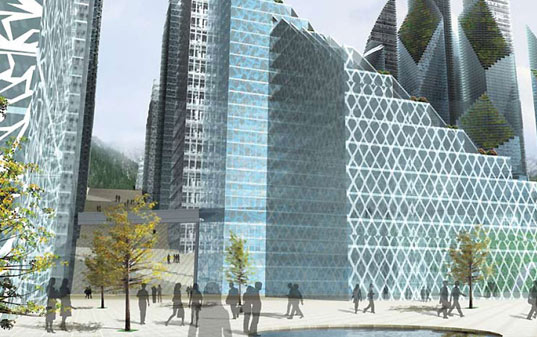
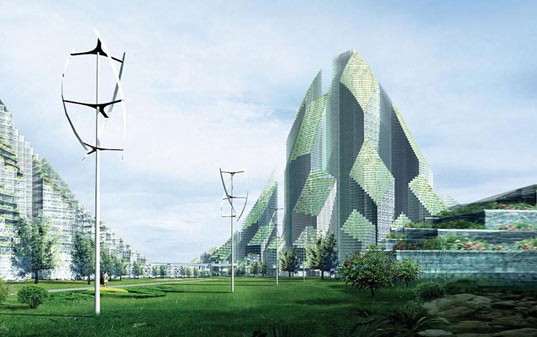
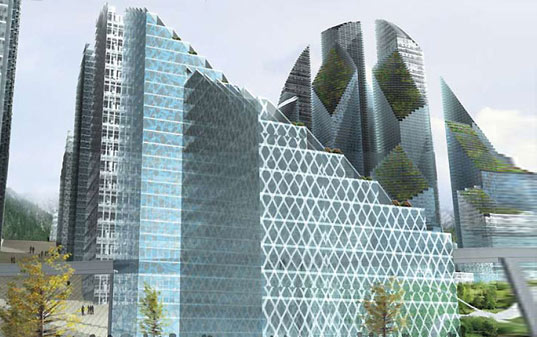
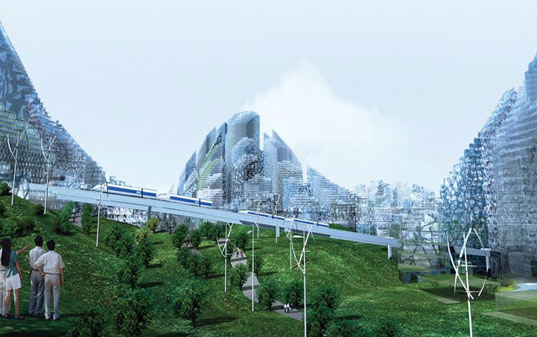



 Magic Mountains ChongqingIf you've ever wanted to live or work inside a <a href="http://inhabitat.com/2010/07/20/aston-martin-resort-disguised-as-a-giant-mountain-of-lush-green/">mountain</a>, this might be your chance. When tasked with dreaming up a new green business district in Chongqing, China, the CEBO/<a href="http://www.cqu.edu.cn/html/index.htm">Chongqing University</a> team delivered the goods with this amazing design filled with buildings that resemble prismatic <a href="http://inhabitat.com/2010/06/17/peruvian-team-paints-mountain-white-to-rehab-a-melted-glacier/">mountain</a> peaks. Called <a href="http://roomatthetop.wordpress.com/2007/07/05/magic-mountains-green-central-business-district-in-chongqing-proposal/">Magic Mountains</a>, their proposal not only creates an exhilarating new skyline dotted with green, it also incorporates passive cooling and heating, a plan that encourages biking and walking and measures to reduce the overall consumption of resources and energy by 22%.1
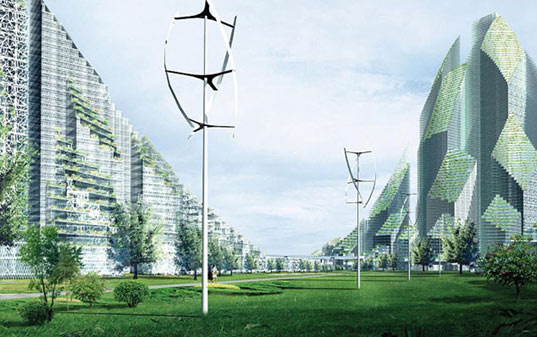
 Magic Mountains ChongqingMagic Mountains' <a href="http://inhabitat.com/2010/07/21/acros-a-giant-japanese-pyramid-blanketed-in-green-grass/">geometric hilltops</a> are meant to resemble the natural skyline of Chongqing.2
 Magic Mountains ChongqingExcept that they are composed of glass and steel, that is.3
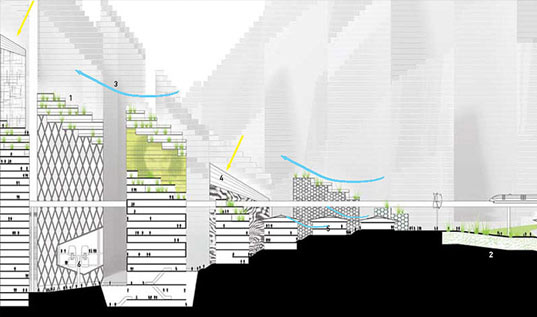
 Magic Mountains ChongqingThe peaks will hold the high density centers, while the lower areas will look more like traditional Chinese neighborhoods.4
 Magic Mountains ChongqingThe valleys will be open green spaces where the “living machine” – a <a href="http://www.inhabitat.com/index.php?s=wastewater+treatment">wastewater treatment</a> and renewable energy generation system - will be housed.5
 Magic Mountains ChongqingThe individual buildings that make up the "mountains" have stepped profiles, giving the mountains a pixelated look.6
 Magic Mountains ChongqingThe plan for the business center includes passive cooling in the summer and passive heating in the winter.7
 Magic Mountains ChongqingThe team says that these strategies will reduce the overall consumption of resources and energy by 22%.8
 Magic Mountains ChongqingThe proposal also calls for an 11% substitution of <a href="http://www.inhabitat.com/energy">renewable energy</a> instead of conventional.9
 Magic Mountains ChongqingWind turbines will be used in the open areas of the city to generate renewable energy.10
 Magic Mountains ChongqingPeople who need to get around the hilly city will have a system of bicycle and pedestrian paths and an efficient public <a href="http://www.inhabitat.com/transportation">transportion</a> system to minimize the need for cars.11
 Magic Mountains ChongqingA view of the city lit up at night.12
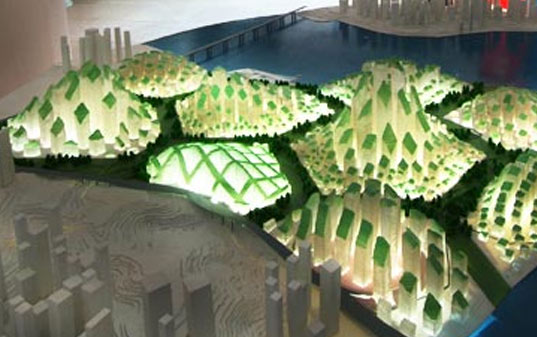
 Magic Mountains ChongqingA model of Magic Mountains constructed by the CEBO/Chongqing University team.13


