


Start Slideshow

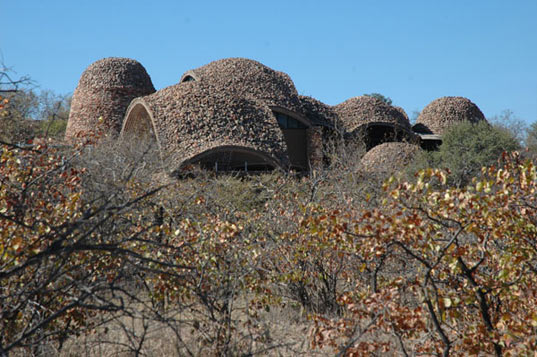





 Mapungwebe Interpretation CenterAppearing to have sprouted right from the ground like a cluster of mushrooms, the <a href="http://www.worldbuildingsdirectory.com/project.cfm?id=1634">Mapungubwe Interpretation Centre</a> is a dynamic cultural hub located at the confluence of the Limpopo and Shashe Rivers in Zimbabwe. The center and surrounding park celebrate the indigenous peoples of the area and the structure itself blends into the natural beauty of the mesa. Designed by <a href="http://www.peterricharchitects.co.za/">Peter Rich Architects</a>, the domed buildings were built with local materials by unemployed local workers, providing them with skills they carried over to work on their own homes!1
 Mapungwebe Interpretation CenterNot only was the natural landscape of the mesa the inspiration for the design of the center, it was also the source of most of the construction materials.2
 Mapungwebe Interpretation CenterThat probably explains why the structures look so authentic.3
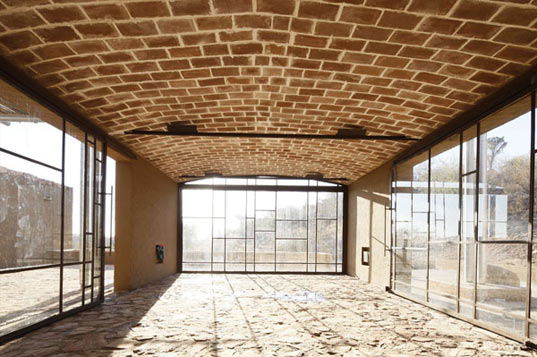
 Mapungwebe Interpretation CenterThe heavy vaulted ceilings of the domes contrast with the delicate walkways that meander through the center.4
 Mapungwebe Interpretation CenterInside, the domes are <a href="http://www.inhabitat.com/daylighting">daylit</a> by a strong southern light that filter in through an opening in ceiling.5
 Mapungwebe Interpretation CenterPonds in the area cool the air that <a href="http://inhabitat.com/index.php?s=natural+ventilation">naturally ventilates</a> the buildings.6
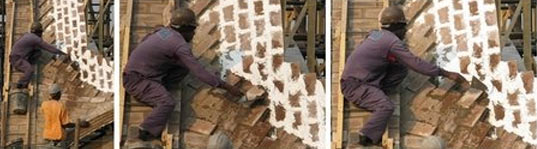
 Mapungwebe Interpretation CenterIn addition to being made out of local materials, the center was constructed by unemployed local workers who were trained in the production of the stabilized earth tiles that were used to build it.7
 Mapungwebe Interpretation CenterThese skills are now a part of the culture of the region, and the masons continue to use them and the leftover tiles for their houses in nearby villages.8
 Mapungwebe Interpretation CenterIt's pretty amazing when a <a href="http://inhabitat.com/index.php?s=cultural+center">cultural center</a> can actually write a piece of the story of the people it celebrates.9
 Mapungwebe Interpretation CenterThe experience of the exhibition space is cavernous, characterized by the exposed tiles made from the local soil.10
 Mapungwebe Interpretation CenterAn aerial sketch of the center.11
 Mapungwebe Interpretation CenterAn elevation sketch of the center showing the above ground and underground spaces.12
 Mapungwebe Interpretation CenterThe center is composed of two main hollow cairns that evoke the route-markers found in Southern African cultures.13
 Mapungwebe Interpretation CenterA sketch of the center showing the main spaces and the flow of visitor traffic.14


