


Soon, the water in Gijon, a harbor in Northern Spain will be monitored by robotic, battery-powered fish. These mechanical, articulating sea creatures were designed and tested by the Robotics Department at the University of Essex. At a cost of $3.6 million, through a European Union grant, these fish will test the water for oxygen levels, detect oil slicks and other contaminants pumped into the water. This is the first monitoring program of it’s kind, and the retrieved data could be very important, with implications for global warming and the state of our water sources.
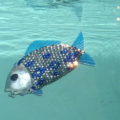

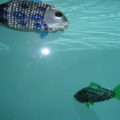



Researchers at Essex have been testing out their fish prototypes in a special tank at the London Aquarium since 2005. Visitors have been wowed by the incredible ability of the robots to move just like a fish does. As Rory Doyle, a researcher on the project, says, “The design of fish which nature has produced is a very energy-efficient one. The fish’s efficiency is created by hundreds of millions of years’ of evolution. Submarines come nowhere near it.” This efficiency in movement will allow the robot to have a longer battery life and collect more data.

The new robot fishes will be about 5 feet long, larger than the prototype version, in order to withstand greater pressures and currents. Each fish will cost about $28,000 to manufacture. At a speed of 1 meter per second, the robot will troll the water collecting data. An on board guidance system will keep them from bumping into obstacles, rocks, fish or ships. They even have a form of sonar that will allow the robots to communicate with each other.
When enough data has been collected, the robot fish will surface and transmit the data via a wireless signal to the port’s control center. Data from each fish will be used to create a 3-d map of pollution in the bay. When the robot is nearing the end of it’s battery charge, it will navigate back to a power hub to recharge.
Researchers expect to release the robots into the harbor in 18 months. No word yet on what the fish will look like, but don’t expect them to be the shiny specimens we’re showing here. The researchers say that appearances aren’t nearly as important as how they work. Check out this video to see the robot fish in motion.
+ Robotics Department at the University of Essex
via Huffington Post


