


Start Slideshow

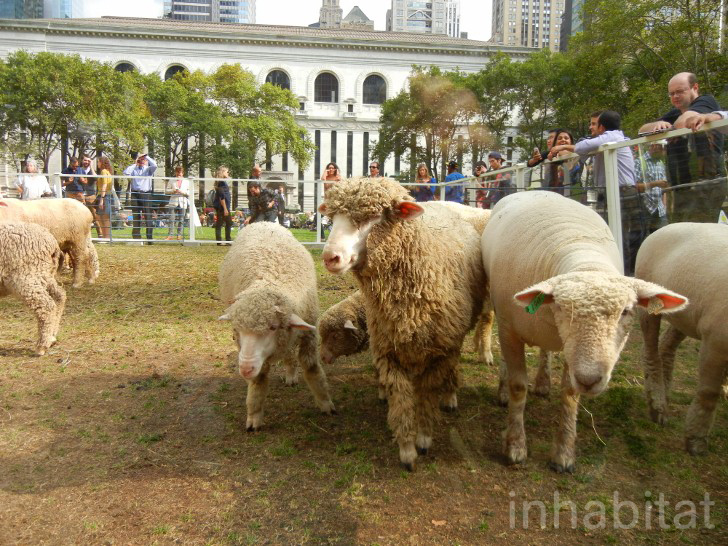
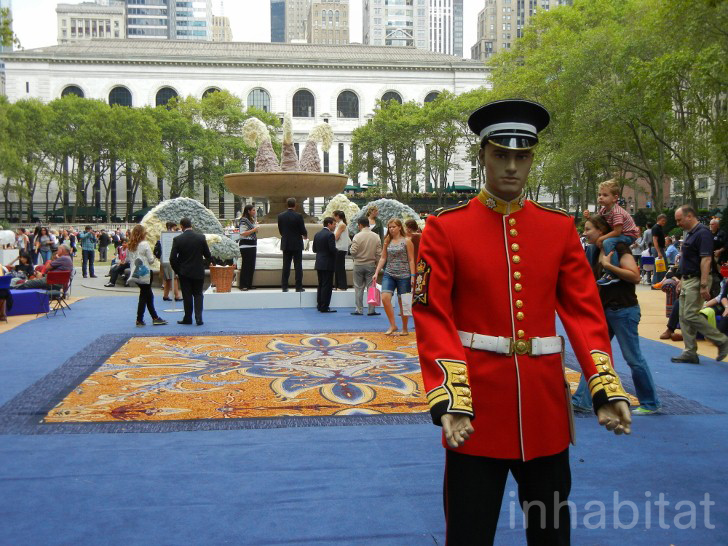
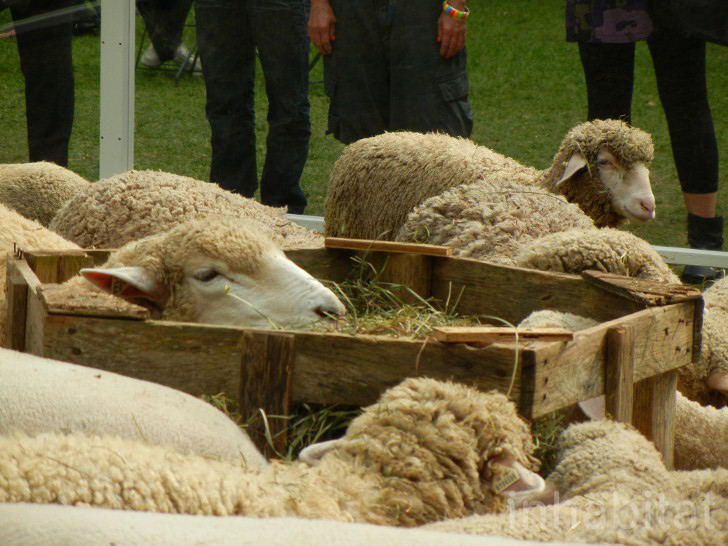
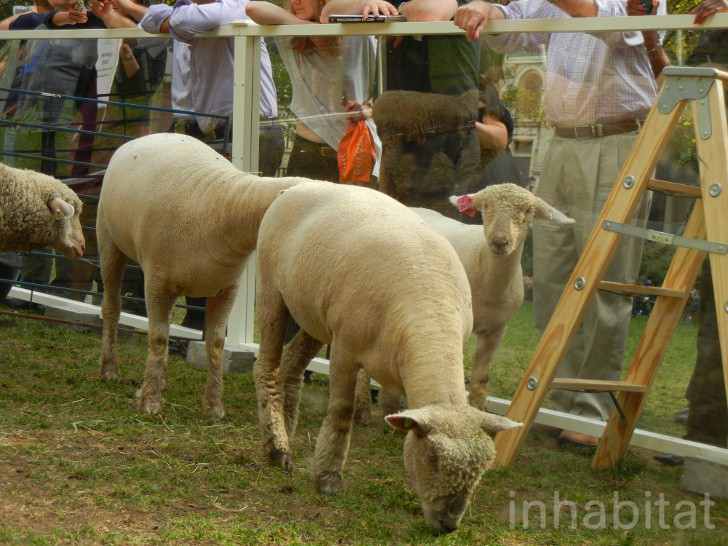
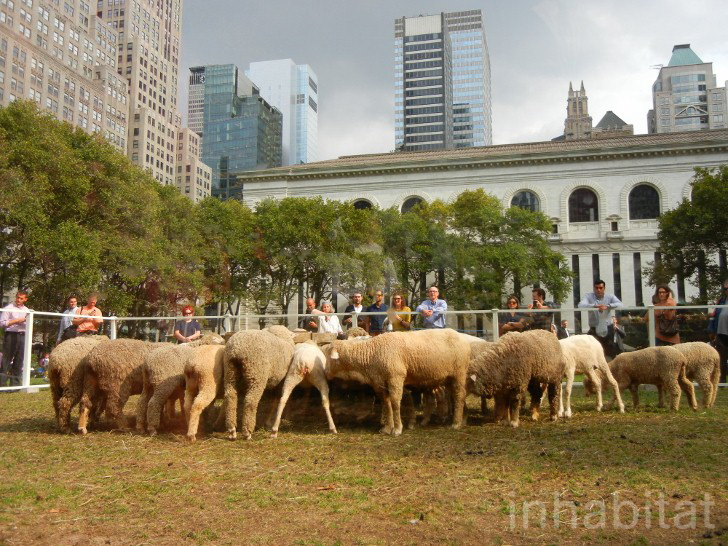
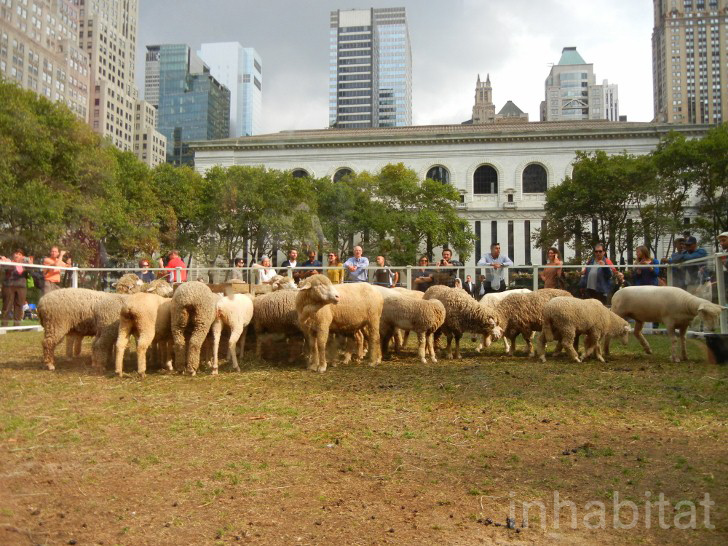
 Sheep in Bryant ParkA <a href="http://inhabitat.com/nyc/30-woolly-sheep-will-soon-invade-bryant-parks-lawn/">flock of fleecy sheep</a> invaded <a href="http://www.bryantpark.org/">Bryant Park </a>yesterday as part of The Prince of Wales' <a href="http://www.campaignforwool.org/" target="_self">Campaign for Wool</a> to promote the natural fiber. In addition to a visit from these fuzzy friends, the celebration transformed the popular midtown green space into a yarnbombed woolen wonderland that most passersby seemed to enjoy - but there were some critics. Care2 pointed out that there is a <a href="http://www.care2.com/causes/wool-festival-in-nyc-will-celebrate-cruelty-to-animals.html">dark side to the wool industry</a>, and while we still stand behind the material as a long-lasting, renewable resource, we also wish the campaign did more to specifically promote wool from sheep that are treated humanely and with dignity.1
 Sheep in Bryant ParkThe Campaign for Wool is <a href="http://www.campaignforwool.org/">a pro-wool campaign </a>that was initiated in 2008 when the <a href="http://www.princeofwales.gov.uk/">Prince of Wales</a> noticed a decline in the wool industry.2
 Sheep in Bryant ParkWith the prevalence of synthetic (and often petroleum-based fibers), wool has been losing popularity, and as a result, many of the family wool farmers who produce it have been suffering.3
 Sheep in Bryant ParkWith the Campaign for Wool, His Royal Highness is hoping to remind the public of the many benefits of the natural, durable, and renewable fiber.4
 Sheep in Bryant ParkWhile there were a few small signs at the event indicating that sustainability was a consideration for wool farmers, we didn't see anything referencing the humane treatment of animals.5
 Sheep in Bryant ParkWhat many people might not know is that although shearing fleece from sheep is not inherently harmful to them, some wool farmers <a href="http://www.care2.com/causes/wool-festival-in-nyc-will-celebrate-cruelty-to-animals.html">end up injuring the animals while shearing</a> since they are paid by volume and need to work quickly. In other cases, the sheep are simply neglected and may even be left for dead without proper medical treatment if they are maimed.6
 Sheep in Bryant ParkThe most disturbing form of animal cruelty in the wool trade takes place in Australia and is called mulesing. The surgical process is meant to prevent flystrike (<a href="http://en.wikipedia.org/wiki/Myiasis">myiasis</a>), which is common in the area, and involves putting a lamb under restraint, and cutting or shearing away part of its buttocks. The surgery is performed with no anesthesia.7
 Sheep in Bryant ParkThe fact that there are animal mistreatment issues in the wool industry is undeniable, but as Ecouterre Managing Editor <a href="http://www.ecouterre.com/author/jasmin">Jasmin Malk Chua</a> explained, "It really depends on the farm. There are lots of responsible and animal-loving farmers and brands out there too like <a href="http://izzylane.com/">Izzy Lane</a> and <a href="http://thenorthcircular.com/">The North Circular</a>, who use wool from rescued and rehabilitated sheep. There's really no such thing as a bad fiber, just bad humans."8
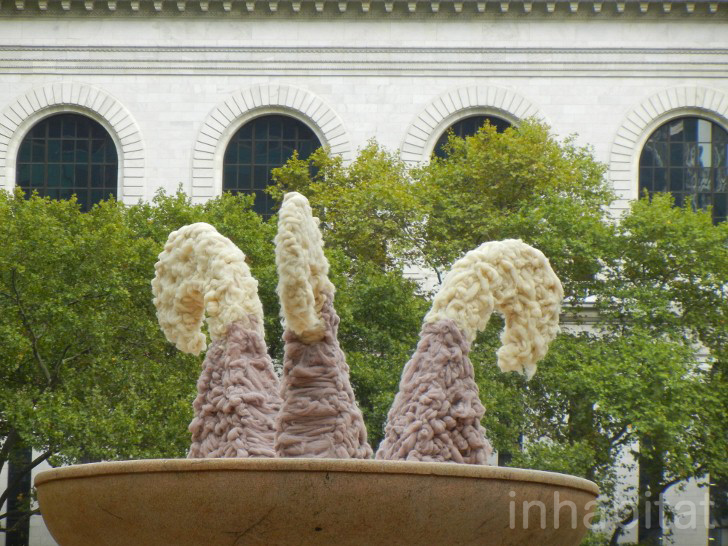
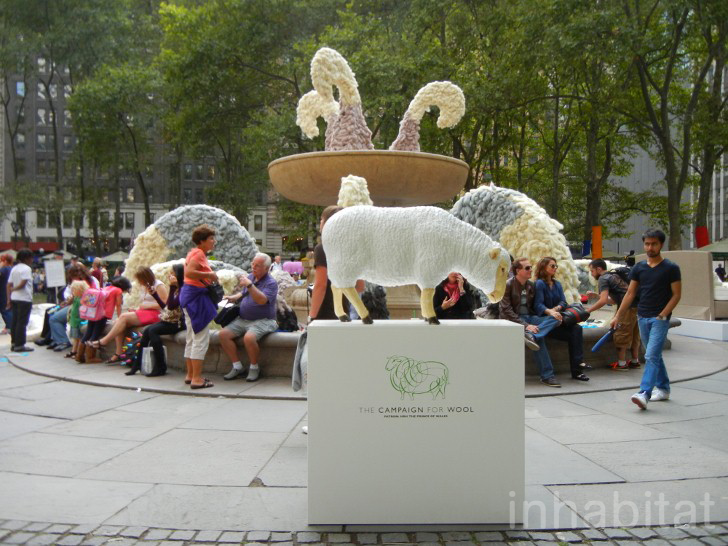
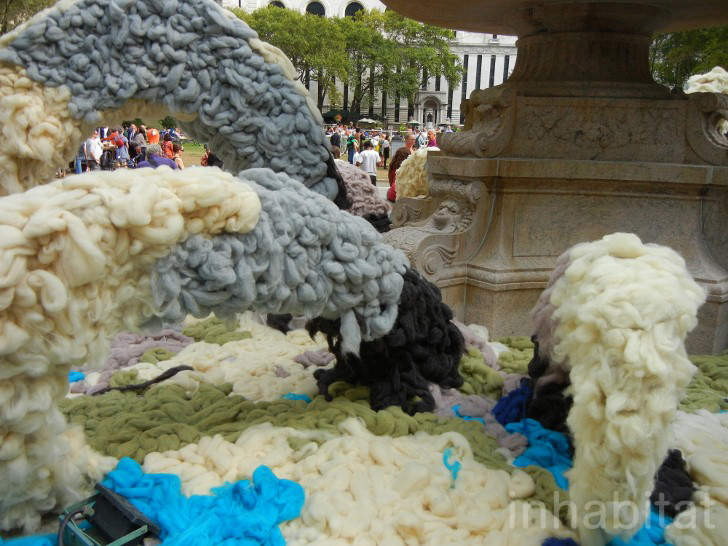
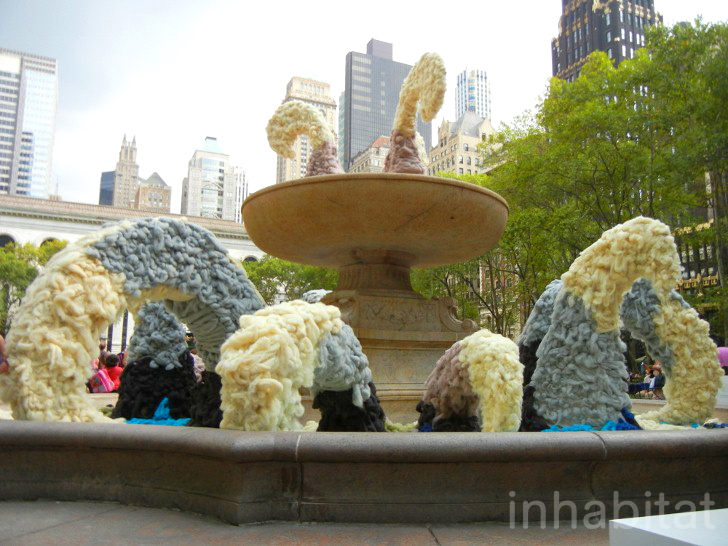
 Sheep in Bryant ParkThe wool-filled fountain was a hit with passersby.9
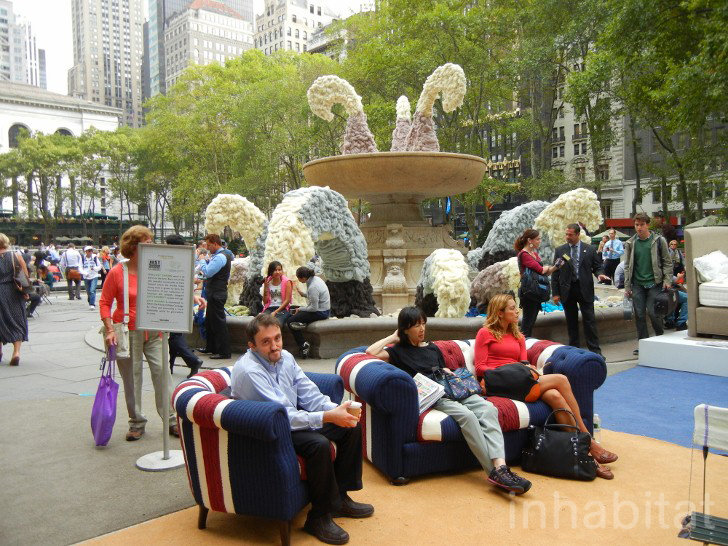
 Sheep in Bryant ParkNew Yorkers and tourists taking a rest on wool-covered furniture.10
 Sheep in Bryant ParkThe fountain was drained and filled with<a href="http://inhabitat.com/tag/wool/"> wool and yarn</a>.11
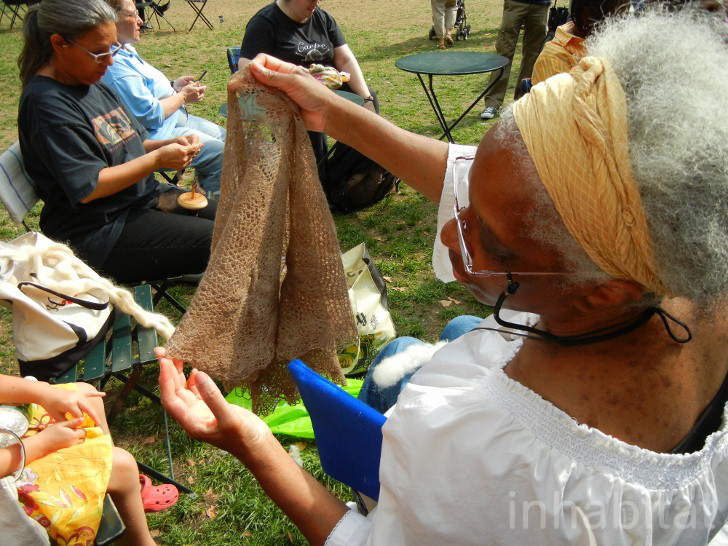
 Sheep in Bryant ParkThere was also a display to showcase how raw wool is sorted as well as demonstrations of crafting and knitting and other wool-centered activities.12
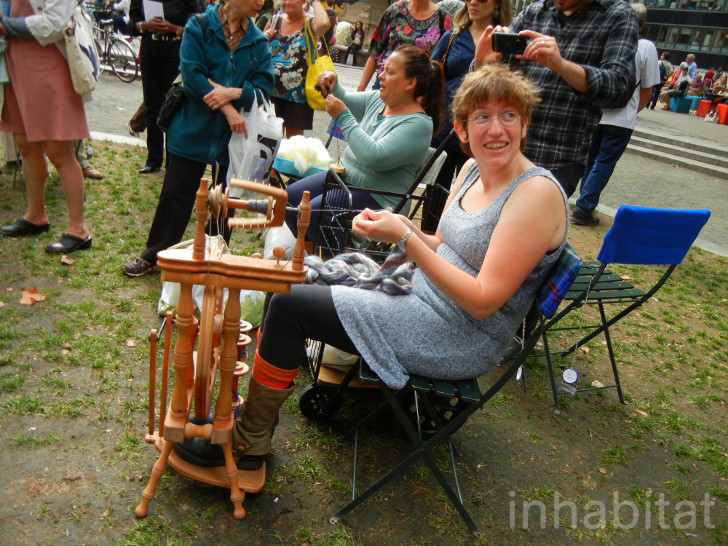
 Sheep in Bryant ParkVisitors learned about yarn and how it is spun.13
 Sheep in Bryant ParkKnitting and crocheting experts were also on hand to show off their handiwork14


