


Start Slideshow


 Twitter photo by Tuomas XiRiken Yamamoto's Ecoms House exemplifies a new kind of home economics. Constructed out of aluminum panels, this diminutive 24-foot by 24-foot box demonstrates how economy in size and fabrication can lead to surplus in style and coolness. A prototype residence for SUS Corporation, a manufacturer of aluminum precision machine parts and furniture, this home was initially an experiment to create something out of aluminum that could not be expressed with steel. The exterior is inspired by the traditional use of tatami mats in Japanese homes -- each of the four sides featuring transparent, opaque, and glass-covered aluminum lattice panels.1
 Flickr photo by Tuomas XiRiken Yamamoto's Ecoms House exemplifies a new kind of home economics. Constructed out of aluminum panels, this diminutive 24-foot by 24-foot box demonstrates how economy in size and fabrication can lead to surplus in style and coolness. A prototype residence for SUS Corporation, a manufacturer of aluminum precision machine parts and furniture, this home was initially an experiment to create something out of aluminum that could not be expressed with steel. The exterior is inspired by the traditional use of tatami mats in Japanese homes -- each of the four sides featuring transparent, opaque, and glass-covered aluminum lattice panels.2
 Ecoms HouseRiken Yamamoto's Ecoms House exemplifies a new kind of home economics. Constructed out of aluminum panels, this diminutive 24-foot by 24-foot box demonstrates how economy in size and fabrication can lead to surplus in style and coolness. A prototype residence for SUS Corporation, a manufacturer of aluminum precision machine parts and furniture, this home was initially an experiment to create something out of aluminum that could not be expressed with steel. The exterior is inspired by the traditional use of tatami mats in Japanese homes -- each of the four sides featuring transparent, opaque, and glass-covered aluminum lattice panels.3
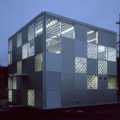 Ecoms Shot from Arch RecordRiken Yamamoto's Ecoms House exemplifies a new kind of home economics. Constructed out of aluminum panels, this diminutive 24-foot by 24-foot box demonstrates how economy in size and fabrication can lead to surplus in style and coolness. A prototype residence for SUS Corporation, a manufacturer of aluminum precision machine parts and furniture, this home was initially an experiment to create something out of aluminum that could not be expressed with steel. The exterior is inspired by the traditional use of tatami mats in Japanese homes -- each of the four sides featuring transparent, opaque, and glass-covered aluminum lattice panels.4
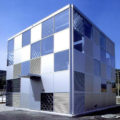 PREFAB FRIDAY: Riken Yamamoto's Ecoms HouseRiken Yamamoto's Ecoms House exemplifies a new kind of home economics. Constructed out of aluminum panels, this diminutive 24-foot by 24-foot box demonstrates how economy in size and fabrication can lead to surplus in style and coolness. A prototype residence for SUS Corporation, a manufacturer of aluminum precision machine parts and furniture, this home was initially an experiment to create something out of aluminum that could not be expressed with steel. The exterior is inspired by the traditional use of tatami mats in Japanese homes -- each of the four sides featuring transparent, opaque, and glass-covered aluminum lattice panels.5
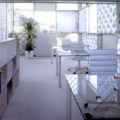 PREFAB FRIDAY: Riken Yamamoto's Ecoms HouseRiken Yamamoto's Ecoms House exemplifies a new kind of home economics. Constructed out of aluminum panels, this diminutive 24-foot by 24-foot box demonstrates how economy in size and fabrication can lead to surplus in style and coolness. A prototype residence for SUS Corporation, a manufacturer of aluminum precision machine parts and furniture, this home was initially an experiment to create something out of aluminum that could not be expressed with steel. The exterior is inspired by the traditional use of tatami mats in Japanese homes -- each of the four sides featuring transparent, opaque, and glass-covered aluminum lattice panels.6
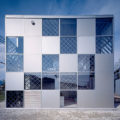 PREFAB FRIDAY: Riken Yamamoto's Ecoms HouseRiken Yamamoto's Ecoms House exemplifies a new kind of home economics. Constructed out of aluminum panels, this diminutive 24-foot by 24-foot box demonstrates how economy in size and fabrication can lead to surplus in style and coolness. A prototype residence for SUS Corporation, a manufacturer of aluminum precision machine parts and furniture, this home was initially an experiment to create something out of aluminum that could not be expressed with steel. The exterior is inspired by the traditional use of tatami mats in Japanese homes -- each of the four sides featuring transparent, opaque, and glass-covered aluminum lattice panels.7
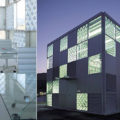 PREFAB FRIDAY: Riken Yamamoto's Ecoms HouseRiken Yamamoto's Ecoms House exemplifies a new kind of home economics. Constructed out of aluminum panels, this diminutive 24-foot by 24-foot box demonstrates how economy in size and fabrication can lead to surplus in style and coolness. A prototype residence for SUS Corporation, a manufacturer of aluminum precision machine parts and furniture, this home was initially an experiment to create something out of aluminum that could not be expressed with steel. The exterior is inspired by the traditional use of tatami mats in Japanese homes -- each of the four sides featuring transparent, opaque, and glass-covered aluminum lattice panels.8
