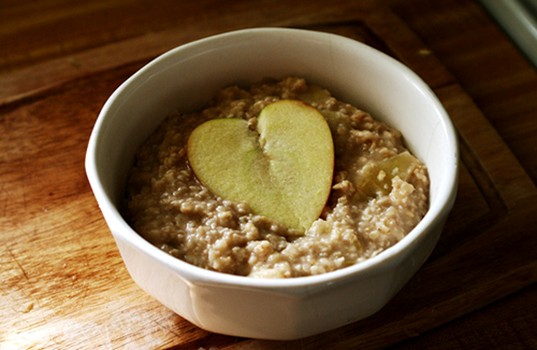
Here’s a breakfast that’s capable of not only fueling your body but also powering the entire factory that makes it. Scott’s Porage Oats, a Quaker Oats Factory at Uthrogle Mills in Scotland is installing a combined heat and power biomass boiler that will enable the factory to become carbon-neutral, running entirely on waste oat husks. The husks, removed from the oats during the milling process, will provide 9,709 MWhrs of electricity and 10,902 MWhrs of steam a year, reducing its emissions by 9,000 tonnes a year—equivalent to the annual emissions of 3,000 cars. Now none of the energy stored in the oats will go to waste.

Related Posts
-
© dullhunk Google just announced that it has been carbon neutral since 2007, and the internet giant also recently unveiled plans to invest in pig poop
-
Food waste has long been a problem, but it seems a particular foodstuff is more harmful than others. According to a team from Edinburgh University,
-
There are some intriguing ideas with how to deal with the greenhouse gas emissions from electricity generation – the most commonly heard being carbon sequestration.
5 Responses to “Quaker Oats Porridge Powered Factory”
-
Featured Author
-
Read Inhabitat
-
Search Categories
-
Recent Posts
-
Recent Comments
-
Browse by Keyword
follow inhabitat on:
popular today
all time
most commented
more popular stories >
© Inhabitat.com 2012 | About Inhabitat | Contact Us | Advertising with Inhabitat | Terms Of Use | Privacy Policy | Inhabitat, LLC


This would be really really cool but Cuba has been doing this with sugar cane factories since, at least, the 1950′s. And the cuba versions not only make the plants carbon neutral, but actively help power the surrounding areas while the mill is up and running.
Not that it makes this un-cool, just not as revolutionary as it might sound.
[...] Read Full Story Here Tagged as: Alternative Energy, biofuel, Quaker Oats [...]
But great that it’s using a by product of food production (that would otherwise be wasted) rather than converting fields that could feed people into bio-diesel production to satiate wealthier nations lust for big cars.
Sorry if this makes me sound stupid, but why don’t they compost the husks back into the soil. It seems like they are removing a lot of biomass from the soil that they have to replace with fertilizers and i don’t know what else. It seems as if they aren’t saving any waste at all but just transfering it, which may have better short term or long term benefits, i dont know. I’m rather ignorant on the subject. If anyone could give me a quick lesson it would be greatly appreciated!
For one thing there is no more nutrition in the husk once it has gone through its process.