


Start Slideshow





 Inujima Art ProjectAn old copper mine on a tiny island in Japan sat abandoned for 80 years until Architect Hiroshi Sambuichi and conceptual artist <a href="http://www.iniva.org/dare/themes/space/yanagi.html">Yukinori Yanagi</a> were offered the chance to re-imagine the degraded complex as a commentary on the budding of an industrial nation. Spotted on <a href="http://www.spoon-tamago.com/2009/07/08/inujima-art-project/">Spoon & Tamago</a>, the <a href="http://benesse-artsite.jp/en/inujima/">Inujima Art Project</a> is also a unique, sustainable nod to a future where buildings takes care of themselves and conspicuous consumption is leerily regarded. The building <a href="http://inhabitat.com/?cat=1779">addition</a> itself is a brilliant example of adaptive design that requires electricity only to keep the emergency lights on; all other lighting, cooling, and heating is done -- incredibly-- with only passive measures.1
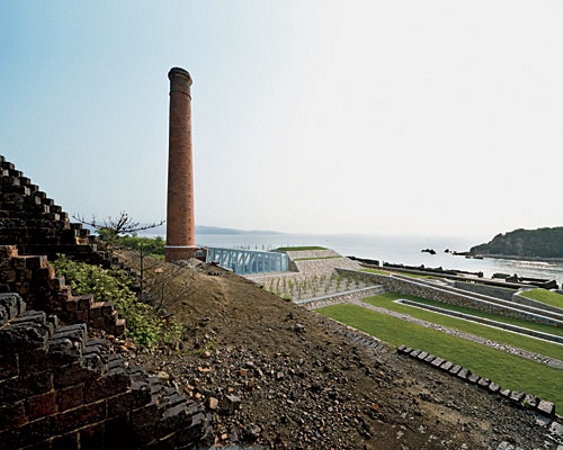
 Inujima Art ProjectSet on its own .21 square mile island, the Museum allows only 50 visitors a day. From afar they can see the six enormous brick smoke stacks in various stages of decay.2
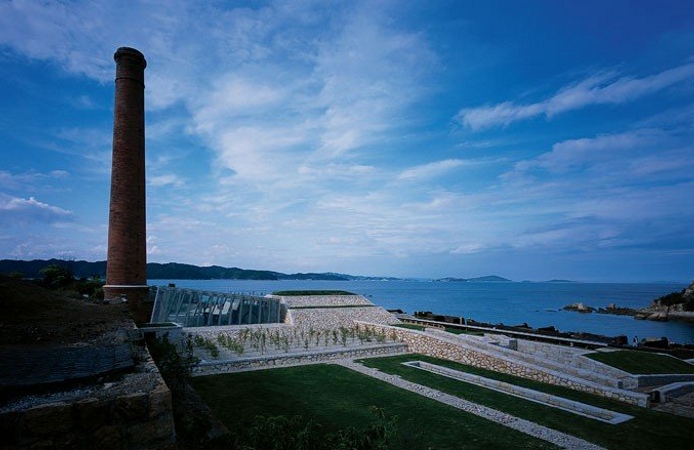
 Inujima Art ProjectOnly when they arrive can they see the low-slung glass and white stone building3
 Inujima Art ProjectThe entire complex is a large passive heating and<a href="http://inhabitat.com/index.php?s=natural+cooling"> cooling machine</a> that use the 98 foot tall smoke stack adjacent to gallery to suck air out of the complex.4
 Inujima Art ProjectThe galleries themselves provide all the heating and cooling.5
 Inujima Art ProjectRadiating from the center of the complex is an Earth Gallery to one side and a Sun Gallery to the other. <a href="http://inhabitat.com/?cat=16">Sustainability</a> is taken into account for water as well -- waste water in filtered on-site with a plant-based water clarifier system and used to irrigate orange and olive trees.6
 Inujima Art ProjectThe <a href="http://inhabitat.com/?attachment_id=178446">Earth Gallery</a> is a fascinating 262 foot-long embedded earth hall with walls made from 1/2 inch corrugated sheets that absorb the sun's heat and transfers it to the rest of the building. The turning hall has mirrors at the corners to reflect daylight down its passages.7
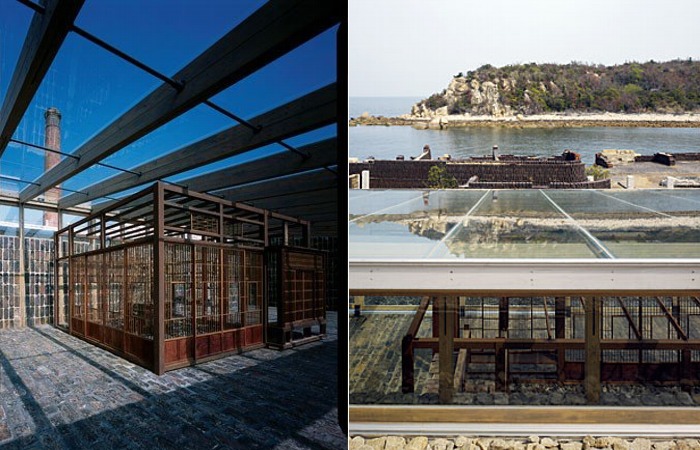
 Inujima Art ProjectThe Sun Gallery and Chimney Hall provide the bulk of solar heating on colder days, and the entire system is controlled by simply opening and closing doors and internal windows.8
 Inujima Art Project<a href="http://inhabitat.com/?cat=7">Reclaimed materials</a> are common throughout the building -- blocks discarded from the copper operation and sunk into the sea make up the Sun Gallery.9
 Inujima Art ProjectBricks from the crumbling buildings are used extensively, as are clay tiles and even the landscape itself.10
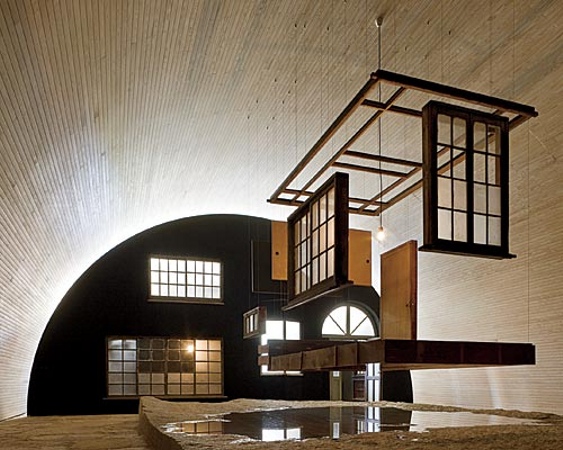
 Inujima Art ProjectThe various <a href="http://inhabitat.com/art/">installations</a> throughout the galleries by artist Yukinori Yanagi reference the famous writer <a href="http://en.wikipedia.org/wiki/Yukio_Mishima">Mishima Yukio</a>’s treatise on the destructiveness of industrialization to Japan’s culture.11
 Inujima Art ProjectRemnants of the novelist's house are suspended in space, creating a kind of reconstruction of the author’s immediate surroundings engulfed by the surrounding of his subject matter.12
 Inujima Art ProjectTaken as a whole, the project is a fascinating look both into the past and the not-so-distant-future13
 Inujima Art ProjectRadiating from the center of the complex is an Earth Gallery to one side and a Sun Gallery to the other.14


