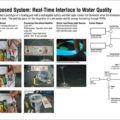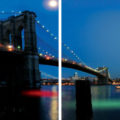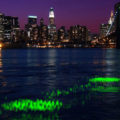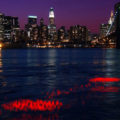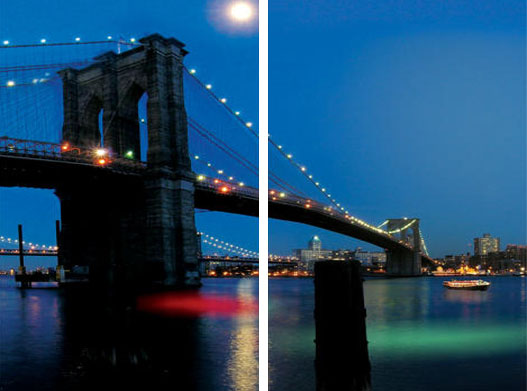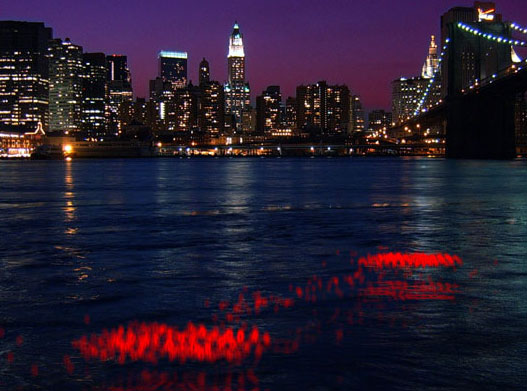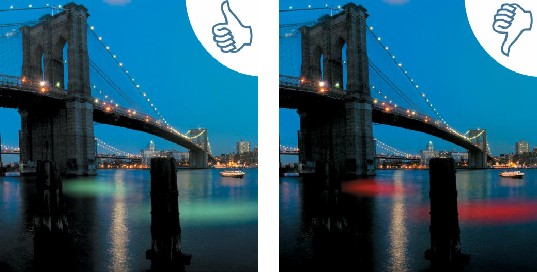
Here’s a brilliant idea that functions as both environmental pollution monitor and thought-provoking urban art installation: a floating LED light system embedded in bodies of water to warn of water pollution (in addition to creating an ethereal glow at nighttime). A great way to be more green is simply to be more aware, like in the case of DIY Kyoto’s Wattson energy meter, or Natalie Jeremijenko’s pollution-sniffing dogs, and this project, architects Soo-in Yang and David Benjamin’s ingenious WaterGlow project does just that – making us aware of environmental problems in a beautiful way.

RIVER GLOW: Water Pollution Monitor / Urban Art Installation
by Tylene Levesque, 06/12/07
filed under: Green Lighting, Green Products, Interactive Objects, New York City, postopolis, Urban design, Water Issues
Related Posts
-
Seoul, South Korea is filled with blinding light-up displays and headache-inducing neon screens. But residents of the city who want to see these displays put
-
What if architecture was designed to work for you to keep you healthy? Soo-in Yang and David Benjamin, architects at The Living have come
-
If a country was told that 90% of their beaches and rivers met EU water quality standards, you would think that would be a cause
6 Responses to “RIVER GLOW: Water Pollution Monitor / Urban Art Installation”
-
Featured Author
-
Read Inhabitat
-
Search Categories
-
Recent Posts
-
Recent Comments
-
Browse by Keyword
follow inhabitat on:
popular today
all time
most commented
more popular stories >
© Inhabitat.com 2012 | About Inhabitat | Contact Us | Advertising with Inhabitat | Terms Of Use | Privacy Policy | Inhabitat, LLC


This is great – anything that provides an easily recognisable indication of pollution or high energy use can make a huge impact. This reminds me, in a way, of the simple idea of having an electricity meter display in your kitchen with your energy use converted into the cost to you in pounds/euros/dollars. When people get to see how much their energy use is costing them, they’ll cut down…
good idea, I just hope every effort is made to make sure this installation won’t affect any wildlife.
hey nick, i like your idea. i also have a similar idea, yet i’m still not sure how it can be implemented… installing mpg meters, not only in the dashboard of cars, but on the rear bumper as well (like a bumper sticker). i think it would bring a lot of attention to how much fuel are people using…
the main point of all of these projects:
as long as people live in ignorance, they will not be able to realize the negative impact they have on the environment, and will therefore not have the motivation to change
actually, there are alot of SUVs out there now with mpg displays, in the console right above the rearview mirror. I’ve seen a dodge ram hemi with it and also a ford explorer. my friend thought it was funny to floor it on the highway uphill to watch the meter drop to 6 miles to the gallon…I’m not sure how effective it is in persuading people to conserve gas. its like those police speed signs, the ones that flash you your current speed…alot of drivers get a kick out of seeing how fast they can clock by that thing. an electricity meter display in the home may be more effective – turning on your appliances and watching your meter go nuts doesn’t have the same thrill factor of flooring a vehicle. people like going fast in cars, despite the costs (money and on the environment), people aren’t as interested in racking up their electricty bills without the thrill.
Only nit pick is the choice of photo location.
Too bad no one will ever swim in the east river under the brooklyn bridge anyways. And toxic chemicals in fish are there for their lifetimes. I already know the east river is too dirty to do anything with already, just thow some red lights in there and be done. Great for other waterways people might actually use.
This is a really cool idea. It is highlighting environmental issues through art and technology. Its beautiful! I think source water protection infrastructure should incorporate more of this to highlight areas of needed concern. Read more at http://www.enviro-family.com