Site Meter
Ariel Schwartz

Solar-Powered Moon Rover to Explore Apollo Landing Site

by , 07/22/09
filed under: green gadgets, Solar Power

astrobiotic technology sustainable design, green design, solar rover, moon, apollo, google, space

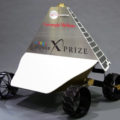
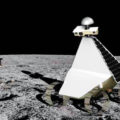
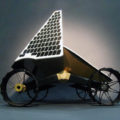
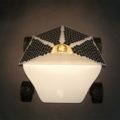
Solar power doesn’t have to be limited to Earth-based gadgets — at least, not if Carnegie Mellon roboticist Dr. William Whittaker has anything to say about it. Whitaker and Astrobiotic Technology have teamed up to develop a solar rover prototype that will explore the Apollo moon landing site and find out how materials used in the mission have fared over all these years.
Related Posts

9 Responses to “Solar-Powered Moon Rover to Explore Apollo Landing Site”

  1. polymind polymind says:

    Wonder if the older rovers were also solar powered?

  2. x@x.com x@x.com says:

    there is no air on the moon.

  3. beezorphlegmon beezorphlegmon says:

    I hate to be hyper-critical, but all unmanned space vehicles since the first satellites were solar powered. The space program was one of the first uses of solar panels, and until recently, NASA did most of the solar research and development. Every single rover that has gone to mars and the moon has been solar powered. In addition, the International Space Station is powered completely by solar energy, as was the previous Russian Mir Space Station. The reason that thin film and other lower-grade inexpensive solar technologies are only recently beginning to appear is because NASA never had a need for these, because they need to get the maximum amount of energy out of the smallest volume and weight of the panels.

  4. AlexTheApe AlexTheApe says:

    The Apollo rovers were battery powered, by a pair of silver oxide batteries. Silver oxide still have near the best capacity/weight ratio, which is obviously good for Apollo, but they’re non-rechargeable and quite expensive.

  5. devilbile devilbile says:

    How do they propose to keep the solar panels and camera lenses clean from moon dust that is kicked up from the rover moving?

  6. Alastair Mayer Alastair Mayer says:

    In 1970 and 1973 the Soviets landed their Lunokhod solar-powered robotic rovers on the Moon. Lunokhod 1 lasted for 11 months and covered 10.5 kilometers, Lunokhod 2 only lasted 4 months but covered 37 km. So this is 40 year old technology we’re talking about.

    Incidentally, Richard Garriot (son of astronaut Owen Garriot and a computer gaming entrepreneur) purchased Lunokhod 2 from the Russians in 1993. It’s location is precisely known via laser rangefinding. As the only private owner of an object on another celestial body, he’s claimed the Moon. ;-)

  7. I wonder why we are willing to do solar powered rovers, and yet there so little support for solar power here on the Earth!

  8. homework girl homework girl says:

    i want to go to out of space
    p.s this is for my home work

  9. rayajames rayajames says:

    Hello solar fans give us some info at rayajames@globalenergyservices.info

Leave a Comment

Please keep your comments relevant to this blog entry. Email addresses are never displayed, but they are required to confirm your comments.

Please note that gratuitous links to your site are viewed as spam and may result in removed comments.

Add your comments

NEW USER

CURRENT USERS LOGIN

Lost your password?

get the free Inhabitat newsletter

Submit this form
popular today
all time
most commented
more popular stories >
What are you looking for? (Solar, HVAC, etc.)
Where are you located?