


Start Slideshow


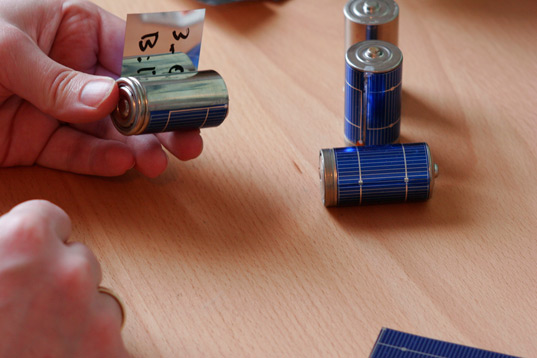

 SunCat: Solar Batteries Powered by SunshineDesigner and inventor extraordinaire Knut Karlsen recently unveiled an inspired approach to portable power that can't be beat for its elegant simplicity: a prototype battery capable of charging itself when exposed to sunshine. His slick set of SunCat C-cells are wrapped in flexible photovoltaic panels and will slowly recharge when left to bask in the sun - just like a cat.1
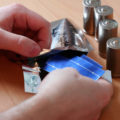 SunCat: Solar Batteries Powered by SunshineDesigner and inventor extraordinaire Knut Karlsen recently unveiled an inspired approach to portable power that can't be beat for its elegant simplicity: a prototype battery capable of charging itself when exposed to sunshine. His slick set of SunCat C-cells are wrapped in flexible photovoltaic panels and will slowly recharge when left to bask in the sun - just like a cat.2
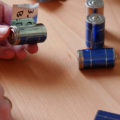 SunCat: Solar Batteries Powered by SunshineDesigner and inventor extraordinaire Knut Karlsen recently unveiled an inspired approach to portable power that can't be beat for its elegant simplicity: a prototype battery capable of charging itself when exposed to sunshine. His slick set of SunCat C-cells are wrapped in flexible photovoltaic panels and will slowly recharge when left to bask in the sun - just like a cat.3
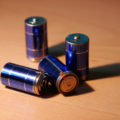 SunCat: Solar Batteries Powered by SunshineDesigner and inventor extraordinaire Knut Karlsen recently unveiled an inspired approach to portable power that can't be beat for its elegant simplicity: a prototype battery capable of charging itself when exposed to sunshine. His slick set of SunCat C-cells are wrapped in flexible photovoltaic panels and will slowly recharge when left to bask in the sun - just like a cat.4
