


Start Slideshow

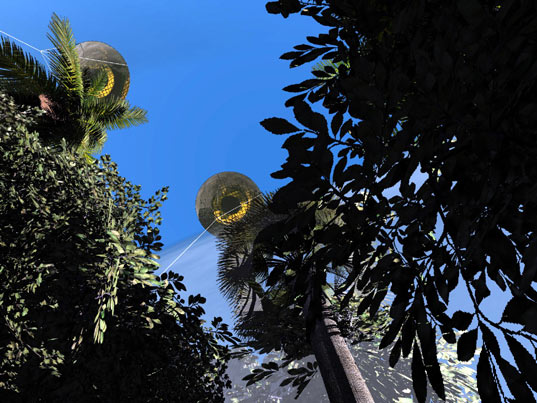


 SOLAR BALLOONS: SunHope Renewable EnergyWhat could be more refreshing than casting off your carbon shackles with a bunch of solar balloons? Our favorite environmental architect visionary, Joseph Cory, of Geotectura has seized this dream with an award winning way to take solar energy to the skies. He's teamed up with Technion aerospace engineer Dr. Pini Gurfil to develop an an array of helium filled platforms constructed from a new fabric coated with photovoltaic solar cells. Dubbed Sunhope, the project is showing great promise as a low-cost deployable system that would harness solar energy while maintaining a minuscule environmental footprint.1
 SOLAR BALLOONS: SunHope Renewable EnergyWhat could be more refreshing than casting off your carbon shackles with a bunch of solar balloons? Our favorite environmental architect visionary, Joseph Cory, of Geotectura has seized this dream with an award winning way to take solar energy to the skies. He's teamed up with Technion aerospace engineer Dr. Pini Gurfil to develop an an array of helium filled platforms constructed from a new fabric coated with photovoltaic solar cells. Dubbed Sunhope, the project is showing great promise as a low-cost deployable system that would harness solar energy while maintaining a minuscule environmental footprint.2
 SOLAR BALLOONS: SunHope Renewable EnergyWhat could be more refreshing than casting off your carbon shackles with a bunch of solar balloons? Our favorite environmental architect visionary, Joseph Cory, of Geotectura has seized this dream with an award winning way to take solar energy to the skies. He's teamed up with Technion aerospace engineer Dr. Pini Gurfil to develop an an array of helium filled platforms constructed from a new fabric coated with photovoltaic solar cells. Dubbed Sunhope, the project is showing great promise as a low-cost deployable system that would harness solar energy while maintaining a minuscule environmental footprint.3
 Joseph Cory, Cory Solar Balloons, Geotectura Solar Balloons, Geotectura, SunHopes, SunHope solar balloons, solar balloons, Israeli architect, Technion, Pini Gurfil, photovoltaic, renewable energy, remote energy, solar concept,What could be more refreshing than casting off your carbon shackles with a bunch of solar balloons? Our favorite environmental architect visionary, Joseph Cory, of Geotectura has seized this dream with an award winning way to take solar energy to the skies. He's teamed up with Technion aerospace engineer Dr. Pini Gurfil to develop an an array of helium filled platforms constructed from a new fabric coated with photovoltaic solar cells. Dubbed Sunhope, the project is showing great promise as a low-cost deployable system that would harness solar energy while maintaining a minuscule environmental footprint.4
 Joseph Cory, Cory Solar Balloons, Geotectura Solar Balloons, Geotectura, SunHopes, SunHope solar balloons, solar balloons, Israeli architect, Technion, Pini Gurfil, photovoltaic, renewable energy, remote energy, solar concept,What could be more refreshing than casting off your carbon shackles with a bunch of solar balloons? Our favorite environmental architect visionary, Joseph Cory, of Geotectura has seized this dream with an award winning way to take solar energy to the skies. He's teamed up with Technion aerospace engineer Dr. Pini Gurfil to develop an an array of helium filled platforms constructed from a new fabric coated with photovoltaic solar cells. Dubbed Sunhope, the project is showing great promise as a low-cost deployable system that would harness solar energy while maintaining a minuscule environmental footprint.5
 Joseph Cory, Cory Solar Balloons, Geotectura Solar Balloons, Geotectura, SunHopes, SunHope solar balloons, solar balloons, Israeli architect, Technion, Pini Gurfil, photovoltaic, renewable energy, remote energy, solar concept,What could be more refreshing than casting off your carbon shackles with a bunch of solar balloons? Our favorite environmental architect visionary, Joseph Cory, of Geotectura has seized this dream with an award winning way to take solar energy to the skies. He's teamed up with Technion aerospace engineer Dr. Pini Gurfil to develop an an array of helium filled platforms constructed from a new fabric coated with photovoltaic solar cells. Dubbed Sunhope, the project is showing great promise as a low-cost deployable system that would harness solar energy while maintaining a minuscule environmental footprint.6
