


Start Slideshow


 Matthew Laws' Climate MachineAs part of the <a href="http://inhabitat.com/london-design-week"> 2010 London Design Festival</a> the Royal College of Arts is hosting two great eco exhibitions in its Upper Gulbenkian Gallery. <a href="http://www.rca.ac.uk/Default.aspx?CategoryID=36755">Sustain</a> showcases the responses of student designers to the idea of sustainability within their work, while Bin 2 Bin is a project by IDE with iGuzzini & Fratelli Guzzini that challenged students to consider the entire lifecycle of a product and produce items with 'recycling' at their heart. Read to take a look at these incredible student designs!1
 Tina Chen's SnowflakeTina Chen's Snowflake design was inspired by the formation and interactions of real snowflakes. The modular design of each piece allows the client to custom design their own products according to their needs. Pieces can then be recycled to create new ones.2
 Sae Ra Kang's L+D VaseSae Ra Kang's L+D Vases are made from brightly colored recycled plastic. Each vase features a set of suction cups with embedded solar LEDS that allow them to attach to smooth surfaces and attract attention to the materials.3
 Textile Reprocessing by Jrumchai SingalavanijJrumchai Singalavanij has developed a unique process to transform waste from the textile industry into material that can be woven.4
 Angela Chao's PlanterAngela Chao's Planters are made from ceramics that have been brightly colored to mimic carrots. The tools can be left in the flowerbed between uses without becoming rusty or appearing ugly, and at the end of their useful life they can be recycled to make new tools.5
 Matthew Laws' Climate MachineMatthew Laws' Climate Machine is a visualization of our own carbon footprint. Adjusting the sliders at the front to reflect our energy usage switches lightbulbs on or off. The fewer lightbulbs turned on, the smaller the footprint and the better we are able to see our image on a screen (not pictured).6
 Rob Maslin's Free LunchRob Maslin's Free Lunch repurposes a traditional decorative aquarium into a sustainable food system. A 225 litre tank can sustain 15cm of growth in ten plants per week.7
 Seongyong Lee's PlytubeSeongyong Lee's Plytube is, as the name suggests, a set of tubes manufactured from plywood. The lightweight but strong design is highly adaptable and customizable and can be used to construct items of furniture such as the stool on the far right.8
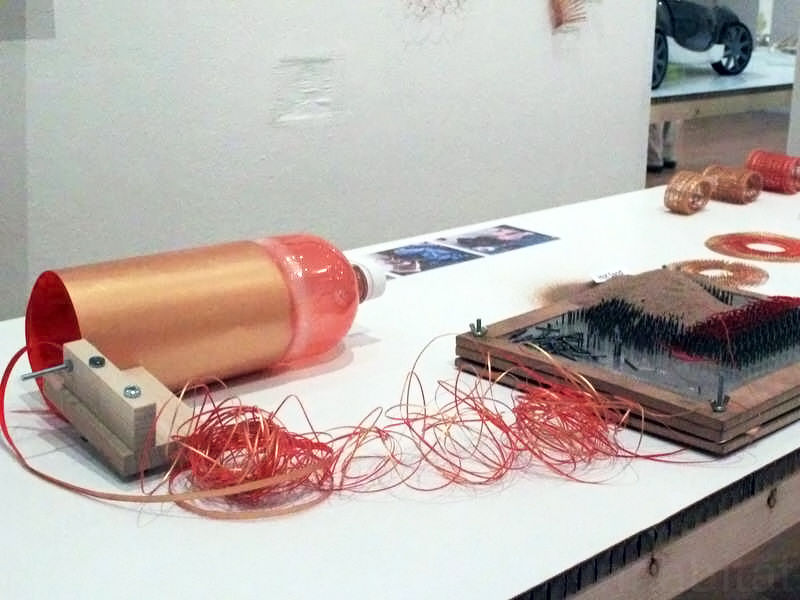
 Florie Salnot's plastic bottle jewelry techniqueFlorie Salnot's plastic bottle jewelry technique was developed in response to Salnot's time spent with women at Saharawi refugee camps. The technique involves shaving thin strips from plastic bottles, wrapping them in patterns round a pin board and then immersing it in hot sand to shrink the plastic and set the shapes. The jewelry is attractive and the means of production incredibly cheap and makes good use of plastic waste.9
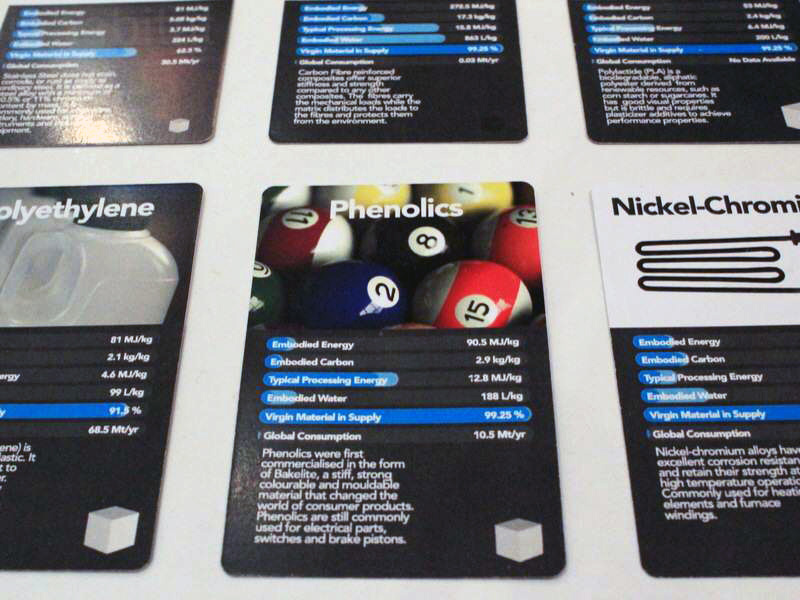
 Richard Gilbert's Energy TrumpsRichard Gilbert's Energy Trumps are a neat tool to incorporate into the design process - they provide a quick reference and comparison for the energy considerations of various materials.10
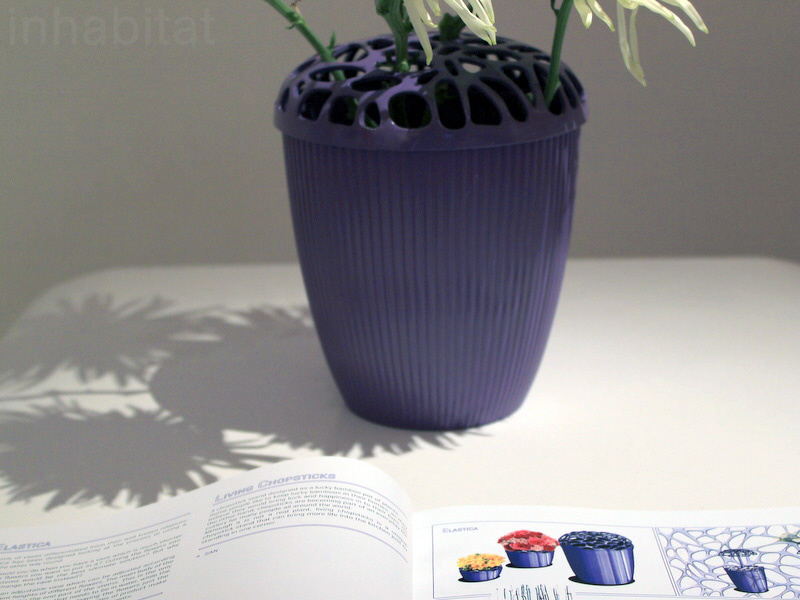
 Marjan Angoshtari's ElasticaMarjan Angoshtari's Elastica is a family of vases that relies on altering the vase rather than the flowers to accommodate different stem lengths and arrangements. The body holds the water and the mesh top holds the stems in place.11
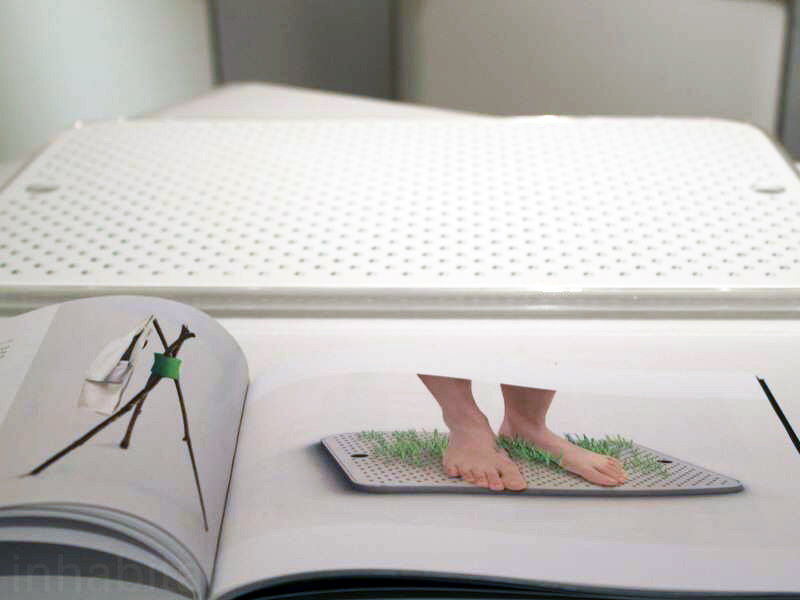
 Yan Lu's Nature StepYan Lu's Nature Step is a bathroom mat containing soil and grass seeds. The idea is that after taking a shower the water which drips off a person will water the seeds and, in turn, provide a contact point with nature for that person.12
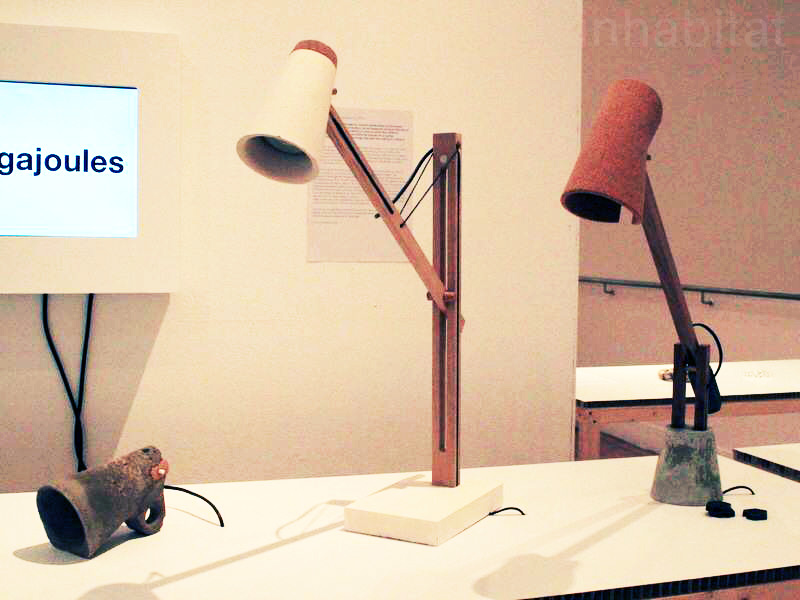
 Richard Gilbert's Megajoule ChallengeRichard Gilbert's Megajoule Challenge involved attempting to redesign an Anglepoise lamp (which usually costs 142 megajoules to produce) with a cost limit of 1, 10 and 20 megajoules. The point was to see how much flexibility, function and appearance had to be sacrificed at each cost point.13
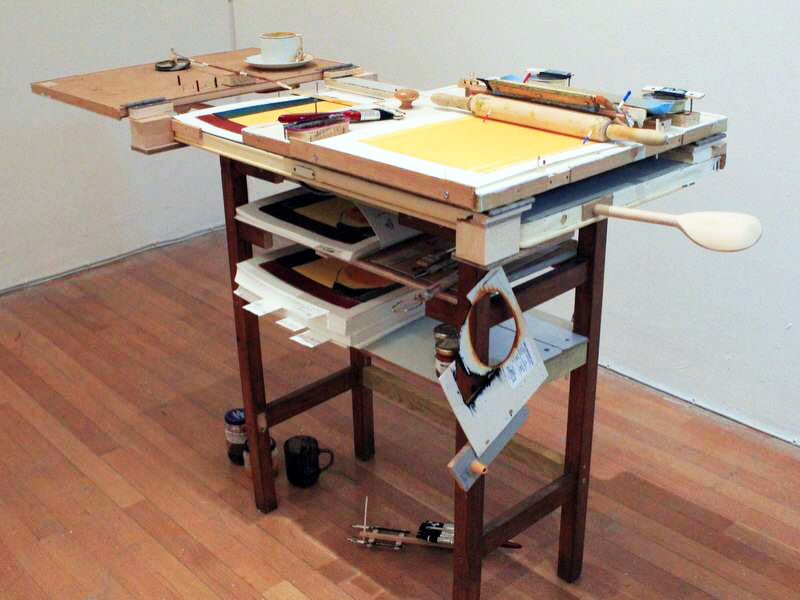
 Helen Murgatroyd's Fruit Bowl Assembly LineHelen Murgatroyd's Fruit Bowl Assembly Line creates an art production line from domestic objects. The aim is that each usage will result in a slightly different copy of an original still life.14


