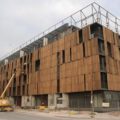
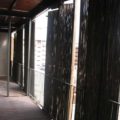
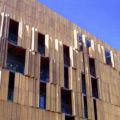
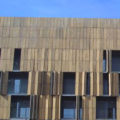
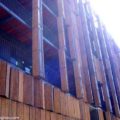
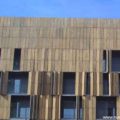
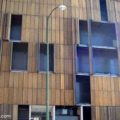
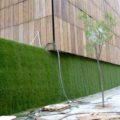
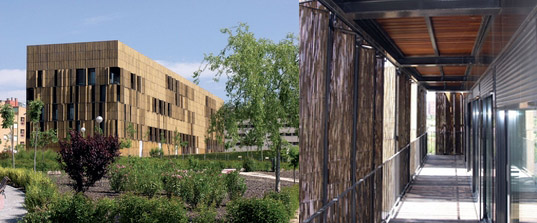
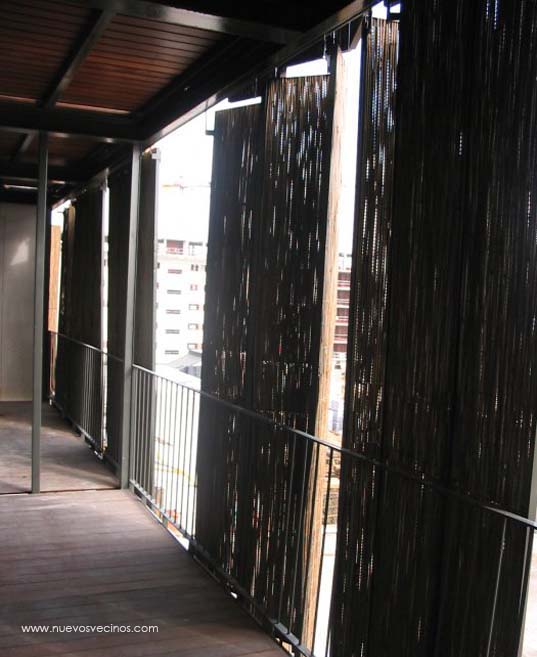
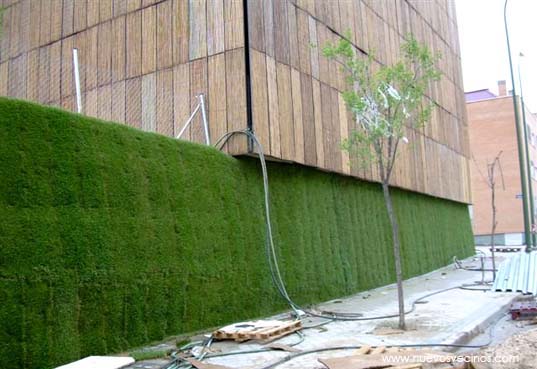
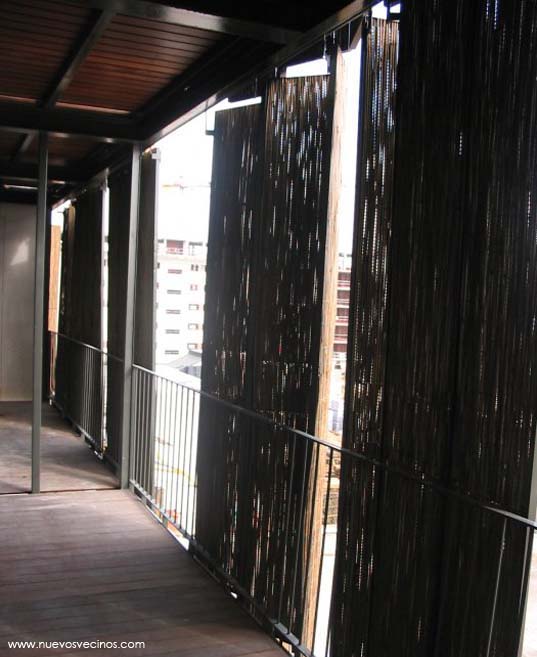
Faced with a shortage of public housing, the City of Madrid commissioned Foreign Office Architects to create a sustainable multi-unit residential alternative for its new public housing development at Carabanchel. Simply known as Carabanchel 16, this building shows how you can is a simple housing design transformed into a beautiful canvas of light and shadow using the simplest tool in an architect’s arsenal: shading devices.
Related Posts
-
Henning Larsen based their design on Johan Caspar von Cicignon’s masterplan for Trondheim and scaled the office building to match the surrounding city and historical
-
The design for Malmo’s New Fair and Exhibition Center was recently decided upon in a juried competition, and the winner is Erik Giudice Architects for
-
Housing+ was designed by C.F.Møller in collaboration with Moe & Brødsgaard, Cenergia, Phillips, Schüco, Erik Juul and Vogt landscape. The zero energy development includes 60
17 Responses to “SUSTAINABLE PUBLIC HOUSING by Foreign Office Architects”
-
Featured Author
-
Read Inhabitat
-
Search Categories
-
Recent Posts
-
Recent Comments
-
Browse by Keyword
follow inhabitat on:
popular today
all time
most commented
more popular stories >
© Inhabitat.com 2012 | About Inhabitat | Contact Us | Advertising with Inhabitat | Terms Of Use | Privacy Policy | Inhabitat, LLC


This is beautiful, although almost a direct (but wooden) copy of Herzog and De Meuron’s housing at Rue des Suisses in Paris. In fact I used a similar idea about a year ago for a design project, it creates a beautiful and dynamic facade really easily. Plus it’s environmentally responsive whilst keeping control in the occupants’ hands…
It may be groovy, but it’s still public housing and very institutional looking. If it was an office block I’d be more impressed.
[...] Read the full post at Inhabitat. Faced with a shortage of public housing, the City of Madrid commissioned Foreign Office Architects to create a sustainable multi-unit residential alternative for its new public housing development at Carabanchel. Simply known as Carabanchel 16, this building shows how you can is a simple housing design transformed into a beautiful canvas of light and shadow using the simplest tool in an architect’s arsenal: shading devices. • • • [...]
what looks like housing and what looks like institutional? i think it is all relative and this is a new idea for a problem that is not addressed….
just because it does not look like your idea of “house” does not mean it does not feel like “home”
I agree with everyone’s comments but I see a big problem here. In less than a month some of those moveable shades will be broken or removed or just not functioning, more over time. This is an unfortunate aspect of public and subsidized housing, nothing of a remotely delicate nature or of moving parts lasts. The residents typically have little sense of ownership and take out their frustrations on where they’ve been given to live. This, no matter how good the living condition is.
[...] Inhabitat » SUSTAINABLE PUBLIC HOUSING by Foreign Office Architects [...]
[...] clipped from http://www.inhabitat.com [...]
[...] G by Foreign Office Architects [...]
this idea is quite ols.
check out this web site: http://www.baumschlager-eberle.com/
project is at least 15 yrs. old.
of course. this is all very much trad japanese architecture withits use of shoji and fusuma partitions….
yeah ann you are so right… so let us never try! better yet lets take away from those that need it.
i think you have never worked with those in public housing; in fact they do the exact opposite of what you “speculate” they would do.
Jared, I think you’re being too harsh with Ann. She makes a very valid point. I’m an architect who has worked on affordable housing for years (it’s just about all my firm does) and I have found that durability is absolutely critical. It’s a fair generalization to make that affordable/subsidized/supportive housing projects take a tremendous beating. I don’t know anything specific about the population living in this building, or the funding available for construction and maintenance, but I wouldn’t even consider trying something like this on one of my projects. The shading system would likely be broken, and the available maintenance funds would never cover its repair – and unrepaired damage seems to only promote more abuse. I don’t even put exposed downspouts on some of my projects, because they’ve been quickly flattened by kids with sticks and baseball bats. It’s a very unfortunate reality.
Furthermore, I don’t think Ann was talking about taking anything away from anyone: I think she was talking about providing a sensible, durable building that will continue to look good and function well for years. That’s nothing to criticize – it’s why we do the work we do.
As an aside, your previous point about it looking like “home” without looking like a “house” was right on the money. Nicely said. I’d be happy to live in such a gorgeous building.
I agree with Ann, to some degree. Great concept with the right intension in mind, but think 10, or even 15 years down the road when the shades start to break, fade, when the wood needs to be treated again (think of moisture), whos funding? I do believe that something timeless, as affordable housing will always be needed, should be well thought out….choose materials and details to sustain. Perhaps this building will surprise us, becoming better with time.
It’s an interesting project, though it will be interesting to see how it ages and weathers in the hot sun of Spain. Is that green wall covered in grass sod? Is that going to have to be watered? If so I wish FOA put a bit more thought into that. It will require a lot of maintenace and watering, especially for a place that is very dry, has a water shortage and quite high water prices. It could have easily been done using native plantings or another material. Nevertheless, I’ll definitely have to go take a look next time I am in Madrid.
[...] Housing Project: Madrid Carabanchel 16 is a public housing complex commissioned by the city of Madrid to realize an efficient and [...]
este edificio es un FRACASO, ya tenemos los dichosos babum podridos y funcionan fatal, parece que vivimos en una CAJA DE CERILLAS. cualquier dia prendemos.
Estaba pensando exactamente lo mismo. Gran Idea pero costosa en el largo plazo. Bambu expuesto al sol 24/7 necesita mantenimiento constante y cuando hablamos de Public housing no necesariamente hablamos de high en upkeep. en cuanto al Disenho formal del edificio, pobre para mi gusto pero arquitectos tendemos a ser criticos de las obras ajenas y muy rara vez diremos que obra ajena en buena. Arquitectura para mi tiene mas connotacion funcional y si hablamos de disenho Verde porque no estamos usando las orientaciones en nuestra ventaja. Todo el edificio parece bloqiueado al sol Norte sur etc. Hmmm.. to many questions about the building design.
Great Idea though.
can anyone tell me who was the facade consultant for the rue des suisses, by herzog????