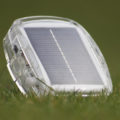
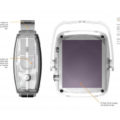
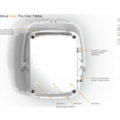
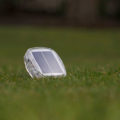
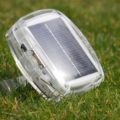
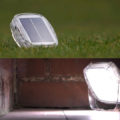
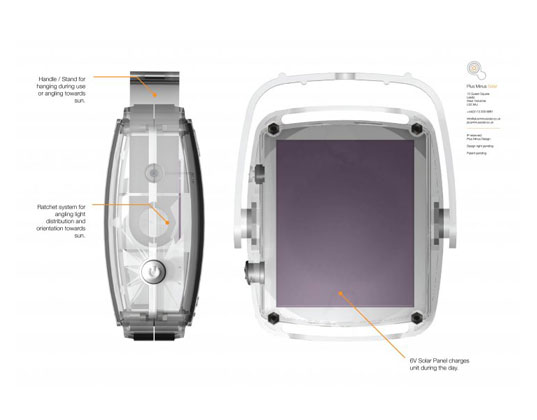
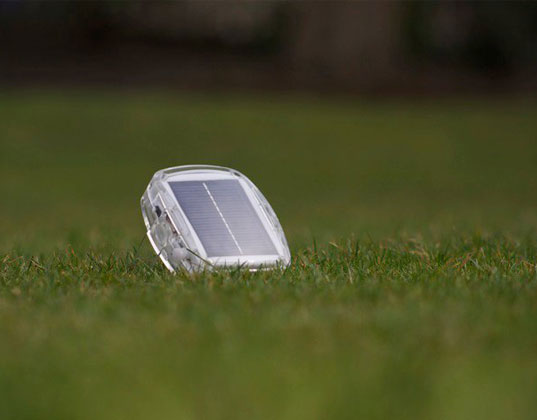
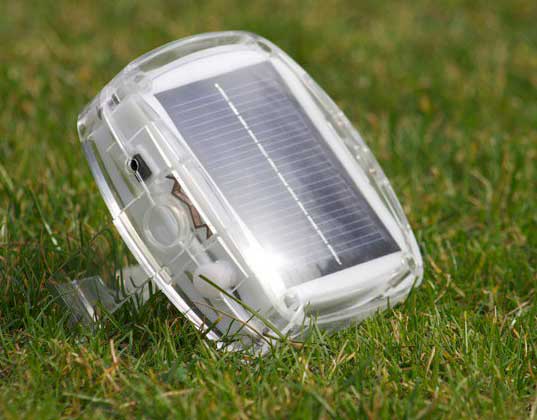
In the poorest regions of the world, exposure to kerosene kills one person every 20 seconds. That’s why we’re really impressed with the folks over at Plus Minus Solar who’ve designed their Solar Pebble to replace kerosene lamps which are widely used in rural Africa. Kerosene is expensive and highly toxic and eliminating the use of it is a huge mission for humanitarian designers. This little solar wonder is a great alternative. Its small, portable, inexpensive and can provide light as well as charge small electronic devices.
Tiny Solar Pebble Can Replace Kerosene Lamps in Rural Africa
by Brit Liggett, 04/05/10
filed under: Air quality, global development, green gadgets, Green Lighting, humanitarian design, Solar Power
Related Posts
-
1.6 billion people in the world still use kerosene lamps for light. Not only are they non-renewable and expensive — they can consume up
-
As Mathieu Young was traveling around Cambodia he met two employees of KamWorks by accident outside a guesthouse one night, who introduced them to their work
-
Swiss not-for-profit Solafrica has provided a portable solar power station that runs a large donated TV where residents of Kibera, Africa’s largest slum, can gather
6 Responses to “Tiny Solar Pebble Can Replace Kerosene Lamps in Rural Africa”
-
Featured Author
-
Read Inhabitat
-
Search Categories
-
Recent Posts
-
Recent Comments
-
Browse by Keyword
follow inhabitat on:
popular today
all time
most commented
more popular stories >
© Inhabitat.com 2012 | About Inhabitat | Contact Us | Advertising with Inhabitat | Terms Of Use | Privacy Policy | Inhabitat, LLC


Great story on the Solar Pebble Brit. We also got a chance to chat with the designers – http://www.earthtechling.com/2010/04/shining-light-on-the-solar-pebble-chatting-with-designers-plus-minus-design/ – and were quite impressed by what they want to do with this.
Nino
EarthTechling
Left a message on their wall that was removed after a few seconds. Obviously their marketing department doesn’t like to hear any constructive criticism. The unit is not poor friendly. The way it is designed now, it will be useless in a little over a year, after the original battery dies. Then be tossed into the garbage with all the other poorly designed products. The case is held together with small screws. Do poor Africans have jewelers screwdrivers? Also, What Type of battery(s) does it use. A better Design would have been a round case, with a screw off back, and use rechargeable AA batteries. (Much cheaper to replace a few batteries than a whole new unit) If I were poor, I wouldn’t buy it without these 2 features. Another case of marketing hype over reality. The Chinese will have a better product out in a few weeks, and this company will fade into the sunset fast. Neither poor or environmentally friendly. No Stars deserved
streamer – a little unfair I think – your comments were replied to and quite comprehensively addressed your concerns I think – and you can still see the reply on their Wall – plus minus solar.
@streamer I don’t see your post at FB and a response moving on Who’s to say these units aren’t being manufactured in China now? I see nothing at the product’s web page that mentions place of manufacture. With the savings from not buying fuel, purchasing a small screwdriver may not be a hardship.
[...] a million people — and no electricity. Kibera residents use dangerous and heavily-polluting kerosene lamps to see at night, and despite their fervor for soccer, watching the World Cup has been entirely out [...]
@steamer – Bravo! you have a rare keen eye for design at the base of the economic pyramid. I am so frustrated with the extraordinary amount of positive media attention solar rubbish “designed for the poor” receives in the West. Thinking in particular of Nokero as well…