


Start Slideshow


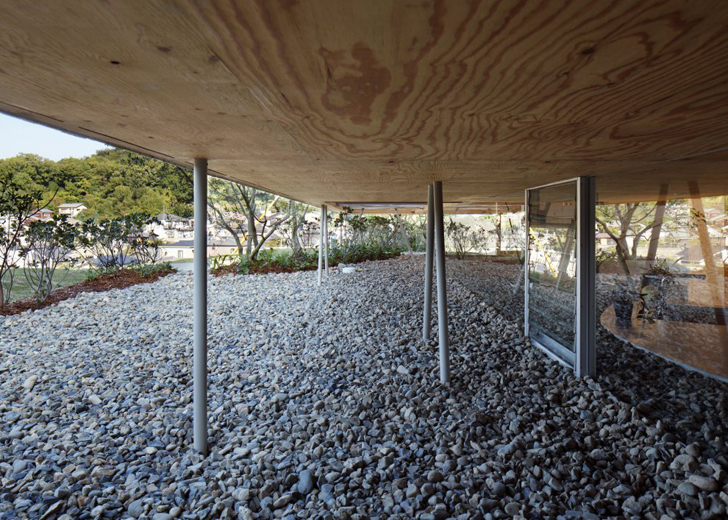
 Pit House UID ArchitectsAppearing to float above the landscape of Okayama, Japan, the Pit House was actually <a href="http://inhabitat.com/nyc/crazy-subterranean-portal-under-central-park-records-nycs-biggest-historical-moments/excavating-wilderness-jeff-kamuda-2/?extend=1" target="_blank">built by excavating</a> six spaces of earth. Accommodating the clients’ desire to create a home with a deep connection to the earth, <a href="http://www.maeda-inc.jp/" target="_blank">UID Architects</a> organized the entire house around a circular living room, creating several interior garden areas that serve as an extension of the landscape.1
 Pit House UID ArchitectsThe cedar box encases the house and hovers above the sunken ground floor.2
 Pit House UID ArchitectsA concrete cylinder situated in the central area of the house acts as both visually and structurally dominant element.3
 Pit House UID ArchitectsThe cylinder connects six types of floor levels. A staircase spirals around it, enclosing a circular bathroom and a storage closet.4
 Pit House UID ArchitectsThe main idea of the project was to make the transition between the exterior and interior as seamless as possible.5
 Pit House UID Architects“The concept is inevitably drawn from the request of the clients, and the context of the site. It becomes a subterranean room with little influence of the open air, and a relationship with the external surface of the earth”, state the architects.6
 Pit House UID ArchitectsThe space seems to flow and gradually develop itself into different areas of the house.7
 Pit House UID ArchitectsMultiple branch-like columns support the cedar floating box.8


