


Earth Day is approaching, and to celebrate the beauty and bounty of Mother Earth, we’ve rounded up some of our favorite jaw-dropping aerial images by photographer Yann Arthus-Bertrand. Captured all across the globe, Arthus-Bertrand’s amazing photographs remind us that Earth Day shouldn’t be honored just one day a year; if we want to preserve these beautiful landscapes, we need to protect our planet with top-down and grassroots efforts every single day. Click through to see 14 amazing aerial photographs that are sure to leave you spellbound.






©Yann Arthus-Bertrand/Altitude
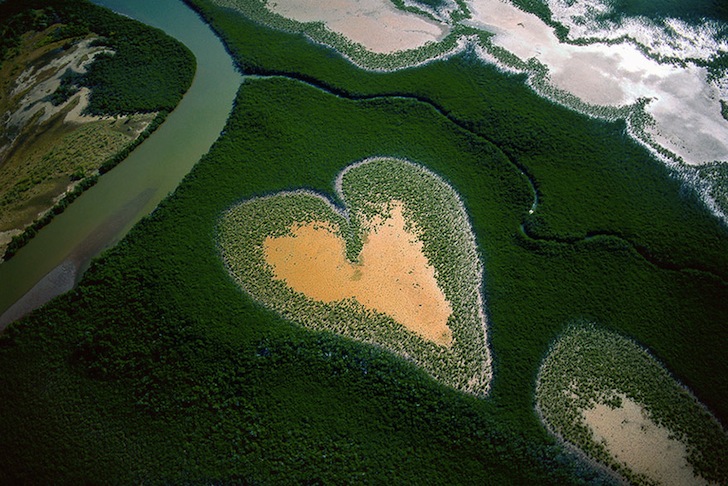
Heart in Voh in New Caledonia
“Heart in Voh” is a heart-shaped mangrove swamp in New Caledonia. Located in tropical coastal regions, these mangrove swamps contain rich habitat and help protect the land from storm surges and soil erosion. Climate change and industrialization, however, have contributed to widespread destruction of mangrove swamps.

©Yann Arthus-Bertrand/Altitude
Fields of Tulips near Amsterdam, Netherlands
The Netherlands has a long history of cultivating and developing different varieties of tulips. Although these colorful rows of flowering bulbs are a beautiful sight, the Dutch were also notorious for their use of pesticides for bulb protection. Fortunately, public and private regulations have been passed recently to enforce more environmentally friendly practices.
©Yann Arthus-Bertrand/Altitude
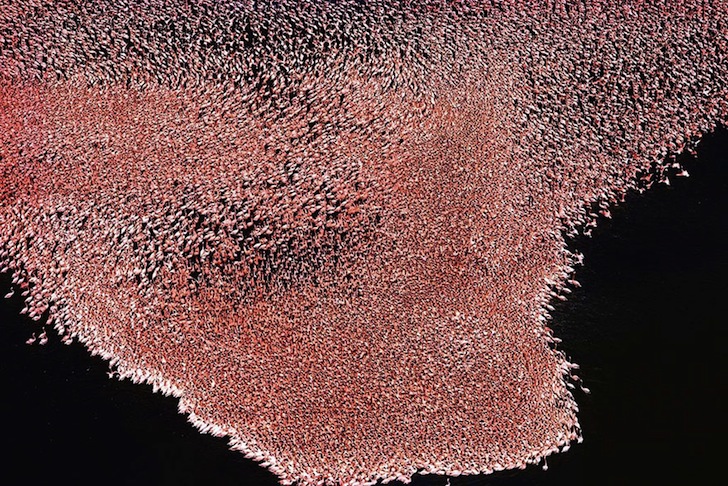
Flamingos on Lake Nakuru, Kenya
If you look closely enough, you’ll see that this giant pink cloud is actually made of tiny, individual flamingos wading in the inky waters of Kenya’s in Lake Nakuru. For years, deforestation and pollution inflows disrupted the ecosystem and led to massive flamingo deaths. In 1990, the Ramsar Convention designated Lake Nakuru as a protected site to put a stop to the environmental destruction.
©Yann Arthus-Bertrand/Altitude
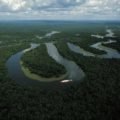
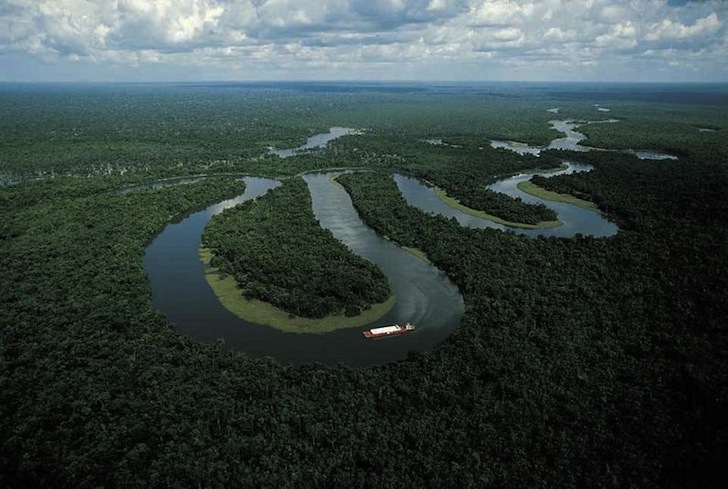
Meanders in the Amazon River near Manaus, Brazil
The mighty Amazon River snakes across Brazil, Colombia, and Peru, and boasts the largest drainage basin in the world. Home to over 3,000 known species of fish (with more constantly being discovered), this river is famous for its incredibly rich ecosystem. The deforestation of the Amazon Rainforest, however, is destroying the region’s biodiversity and causing major flooding.

©Yann Arthus-Bertrand/Altitude
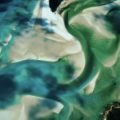
Sandbanks on the coast of Whitsunday Island, Queensland, Australia
The white and windswept sands of Whitsunday Island are located close to the Great Barrier Reef in Queensland, Australia. With its beautiful beaches and warm blue waters, these coastlines are one of the most popular tourist destinations down under, but land-based pollution, invasive species, and climate change are threatening these once pristine landscapes.
©Yann Arthus-Bertrand/Altitude
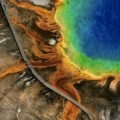
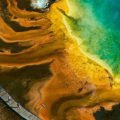
Grand Prismatic Spring, Yellowstone National Park in Wyoming, U.S.
The multicolored Grand Prismatic Spring is the largest thermal basin in Yellowstone National Park; the country’s first and oldest national park. Its vivid rainbow colors result from pigmented bacteria that live in the mineral-rich waters. The park is one of the most-visited natural sites in the world.
©Yann Arthus-Bertrand/Altitude
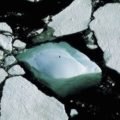
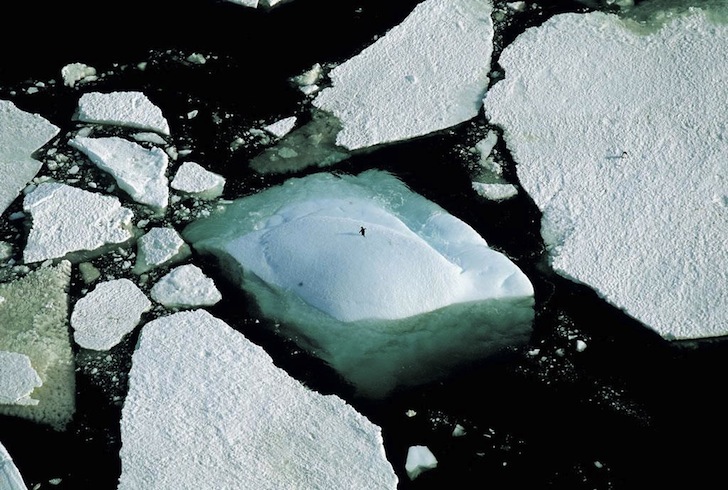
Icebergs and Adélie penguins, Adélie Land, Antarctica
Yann Arthus-Bertrand captured a shot of an Adélie penguin (there’s a second penguin too, see if you can spot it!) balancing atop a piece of floating ice in the Antarctic. Scientists warn that a warming planet could mean that the sixth continent’s ice mass may be melting at an accelerated rate.
©Yann Arthus-Bertrand/Altitude
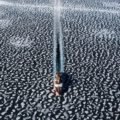
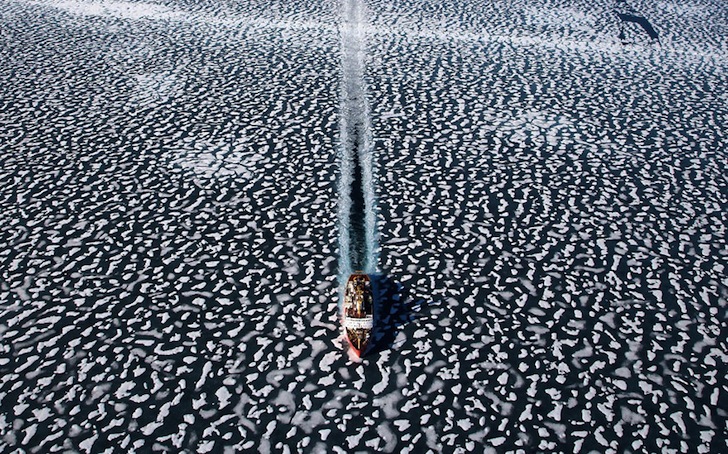
Louis-Saint-Laurent icebreaker in Resolute Bay, Nunavut Territory, Canada
A lone icebreaker ship cuts a straight path through the ice floe to help other marine vessels navigate the Nunavut Territory, Canada. Global warming and sea ice melt may drive these massive ships into obsolescence.

©Yann Arthus-Bertrand/Altitude
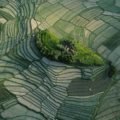
Islet in the terraced rice fields of Bali, Indonesia
The ancient planting and irrigation system of rice field terraces divides the Balinese landscape into layered rice fields. Advances in agricultural practices and use of fertilizers have doubled and tripled annual rice harvests to make Indonesia the third-leading producer of rice in the world.
©Yann Arthus-Bertrand/Altitude
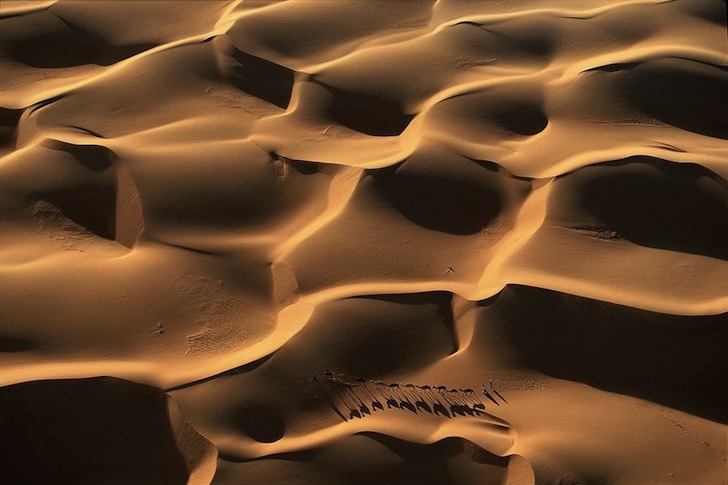
Dromedary caravan in the dunes, near Nouakchott, Mauritania
From up above, the unforgiving Sahara loses its harsh edge, and appears as a calm, caramel-colored landscape. Sprawled across eleven countries, the Sahara is the largest sand desert in the world and is growing ever larger due to desertification caused by overgrazing and wood gathering.
©Yann Arthus-Bertrand/Altitude
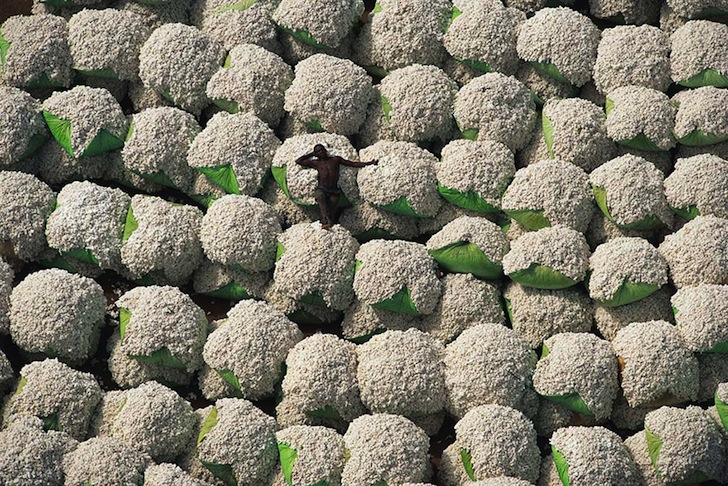
Cotton bales, Thonakaha, Korhogo region, Ivory Coast
Cotton is one of the leading export commodities in the Ivory Coast. Although cotton only grows on 2.4% of the word’s arable land, the crop accounts for nearly $2.6 billion of chemical pesticide use every year.

©Yann Arthus-Bertrand/Altitude
Sanlúcar la Mayor solar thermoelectric power station in Spain
The sun-soaked plains near Seville, Spain are home to several solar thermoelectric power stations. This image shows one such power station with its enormous swiveling mirrors. The high temperatures trigger electricity-generating turbines and alternators.
©Yann Arthus-Bertrand/Altitude
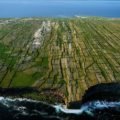
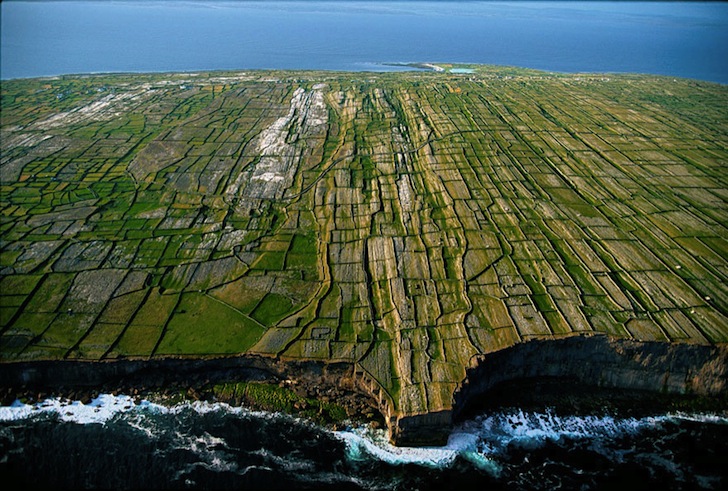
Inishmore cliffs, Aran Islands, County Galway, Ireland
The Arah Islands are a cluster of three islands located on the west coast of Ireland. Inishmore, the largest island, was once barren and rocky ground until locals fertilized the soil with a mix of sand and algae.

©Yann Arthus-Bertrand/Altitude
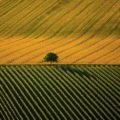
Agricultural landscape near Cognac, Charente, France
The Charente vineyard is a large wine-producing region in France that also harvests cereal crops. Environmental concerns have led producers to turn towards more sustainable methods to promote a more harmonious relationship between man and nature.
+ Yann Arthus-Bertrand


