


Start Slideshow


 South African FIFA venuesAs nations around the globe gear up for the kickoff of the <a href="http://www.fifa.com/index.html">World Cup</a> this Friday all eyes are set on its host country, South Africa. In preparation for the world’s largest sporting event the country has unveiled a stunning set of <a href="http://www.inhabitat.com/2010/06/02/stunning-eco-stadium-scores-green-goal-for-2010-world-cup/">green stadiums</a> that speak to South Africa's history and culture, which was reborn after <a href="http://www.africanaencyclopedia.com/apartheid/apartheid.html">apartheid</a> to lead the African continent into the 21st century. A total of ten stadiums all across the country will host the games, and a number of them feature cutting-edge sustainable building strategies - read on for a look at the greenest stadiums in the 2010 World Cup!1
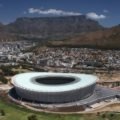 Green Point Stadium- Cape TownAt number five is the elegant <a href="http://www.fifa.com/worldcup/destination/stadiums/stadium=5011924/index.html">Green Point Stadium</a>. Since it is situated at the foot of Signal Hill between downtown Cape Town and the Sea Point neighborhood, the high-profile location demanded a very sensitive aesthetic design. The skin is a translucent silvery-white membrane that takes on the color of its surroundings while producing a soft glow at night. A truss and cable system supports a semitransparent roof that lets light in but limits solar heat. The stadium has capacity for 68,000 fans, and its design was specifically developed to reduce the venue's overall profile.2
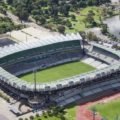 Free State Stadium- Mangaung, BloemfonteinNumber four is the <a href="http://www.fifa.com/worldcup/destination/stadiums/stadium=5002942/index.html">Free State Stadium</a> in the city of Bloemfontein, right in the heart of South Africa. It was originally completed in 1952, refurbished in 1995, and was retrofitted again last year for the FIFA Confederations Cup. A great example of green renovation, the stadium features an increased capacity for 45,000 people and is now a major center for multiple sporting events and home to what has been called South Africa’s most fanatical sport fans base.3
 Durban Stadium- DurbanNumber three is the new <a href="http://www.mosesmabhidastadium.co.za/home/index.php" target="_blank">Moses Mabhid Stadium</a> in the sea side city of Durban. The architects took great care to lower the structure's energy profile by using natural cooling techniques, great protected daylighting , and rainwater catchment. This 70,000 seat facility was designed with the future in mind for ongoing sporting events, concerts and as a seed for a future Olympics bid. You can read more about this stadium's wealth of green building strategies in <a href="http://inhabitat.com/2010/06/02/stunning-eco-stadium-scores-green-goal-for-2010-world-cup/">our recent post</a>.4
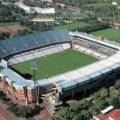 Loftus Versfeld Stadium- Tshwane,PretoriaNext up is the humble <a href="http://www.fifa.com/worldcup/destination/stadiums/stadium=5007765/index.html">Loftus Versfeld Stadium</a>, situated in Tshwane/ Pretoria. Built in 1928, it is an impressive and timeless building that puts to shame the “demolish and replace” culture that has dominated stadium development. Steady upgrades over the years have left a classic building that still has the amenities to seat 50,000 soccer fans.5
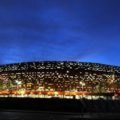 Soccer City- JohannesburgNumber one is an instant classic – the <a href="http://www.fifa.com/worldcup/destination/stadiums/stadium=5007759/index.html">Soccer City Complex</a> in Johannesburg designed by <a href="http://www.populous.com/">Populous</a>. Home to the World Cup 2010 finals, this world-class facility is actually an extraordinary remodel <a href="http://inhabitat.com/?attachment_id=124934">(click to the next slide to learn more)</a>. The renovated venue is based on the iconic African pot known as the <a href="http://en.wikipedia.org/wiki/Calabash">calabash</a>. The stadium achieves a transformative effect on the landscape through its form, color, and light. At day its earthen patterned color evokes the copper-rich land which has supported the local economy for generations. A night transparent panels in the façade create a unique and memorizing pattern. The façade’s transparent roof streams daylight into the concourse. Capacity 90,0006
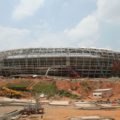 Soccer City renovationThe Soccer City stadium is a major retrofit of an older facility built in 1985 that held the first mass rally after <a href="http://en.wikipedia.org/wiki/Nelson_Mandela">Nelson Mandela’s</a> release. The original seating has been largely retained, but substantial faculty and grounds improvements were incorporated, fusing the old and new and setting a standard for existing infrastructure enhancements. Despite the constantly shifting nature of our built environment, Soccer City's concept of renewal and sense of place is an antidote to ubiquitous scrape-and-build stadiums that dominate so many of the world's cities.7
