


Start Slideshow




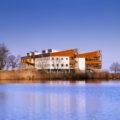
 CBF Merrill Environmental CenterThe <a href="http://www.cbf.org/Page.aspx?pid=389" target="_blank">Chesapeake Bay Foundation's Headquarters</a> located outside of Annapolis, MD is considered by many to be one of the greenest buildings ever built. Completed back in 2000, the Merrill Environmental Center was the <a href="http://leedcasestudies.usgbc.org/overview.cfm?ProjectID=69" target="_blank">first building to achieve LEED Platinum</a> under USGBC's version 1.0 rating system. Boasting heaps of <a href="../sustainable-building" target="_blank">green building strategies</a> and eco-friendly materials, the building backs up its eco credentials by completing building commissioning and building performance studies to ensure it is operating according to its design standards. The center uses almost <b>60%</b> less energy and <b>90%</b> less water than a typical office building built around that same time.1
 CBF Merrill Environmental CenterFinished in 2000, the Phillip Merrill Environmental Center serves as the headquarters for the Chesapeake Bay Foundation. It was the first LEED Platinum Building in the world.2
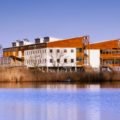 CBF Merrill Environmental CenterThe center is located right on the Cheseapeake Bay. The site was formerly a hotel and was slated for significant development. The CBF designated 26.5 acres of the site for conservation.3
 CBF Merrill Environmental CenterThe building is composted of two shed-roof buildings oriented to the south for solar passive design and views of the Bay.4
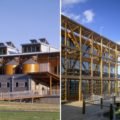
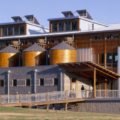 CBF Merrill Environmental CenterRainwater is collected from the roofs and stored in these three cisterns on the northern side of the building. Rainwater collection supplies almost 84% of the building's water needs.5
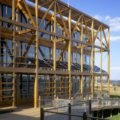 CBF Merrill Environmental CenterOriented to the south, the buildings are warmed by the sun in the winter and shaded with louvers in the summer. Cross ventilation and operable windows help the building cool naturally when conditions are right.6
 CBF Merrill Environmental CenterA 2 kW solar system on the roof supplies <a href="../solar-power/" target="_blank">solar energy</a>, while a geothermal heat pump provides energy to efficiently heat and cool the office. A solar hot water system provides all the domestic hot water needs.7
 CBF Merrill Environmental CenterAs the headquarters are located right on the Bay, protecting the nearby waters was especially important. Stormwater is infiltrated through the permeable gravel parking lots and a bio-retention garden located within the parking lot.8
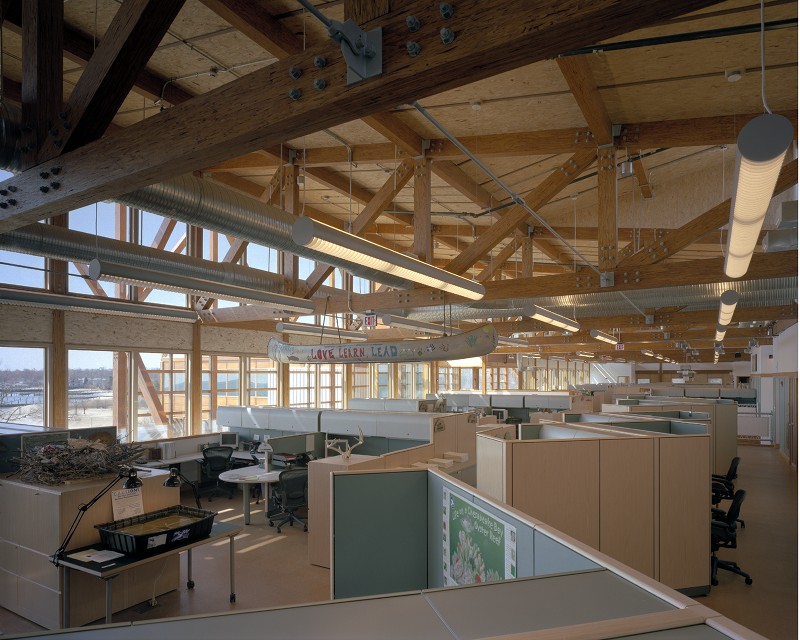
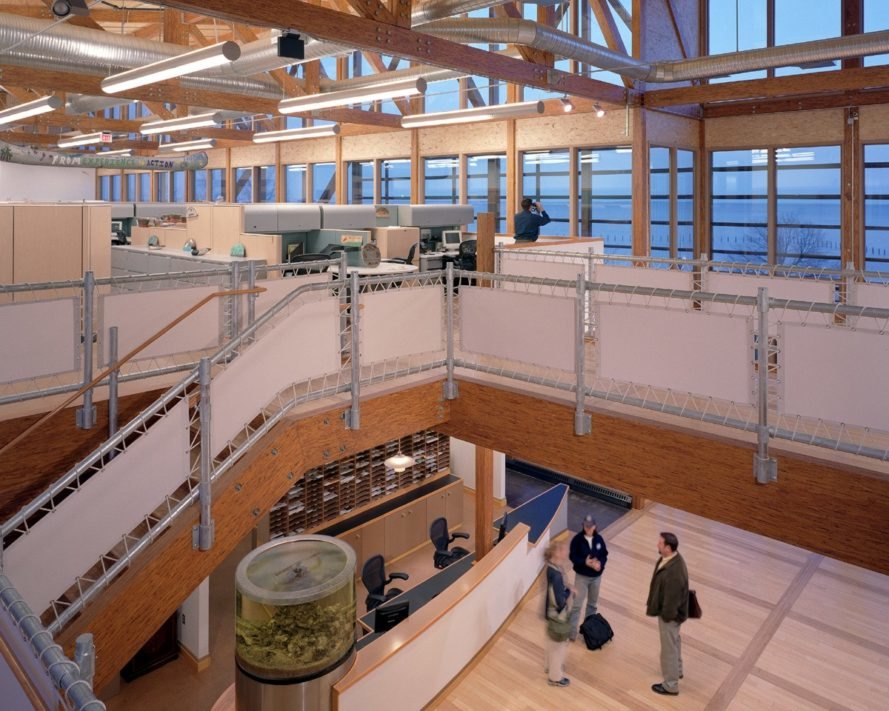
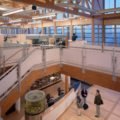
 CBF Merrill Environmental CenterInside, the office is designed to maximum daylighting for each person. There are no closed offices, and even the president of the organization sits out in the room with everyone else. Private conference rooms allow for group meetings.9
 CBF Merrill Environmental CenterIndoor and outdoor temperature and humidity sensors notify occupants when conditions are optimal for natural ventilation. Then employees manually open windows and the mechanical system turns off. Occupancy sensors and daylighting senors also reduce energy usage.10
 CBF Merrill Environmental CenterEco-friendly materials include rapidly renewable interior finishes like bamboo and cork, and salvaged wood from reclaimed pickle barrels was used for all exterior wood sun shades, and a portion of the exterior wood trim.11
 CBF Merrill Environmental CenterEngineered wood from scrap and new-growth wood was used for the post and beam construction. All the wood used in the project was FSC certified.12
 CBF Merrill Environmental CenterWater use is minimized with the help of composting toilets and urinals, which convert waste to fertilizer that is used on site.13
 CBF Merrill Environmental CenterAfter the building was completed in 2000, building commissioning occurred in 2001 to ensure all systems operated according to their design specs. The year after, the building was monitored by NREL to determine how much water and energy was used.14


