


Start Slideshow

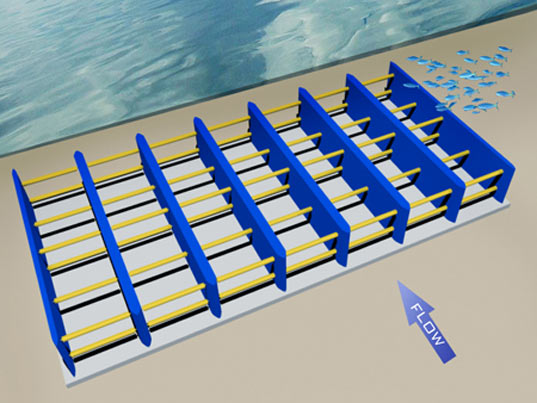


 VIVACE: Slow Water Current Energy Mimics Schools of FishVivace is a new energy technology that gets its name from a phenomenon that engineers have been battling for 25 years. VIV (vortex induced vibrations) destroyed the Narrows Bridge in Washington State in 1940, and the Ferrybridge power station cooling towers in England in 1965. Ironically it is also the same phenomenon that allows schools of fish to swim as fast as they do. Now Dr. Michael M. Bernitsas and researchers at the University of Michigan are turning this 'threat' into a resource. Rather than suppressing VIV, Vivace actually creates and then harvests energy from VIV, and it does it all using slow water currents, a previously untapped source of sustainable energy.1
 VIVACE: Slow Water Current Energy Mimics Schools of FishVivace is a new energy technology that gets its name from a phenomenon that engineers have been battling for 25 years. VIV (vortex induced vibrations) destroyed the Narrows Bridge in Washington State in 1940, and the Ferrybridge power station cooling towers in England in 1965. Ironically it is also the same phenomenon that allows schools of fish to swim as fast as they do. Now Dr. Michael M. Bernitsas and researchers at the University of Michigan are turning this 'threat' into a resource. Rather than suppressing VIV, Vivace actually creates and then harvests energy from VIV, and it does it all using slow water currents, a previously untapped source of sustainable energy.2
 VIVACE: Slow Water Current Energy Mimics Schools of FishVivace is a new energy technology that gets its name from a phenomenon that engineers have been battling for 25 years. VIV (vortex induced vibrations) destroyed the Narrows Bridge in Washington State in 1940, and the Ferrybridge power station cooling towers in England in 1965. Ironically it is also the same phenomenon that allows schools of fish to swim as fast as they do. Now Dr. Michael M. Bernitsas and researchers at the University of Michigan are turning this 'threat' into a resource. Rather than suppressing VIV, Vivace actually creates and then harvests energy from VIV, and it does it all using slow water currents, a previously untapped source of sustainable energy.3
 VIVACE: Slow Water Current Energy Mimics Schools of FishVivace is a new energy technology that gets its name from a phenomenon that engineers have been battling for 25 years. VIV (vortex induced vibrations) destroyed the Narrows Bridge in Washington State in 1940, and the Ferrybridge power station cooling towers in England in 1965. Ironically it is also the same phenomenon that allows schools of fish to swim as fast as they do. Now Dr. Michael M. Bernitsas and researchers at the University of Michigan are turning this 'threat' into a resource. Rather than suppressing VIV, Vivace actually creates and then harvests energy from VIV, and it does it all using slow water currents, a previously untapped source of sustainable energy.4
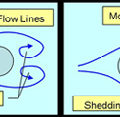 VIVACE: Slow Water Current Energy Mimics Schools of FishVivace is a new energy technology that gets its name from a phenomenon that engineers have been battling for 25 years. VIV (vortex induced vibrations) destroyed the Narrows Bridge in Washington State in 1940, and the Ferrybridge power station cooling towers in England in 1965. Ironically it is also the same phenomenon that allows schools of fish to swim as fast as they do. Now Dr. Michael M. Bernitsas and researchers at the University of Michigan are turning this 'threat' into a resource. Rather than suppressing VIV, Vivace actually creates and then harvests energy from VIV, and it does it all using slow water currents, a previously untapped source of sustainable energy.5
