


Start Slideshow






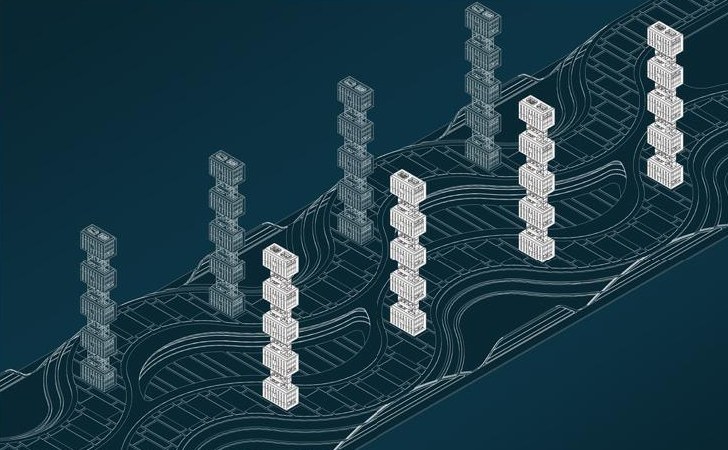
 Vincent Callebaut CoralAs <a href="http://inhabitat.com/port-au-princes-historic-iron-market-restored-to-full-glory/" target="_blank">Haiti marches onward towards reconstruction</a>, <a href="http://inhabitat.com/lilypad-floating-cities-in-the-age-of-global-warming/" target="_blank">Vincent Callebaut</a> continues to pump out amazing concepts for utopian eco villages for Haitians. Inspired by the organic form of coral, Callebaut proposes <a href="http://vincent.callebaut.org/page1-img-coral.html" target="_blank">Coral Reef</a>, a plug-in matrix for 1,000 Haitian families. Built upon seismic piers off the coast of the mainland, the prefabricated, modular units can be fit into a wave-like matrix as space is needed. Each family would have a plot of land to grow their own food, and their passive home would minimize energy usage, while <a href="http://inhabitat.com/category/renewable-energy" target="_blank">renewable energy sources</a> would make the entire project carbon neutral.1
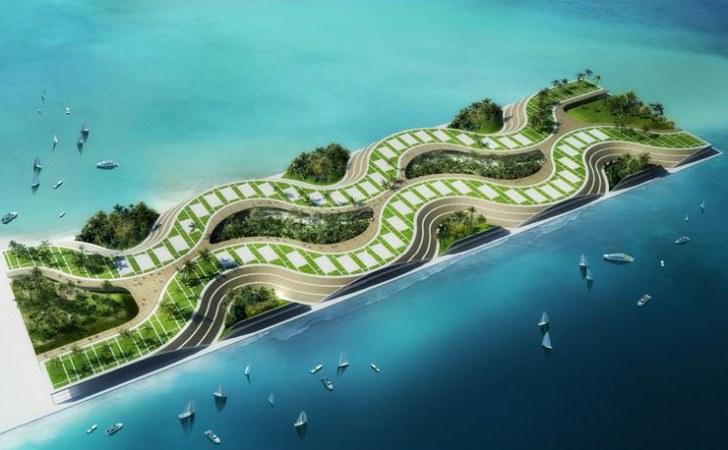
 Vincent Callebaut CoralCallebaut's Coral Reef proposes building an <a href="http://inhabitat.com/harvest-city-floating-islands-to-rebuild-haiti/" target="_blank">artificial pier</a> on seismic piles in the Caribbean Sea.2
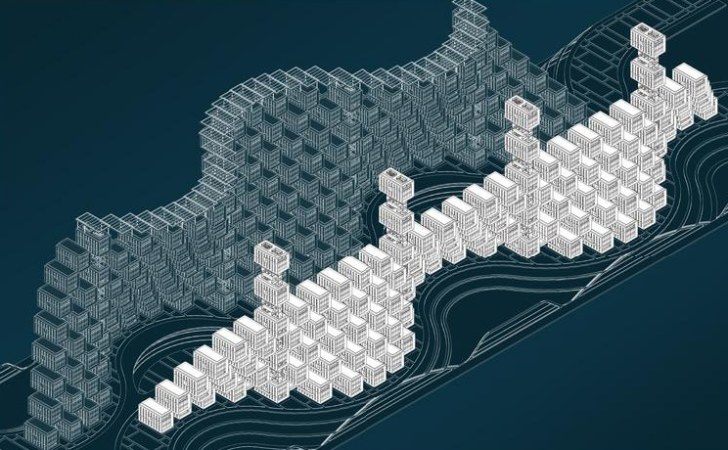
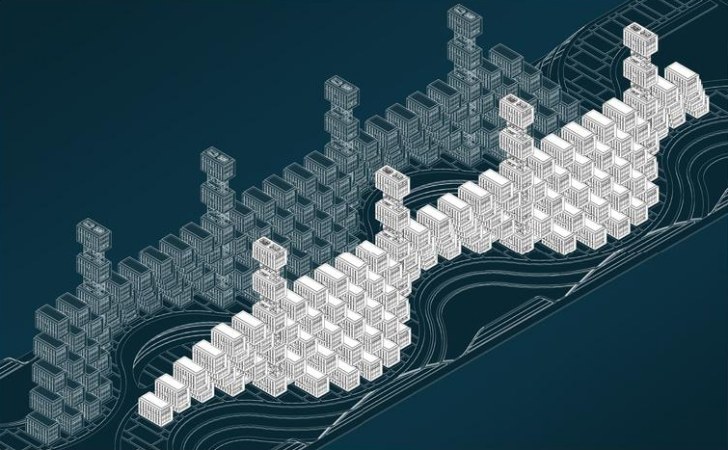
 Vincent Callebaut CoralModular duplexes built according to Passive House standards would be added into the housing matrix as funds and time allow, eventually extending it over the entire pier.3
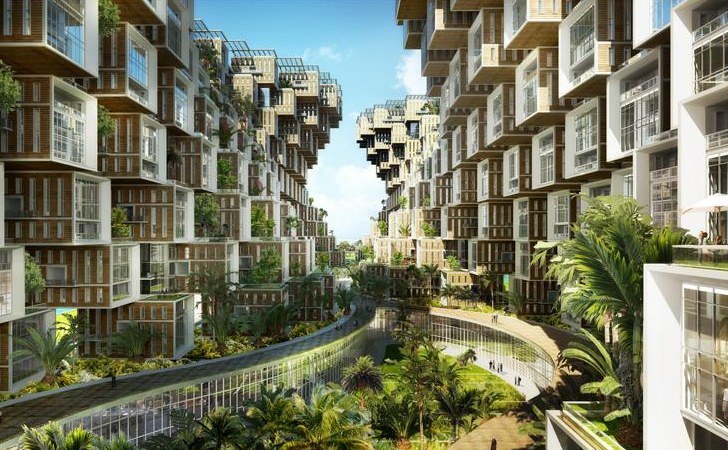
 Vincent Callebaut CoralA canyon flows between two rows of housing that is filled with a tropical ecosystem for local flora and fauna.4
 Vincent Callebaut CoralThe modular units' configuration allows each family to have a plot of land to grow their own food.5
 Vincent Callebaut Coral<a href="http://inhabitat.com/architects-envison-hawaii-sized-island-made-of-recycled-plastic/" target="_blank">Aquaculture farms</a> and greywater recycling plants filter and process the water before sending it into the sea.6
 Vincent Callebaut CoralThe entire complex is carbon neutral and powered via a number of different renewable energy sources.7
 Vincent Callebaut CoralPower would be generated from thermal energy conversion under the pier, marine currents, <a href="http://inhabitat.com/eddy-gt-wind-turbine-is-sleek-silent-and-designed-for-the-city/" target="_blank">vertical axis wind turbines</a>, and solar photovoltaics.8
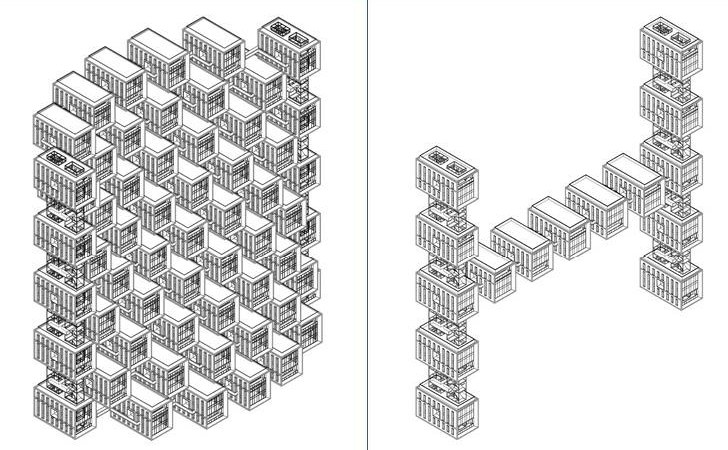
 Vincent Callebaut CoralThe modular project forms two rows of wave-like housing where each pixel or box is a duplex with one family on either side.9
 Vincent Callebaut CoralThis basic module is simply made of two passive houses (with metallic structure and tropical wood facades) interlocked in a duplex around a horizontal circulation linking every unit.10
 Vincent Callebaut CoralThe roof of each module serves as an organic suspended garden enabling each family to cultivate its own food.11
 Vincent Callebaut CoralThe framework of the development is laid out from the beginning, but its design allows it to grow organically over time.12
 Vincent Callebaut CoralModules are prefabricated in a factory and shipped to the site.13
 Vincent Callebaut CoralIn this context of humanitarian crisis, the Coral Reef prototype project is a positive and dynamic solution that fights for the sustainable industrialized and standardized rebuilding of collective social housing of humanitarian and environmental high quality in disaster areas.14


