


Start Slideshow


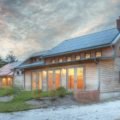 Camden Friends Meeting House (13)Built by <a href="http://www.revisionarch.com/Projects.php?view=a&id=60">Re:Vision Architecture</a> as an addition to a 19th Century Quaker house, this spectacular new design pushes the envelope of sustainability, all without disrupting the history of the place. The LEED Gold<a href="http://inhabitat.com/extraordinary-renovation-of-berlins-neues-museum-wins-2011-mies-van-der-rohe-award/"> fusion</a> of the old and the new has propelled the project into a <em>net-zero energy realm</em>, fit with an efficient shell, passive cooling, natural daylighting and a<a href="http://inhabitat.com/solar-power/"> solar electric </a>array. The project's environmental impact is reduced through a long list of green features that doesn't end at energy performance. The addition also makes use of reclaimed materials, sustainably harvested wood and a rainwater catchment system. The project located in Camden, DE is a complete gesture highlighting the potential of low-impact building, even on sensitive historic sites.1
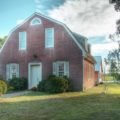 Camden Friends Meeting House (12)The 150 year old Quaker house, now a small museum, needed structural <a href="http://inhabitat.com/renovation/">improvements</a> and a new place for gatherings.2
 Camden Friends Meeting House (2)The design takes advantage of the work by inserting underfloor heating tubing into the old building while it was under renovation.3
 Camden Friends Meeting House (9)New but historically accurate windows also help with efficiency.4
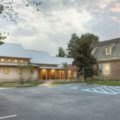 Camden Friends Meeting House (8)The annex, adjacent to the original meeting house, is a high performing building that shares the same heating system powered by a<a href="http://www.greenbuilding.com/knowledge-base/what-are-ground-source-heat-pumps"> ground source heat pump</a>.5
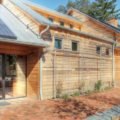 Camden Friends Meeting House (5)The roof is made using<a href="http://inhabitat.com/lessons-in-green-building-from-afghanistan%C2%A0/"> SIP panels</a> with a high R-value and no thermal bridging, while the rest of the walls are filled with soy-based expanding foam.6
 Passive-Cooling-2The new building is naturally cooled by upper awning windows, which automatically open at night to allow cool air to flush the space.7
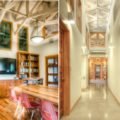 Camden Friends Meeting House (15)The windows also allow ample light into the space, which is supplemented by CFLs and<a href="http://inhabitat.com/philips-new-led-bulbs-light-up-the-night-at-inhabitats-green-lighting-holiday-bash/"> LEDs</a>.8
 Passive-Heating-2The space is solar heated when the sun shines in the winter, but shaded by overhangs in the summer.9
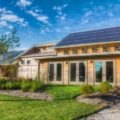 Camden Friends Meeting House (1)Rain water is captured in a 2,000 gallon tank for toilets and other non-potable uses. What cannot be capture is retained on site with <a href="http://en.wikipedia.org/wiki/Bioswale">bioswells</a>.10
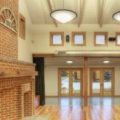 Camden Friends Meeting House (10)The wood floors are reclaimed from a deconstructed building.11
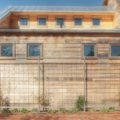 Camden Friends Meeting House (6)The<a href="http://inhabitat.com/geoffrey-lilge-crafts-beautiful-charcuterie-boards-from-fsc-certified-wood/"> FSC</a> cedar siding is locally harvested and soften the new building’s look.12
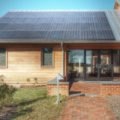 Camden Friends Meeting House (4)The 12.6 Kw <a href="http://inhabitat.com/solar-power/">solar array</a>, while not huge, is more than enough energy for the new building and provides enough to supplement for the historic gathering house making the entire project net-zero energy.13
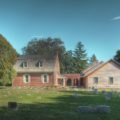 Camden Friends Meeting House (11)The project located in Camden DE, showcases <a href="http://www.revisionarch.com/Projects.php?view=a&id=60">Re:Vision Architecture</a>’s ability to design low impact building, even on historic sites.14


