


Start Slideshow


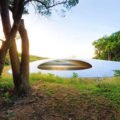 Teshima art museumNot only does the <a href="http://benesse-artsite.jp/en/teshima-artmuseum/index.html">Teshima Art Museum</a>'s form emulate a bead of water—the element is one of the building's primary subject matters. Designed by Pritzker Prize-winning architect <a href="http://www.ryuenishizawa.com/" target="_blank">Ryue Nishizawa</a> and artist <a href="http://www.dnp.co.jp/museum/nmp/nmp_i/articles/naito.html">Rei Naito</a>, the museum is a meditation on nature, space, and the element of water. The design isn't exactly a museum, but a massive 60-meter spanned shelter developed to create a pure experience. The interior is lit by large openings in the roof which illuminate the sole installation; a subtle mix of water and objects. Taken as a whole, the project creates a beautiful installation that requires the full attention of all the senses to fully appreciate.1
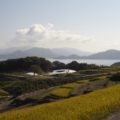 Teshima-Art-Museum- Noboru-Morikawa (2)The <a href="http://inhabitat.com/los-angeles-boasts-worlds-largest-naturally-lit-museum-space/"> museum</a> is a part of the Benesse Art Site program, which gave us the <a href="http://inhabitat.com/reclaimed-factory-makes-fascinating-statement-on-sustainability/">Inujima Art Project</a> as well as several other modern art spaces on the south-eastern Japanese islands.2
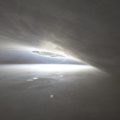 Teshima-Art-Museum- Noboru-Morikawa (3)The project aimed to create more than a building to showcase <a href="http://inhabitat.com/art/">art</a>installations—it aimed to create an <a href="http://inhabitat.com/metropol-parasol-the-worlds-largest-wooden-structure-opens-in-seville/">immersive environment</a> where the building and the art become inseparable.3
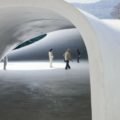 Teshima-Art-Museum- Iwan-Baan (2)<em>Photo © <a href="http://www.iwan.com/photo_index.php?category=photography" target="_blank">Iwan Baan</a></em><br><br>At a mere 25mm thick, the roof has no beams or columns to support it over its 40 by 60 meter span.4
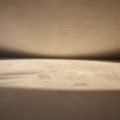 Teshima-Art-Museum- Noboru-Morikawa (5)<em>Photo © <a href="http://www.f64.co.jp/new_work/naitou/photo.html" target="_blank">Npboru Morikawa</a></em>The stark white walls and floor further the dimensional shift, allowing light and sound to take over.5
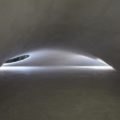 Teshima-Art-Museum- Noboru-Morikawa (4)<em>Photo © <a href="http://www.f64.co.jp/new_work/naitou/photo.html" target="_blank">Npboru Morikawa</a><em><br><br>Like a soap <a href="http://inhabitat.com/eden-project-giant-bubble-biomes-are-worlds-largest-greenhouse/">bubble</a>, the brilliant engineering allows for a self-supporting structure that belies its mass.6
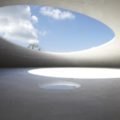 Teshima-Art-Museum- Noboru-Morikawa (9)The seasons obviously have a great influence on the experience: as light changes and water comes and goes, the museum becomes a mirror of the natural elements surrounding it.7
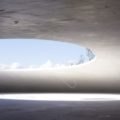 Teshima-Art-Museum- Noboru-Morikawa (1)Photo © <a href="http://www.f64.co.jp/new_work/naitou/photo.html" target="_blank">Npboru Morikawa</a>Two large openings allow the building to breathe and take advantage of <a href="http://inhabitat.com/daylighting/">natural light</a>.8
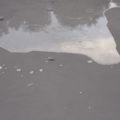 Teshima-Art-Museum- Noboru-Morikawa (7)<em>Photo © <a href="http://www.f64.co.jp/new_work/naitou/photo.html" target="_blank">Npboru Morikawa</a></em>The floor features Rei Naito’s installation <em>Matrix</em>—a play of objects with rainwater and dew collected through the roof.9
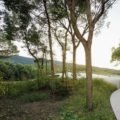 Teshima-Art-Museum- Iwan-Baan (3)<em>Photo © <a href="http://www.iwan.com/photo_index.php?category=photography" target="_blank">Iwan Baan</a></em>The approach to the museum takes a winding path through the hillside, which slowly reveals the unique form. A ticket office is built into the hillside and small shop is housed in another bulbous concrete canopy.10
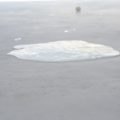 Teshima-Art-Museum- Noboru-Morikawa (8)<em>Photo © <a href="http://www.f64.co.jp/new_work/naitou/photo.html" target="_blank">Npboru Morikawa</a>Rei Naito’s installation <em>Matrix</em>.11
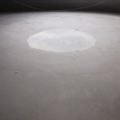 Teshima-Art-Museum- Noboru-Morikawa (6)Photo © <a href="http://www.f64.co.jp/new_work/naitou/photo.html" target="_blank">Npboru Morikawa</a>12
