


Start Slideshow


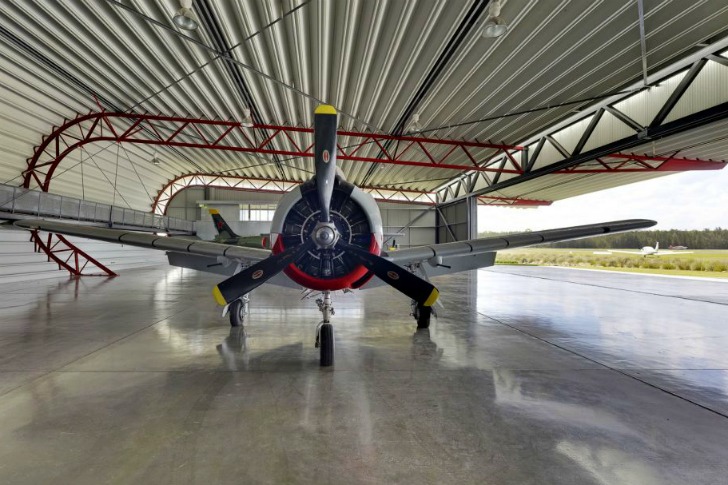


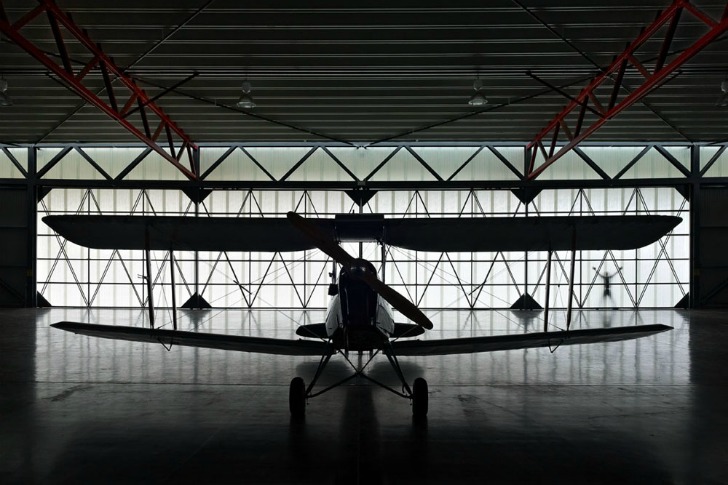
 The Hangar-Peter Stutchbury Architects<a href="http://www.airaction.com.au/hangar.php" target="_blank">The Hangar</a> in Pokolbin, Australia serves as a gallery, public museum and operational facility for a collection of World War Two fighter aircraft. Located on the edge of a country airstrip, the accordion steel building features a striking design and cantilevered roof. Designed by Newport, Australia-based <a href="http://peterstutchbury.com.au/" target="_blank">Peter Stutchbury Architects</a>, the plane hangar's form was derived from the profile of a wing, which gains strength through efficient design. Constructed of steel, the roof is engineered to cantilever out 12 meters beyond the hangar and reduces overall material use to become an economical and environmentally responsible space.1
 The Hangar-Peter Stutchbury ArchitectsLocated an hour north of Sydney in the <a href="http://www.winecountry.com.au/">Hunter Valley wine country region</a>, The Hangar is home to <a href="http://www.airaction.com.au/hangar" target="_blank">Air Action</a>, an aviation museum with a collection of vintage fighter planes to admire and even take rides in.2
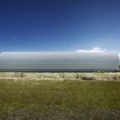 The Hangar-Peter Stutchbury ArchitectsThe 2,000 sq meter facility is primarily and airplane hangar and museum, but also serves as event space for private functions.3
 The Hangar-Peter Stutchbury ArchitectsOriented so the bay doors open up to the north, the hangar takes advantage of passive solar design.4
 The Hangar-Peter Stutchbury ArchitectsUsing the cantilevered roof for shade projection, the sides feature curved windows to pull in daylight from the sides.5
 The Hangar-Peter Stutchbury ArchitectsThe ends of the building also feature administration 'pods' that serve as office space and viewing decks.6
 The Hangar-Peter Stutchbury ArchitectsThe glass pod to the west allows visitors to get a good view of airplanes taking off and landing on the adjacent air strip.7
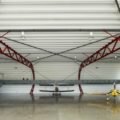 The Hangar-Peter Stutchbury ArchitectsThe building's profile is reminiscent of an airplane wing and is a highly efficient single skinned structure.8
 The Hangar-Peter Stutchbury ArchitectsConstructed from self-supporting <a href="http://www.aramax.com.au/" target="_blank">Aramax</a> deep corrugated steel sheeting, the roof curves from the ground around the back and up and over the top before cantilevering out over the flight deck.9
 The Hangar-Peter Stutchbury ArchitectsOnly four trusses are used to support the roof, which allows for the 12 meter awning and a 30 meter sliding door opening.10
 The Hangar-Peter Stutchbury ArchitectsThis engineered support system allows for a clear and uninterrupted interior space, but also minimizes material use. In fact, the structural system reduced net steel tonnage by 30% compared to other systems to get a similar effect.11


