


Start Slideshow


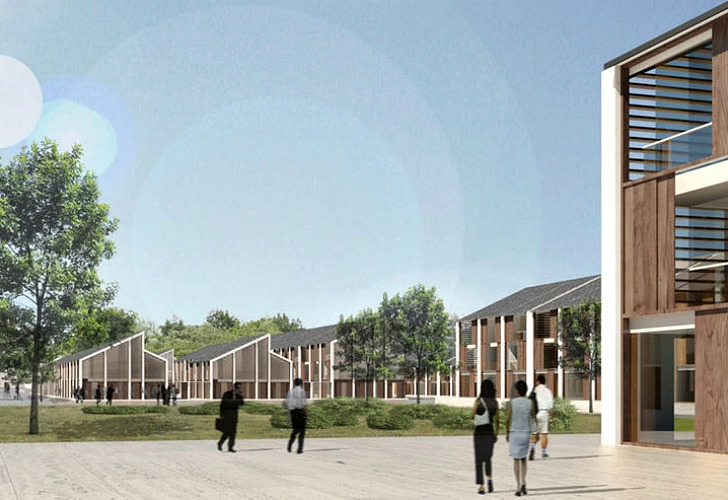


 Qingdao Eco-Park-gmp ArchitektenA German and Chinese partnership dedicated to sustainable building and renewable energy broke ground this week on a new eco-park in Qingdao. Located off the coast of the <a href="http://en.wikipedia.org/wiki/Yellow_Sea">Yellow Sea</a>, the eco-park will be a new city quarter for living and working that will be powered largely by renewable energy. The region is known for a higher than average solar resource and the community will aim to use as much solar energy as possible. Germany-based <a href="http://www.gmp-architekten.com/" target="_blank">gmp Architekten</a> is responsible for the master plan, which is supported by the <a href="http://www.dgnb.de/_en/" target="_blank">German Society for Sustainable Building (DGNB)</a> and <a href="http://www.transsolar.com/" target="_blank">Transsolar Consultants</a>.1
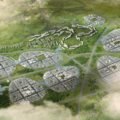 Qingdao Eco-Park-gmp ArchitektenThe new urban quarter will be about 10 sq. km in size - roughly the same as the <a href="http://en.wikipedia.org/wiki/Mitte" target="_blank">Berlin Mitte district</a>.2
 Qingdao Eco-Park-gmp ArchitektenInspired by the surrounding landscape, the park's buildings will mirror the rock formations and green plains. Extending from the mountain ridge in the south and to the bay in the northeast, the site will feature 8 rock-like blocks with soft contours and flowing nature corridors.3
 Qingdao Eco-Park-gmp ArchitektenShort distances between the blocks along with mixed uses and higher density support walkability and energy conservation.4
 Qingdao Eco-Park-gmp ArchitektenA strong focus has been placed on the use of renewable energy as part of the development of the project.5
 Qingdao Eco-Park-gmp ArchitektenThe area is particularly known for its higher than average solar resource, so solar energy will be primarily used along with wind and water power and geothermal energy.6
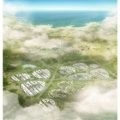 Qingdao Eco-Park-gmp ArchitektenThe foundation stone was laid in a celebration on December 6th by Ernst Burgbacher, Parliamentary State Secretary of the Federal Ministry of Economics and Wang Chao, the Chinese Vice-Minister of Economics. The project is scheduled for completion in 2015.7
