


Start Slideshow


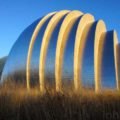 Kauffman Center for the Performing Arts by Moshe Safdie<a href="http://www.msafdie.com/">Moshe Safdie</a>'s stunning <a href="http://www.kauffmancenter.org/">Kauffman Center for the Performing Arts</a> opened in late September 2011 to much acclaim - it's an architectural marvel that consists of two distinct structures formed from multiple concrete and stainless steel bands that rise up from the prairie grass, arching to a height of 65 feet and meeting in a suspended glass ceiling, which slopes down to the south side’s 330-foot-wide glass curtain wall. The interior offers panoramic views of the burgeoning <a href="http://www.kccrossroads.org/">Cross Roads Arts District</a> and beyond. We recently had a chance to tour this remarkable building and bring you a first-hand look inside - read on to learn why the Kauffman Center is not only a stunning work of architecture and engineering, but also an important and vital addition to the Kansas City community as a whole.1
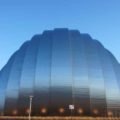 Kauffman Center for the Performing Arts by Moshe Safdie<a href="http://www.thinkkc.com/index.php">The Kansas City Area Development Council</a> recently invited Inhabitat to check out <a href="http://inhabitat.com/kansas-city-design-week-delivers-thought-provoking-events/">Kansas City Design Week 2012</a>, and one of the highlights of our trip was a private tour of Moshe Safdie’s wondrous new <a href="http://www.kauffmancenter.org/">Kauffman Center for the Performing Arts</a>! Public Relations Coordinator (and classically trained opera singer) Kristin Smithson took us on a tour of this striking building.2
 Kauffman Center for the Performing Arts by Moshe SafdieThe building has over 40,000 square feet of glass, most of which is in the great lobby – an expansive portico of glass and steel that bridges the two theaters and shields guests from the elements. Its partial glass envelope allows for an ever-changing display of light and shadow play. Outside, the 27 high-tension steel cables which anchor the stunning glass facade resemble a giant stringed instrument.3
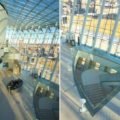 Kauffman Center for the Performing Arts by Moshe SafdieA view of the enclosed glass atrium from a third level lounge area. The buildings partial glass envelope allows for an ever-changing display of light and shadow.4
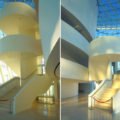 Kauffman Center for the Performing Arts by Moshe SafdieThe theaters' sculptural, white plaster staircases resemble musical note symbols - a reference, perhaps, to the Kauffman Center's great musical performances.5
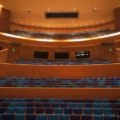 Kauffman Center for the Performing Arts by Moshe SafdieThe Kauffman’s Helzberg Hall is home to the Kansas City Symphony, and hosts orchestral, pop, and jazz performances, as well as lectures and recitals. The 1,600-seat venue is oval in shape, with a vineyard-style seating configuration allowing for the farthest seat to only be about 100 feet from the stage.6
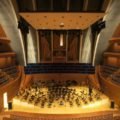 Kauffman Center for the Performing Arts by Moshe SafdieThe stage extends approximately one-third of the distance into the Hall, thus placing 40 percent of the seats alongside or behind the orchestra. This creates an intimate and immersive experience for both artists and audiences and allows a portion of the audience to experience the musician’s perspective during performance.7
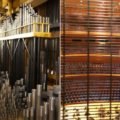 Kauffman Center for the Performing Arts by Moshe SafdieThe pièce de résistance of Helzberg Hall is a <a href="http://www.casavant.ca/">Casavant Frères</a> pipe organ, which is one of the finest concert hall organs in the country. The Quebec-based firm custom designed the mechanical organ in the French romantic tradition, with 79 stops, 102 ranks, and 5,548 pipes.8
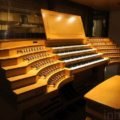 Kauffman Center for the Performing Arts by Moshe SafdiePictured is the Casavant Frères organ bench and console. This past Saturday, the organ was inaugurated by James David Christie in a sold-out organ dedication concert.9
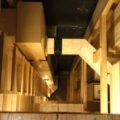 Kauffman Center for the Performing Arts by Moshe SafdieThe very narrow, three story ladder one must climb to gain access to the Casavant Frères pipe organ in Helzberg Hall.10
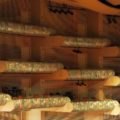 Kauffman Center for the Performing Arts by Moshe SafdieIn juxtaposition to Helzberg Hall, the Muriel Kauffman Theater, home of Kansas City Ballet and Lyric Opera of Kansas City, is both festive and exuberant. The three balconies envelop the hall in a horseshoe-like enclosure, with each balcony broken down into a series of steps cascading from the center rear balcony to the individual boxes on either side of the stage. The stepping enhances sightlines and provides for a sense of intimacy and connection with the action on the stage. The balcony balustrades are a contemporary reinterpretation of the gilded, glittering, candle-lit balconies of 18th and 19th century theaters.11
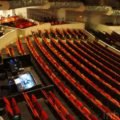 Kauffman Center for the Performing Arts by Moshe SafdieThe 1,800-seat Muriel Kauffman Theatre is designed to be visually striking, yet retain an intimate experience for both audiences and performers. Inspired by the great opera houses of Europe, audiences are seated in front of the stage in a variation on the traditional horseshoe configuration—bringing them closer to the performers than in traditional auditorium-style venues.12
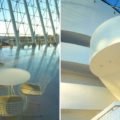 Kauffman Center for the Performing Arts by Moshe SafdieThe Kauffman Center's great lobby and lounge area, where theatergoers will gather before, during, and after performances.13
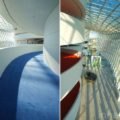 Kauffman Center for the Performing Arts by Moshe SafdieThe Kauffman Center’s two performance venues, Helzberg Hall and Muriel Kauffman Theatre, each have stacked rings of white plaster walkways and lounge areas which are carpeted in blue and red, respectively. Seen from the outside at night, the reflection of these colors create a purplish-pinkish glow at the center of the great hall.14
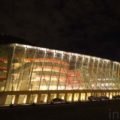 Kauffman Center for the Performing Arts by Moshe SafdieAt night, the entire building becomes inverted, displaying all of its interior activities to the community outside. “The Kauffman Center will be a beacon for Kansas City—a transparent and welcoming place that radiates warmth and invites the community to come together. And as a hub for Kansas City’s performing arts, the Center will play a vital role in the social fabric of the region, linking both people and neighborhoods,” explained Moshe Safdie, architect of the Kauffman Center. “This sense of connectivity continues in the halls themselves, which have been designed to create unparalleled intimate experiences for both artists and audiences.”15
 Kauffman Center for the Performing Arts by Moshe SafdieThough only six months old, The Kauffman Center is beginning to further advance the role of the arts as a catalyst for the educational, civic, and economic vitality of Kansas City.16
