


Start Slideshow


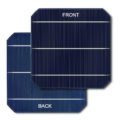 bSolar Double-Sided Photovoltaic CellStandard photovoltaic cells only harvest energy from a single surface - the side facing the sun. Israeli startup bSolar has found a way to improve upon this unidirectional design with a double-sided solar cell that is able to produce up to <b>50%</b> more energy. The trick to bSolar's bifacial design lies in the cells' boron "back surface field", which is used instead of opaque aluminum backing - this enables the potent monocrystalline silicon photovoltaic cells to capture light reflected by rooftops, clouds, the earth, and the atmosphere.1
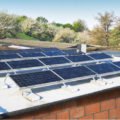 bSolar Double-Sided Photovoltaic CellStandard photovoltaic cells only harvest energy from a single surface - the side facing the sun. Israeli startup bSolar has found a way to improve upon this unidirectional design with a double-sided solar cell that is able to produce up to <b>50%</b> more energy. The trick to bSolar's bifacial design lies in the cells' boron "back surface field", which is used instead of opaque aluminum backing - this enables the potent monocrystalline silicon photovoltaic cells to capture light reflected by rooftops, clouds, the earth, and the atmosphere.2
 bSolar Double-Sided Photovoltaic CellStandard photovoltaic cells only harvest energy from a single surface - the side facing the sun. Israeli startup bSolar has found a way to improve upon this unidirectional design with a double-sided solar cell that is able to produce up to <b>50%</b> more energy. The trick to bSolar's bifacial design lies in the cells' boron "back surface field", which is used instead of opaque aluminum backing - this enables the potent monocrystalline silicon photovoltaic cells to capture light reflected by rooftops, clouds, the earth, and the atmosphere.3
 bSolar Double-Sided Photovoltaic CellStandard photovoltaic cells only harvest energy from a single surface - the side facing the sun. Israeli startup bSolar has found a way to improve upon this unidirectional design with a double-sided solar cell that is able to produce up to <b>50%</b> more energy. The trick to bSolar's bifacial design lies in the cells' boron "back surface field", which is used instead of opaque aluminum backing - this enables the potent monocrystalline silicon photovoltaic cells to capture light reflected by rooftops, clouds, the earth, and the atmosphere.4


