


Start Slideshow


 Salar de UyuniSouthwest Bolivia’s <a href="http://en.wikipedia.org/wiki/Salar_de_Uyuni" target="_blank">Salar de Uyuni</a> is not only the world’s largest salt flat - it's also the largest mirror on the planet! The incredible 6,575 square mile flat is home to many shallow lakes that reflect the gorgeous skies, clouds and animals of <a href="http://inhabitat.com/bolivias-palacio-de-sal-is-the-most-seasoned-hotel-in-the-world/" target="_blank">Bolivia</a>. A walk across the miles of white salt looks more like a trek across the moon than a trip through South America.1
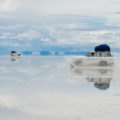 Salar de Uyuni<a href="http://inhabitat.com/lake-retba-is-a-bizarre-naturally-occurring-pink-lake-in-senegal/" target="_blank">Prehistoric lakes</a> once covered the region near the crest of the Andes. When these lakes dried up over hundreds of thousands of years, their rich salt content was left behind, and thus became the thick salt crust of today. The shallow pools of brine are also rich in lithium, containing 50 to 70 percent of the earth’s sources.2
 Salar de UyuniDuring the rainy season, most of the enormous <a href="http://inhabitat.com/scientists-develop-salt-tolerant-wheat-that-could-mitigate-global-food-crisis/" target="_blank">salt flat</a> is covered by shallow water, as rain has nowhere to drain to.3
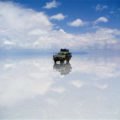 Salar de UyuniThese few inches of water have a<a href="http://inhabitat.com/photos-inhabitat-spends-the-night-in-quebecs-hotel-de-glace-made-entirely-from-ice/" target="_blank"> dazzling effect on the landscape</a>, transforming the plane into one endless mirror, reflecting sun, sky, clouds, visitors and the indigenous pink flamingos that heavily populate the area.4
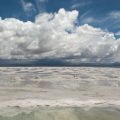 Salar de UyuniThe region 11,995 feet above sea level, making it an optimal spot to monitor and calibrate satellites. The incredible clouds often break to clear skies, with blue and white reflected below.5
 Salar de UyuniSalar de Uyuni sees a lot of traffic, from tourists to industry coming to <a href="http://inhabitat.com/amazing-purple-crabs-discovered-in-philippines-are-already-endangered-by-mining-activities/" target="_blank">mine the layers</a> of salt, potassium, lithium and magnesium from the surface. It is also a major car transport route during dry seasons.6
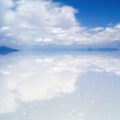 Salar de UyuniSalar de Uyuni is a beautiful natural <a href="http://inhabitat.com/areva-announces-plans-to-build-largest-solar-installation-in-asia/" target="_blank">mirror</a>, but also an important source from salt and lithium, a vital component in electric batteries.7
