


Start Slideshow


 Marin Country Day School by EHDD ArchitectureWhere would you expect to find the first <a href="http://inhabitat.com/zero-energy/">zero-energy</a> classroom building in North America? If you guessed the <a href="http://www.ehdd.com/work/marin-country-day-school/">Marin Country Day School (MCDS)</a> in Corte Madera, California then you win. This 34,934 square-foot project by <a href="http://www.ehdd.com/">EHDD</a> was just recognized with a <a href="http://aiacc.org/2012/08/14/aia-california-council-announces-2012-design-award-recipients/http://">Merit Award by the AIA California Council</a>, which is icing on the cake since the project received LEED Platinum certification by the USGBC in 2010.1
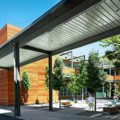 Marin Country Day School by EHDD ArchitectureThe campus follows the tone set by its natural surroundings, and <a href="http://www.ehdd.com/">EHDD</a> did a good job of bringing the landscape into the heart of the campus via a terraced courtyard.2
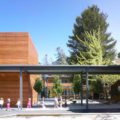 Marin Country Day School by EHDD ArchitectureThe natural ventilation from the windows is assisted by in-floor <a href="http://inhabitat.com/index.php?s=radiant+cooling">radiant cooling</a> that is fed by a 15,000 gallon cistern deep below the building. This graywater cistern also helps to fill the toilets in the building.3
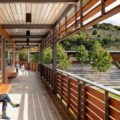 Marin Country Day School by EHDD ArchitectureThe phase-two building has many sustainable features including an integrated facade that protects the building and the occupants from harsh glare and solar gain.4
 Marin Country Day School by EHDD ArchitectureThe bioswales on the site allow for plenty of educational opportunities for the students. The steps are also a wonderful architectural integration into the life of the school. A "Step-UP" graduation ceremony happens at the end of every year where students literally step up these stairs to the next grade.5
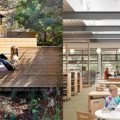 Marin Country Day School by EHDD ArchitectureThe environment created inside and outside of the buildings allow for students to relax and enjoy their time studying.6
 Marin Country Day School by EHDD ArchitectureThe outdoor learning spaces adjacent to many of the classrooms allow for the campus to preserve the natural surroundings while framing the site as an educational opportunity for the students.7
