


Start Slideshow


 North Carolina's Research Triangle Master Plan Seeks to Get More Done in Less Space, SustainablyOn Nov. 9, the <a href="http://www.rtp.org/" target="_blank">Research Triangle Foundation</a> of North Carolina revealed <a href="http://rtp.org/research-triangle-parks-master-plan" target="_blank">a new master plan</a> that will guide the future development of one of the oldest and biggest science and research parks in North America. <a href="http://inhabitat.com/new-master-plan-for-north-carolinas-research-triangle-park-will-stress-sustainable-development/" target="_blank">As anticipated by our story last week</a>, the plan for Research Triangle Park (RTP) emphasizes sustainability. However, the newly-released documents highlight a key challenge for the park: how to get more use out of limited acreage without sacrificing environmental principles.1
 North Carolina's Research Triangle Master Plan Seeks to Get More Done in Less Space, SustainablyLocated on a then-rural tract of land between the university cities of Raleigh (NCSU), Durham (Duke University), and Chapel Hill (UNC) the 7,000-acre Research Triangle Park was established in 1959. Since then, it has attracted over 170 companies with more than 39,000 employees.2
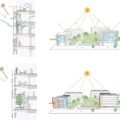 North Carolina's Research Triangle Master Plan Seeks to Get More Done in Less Space, SustainablyThe Research Triangle Foundation, developer of the park, has recently recognized that “the remaining vacant sites at the Park are not sufficient to serve the next 50 years of need.” However, with wise planning, the foundation believes that the park “can yield ample additional development capacity... The challenge and the opportunity [are] in discovering how and where this significant potential can be unlocked in an appropriate way.”3
 North Carolina's Research Triangle Master Plan Seeks to Get More Done in Less Space, SustainablyThe foundation's plan is broad, encompassing such issues as “regional connectivity, access, transit, land use, landscape, environmental considerations, and the sustainable infrastructure needed to support projected future development.” However, it includes substantial thinking about how to implement development sustainably, considering issues of water, energy, waste, transportation, landscape, buildings, and urban design.4
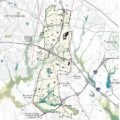 North Carolina's Research Triangle Master Plan Seeks to Get More Done in Less Space, SustainablyIn its current form, the park does little to create a definable center.5
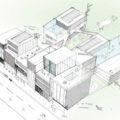
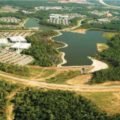 North Carolina's Research Triangle Master Plan Seeks to Get More Done in Less Space, SustainablyThe new plan is based on a “clustered” urban design form that will serve the purposes of the park's tenants and employees, while enhancing walkability and minimizing environmental disturbance.6
 North Carolina's Research Triangle Master Plan Seeks to Get More Done in Less Space, SustainablyThe plan calls for three “guided development areas” with the working designations of Triangle Commons, Park Center, and Kit Creek Center.7
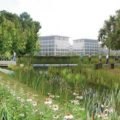 North Carolina's Research Triangle Master Plan Seeks to Get More Done in Less Space, SustainablyPark planners anticipate integrating with the commuter rail system planned for the Triangle region, as well as developing enhanced public transport within the park itself.8
 North Carolina's Research Triangle Master Plan Seeks to Get More Done in Less Space, SustainablyLandscape goals include the preservation of open and green space, wetlands, watersheds, and wildlife habitat. Architectural practices, which are controlled jointly between the foundation and the park's owners and tenants association, will stress green building design and LEED-certified construction.9
 North Carolina's Research Triangle Master Plan Seeks to Get More Done in Less Space, SustainablyThe plan calls for minimizing water consumption and pursuing opportunities for reuse of wastewater.10
 North Carolina's Research Triangle Master Plan Seeks to Get More Done in Less Space, SustainablyDevelopment activities will “Integrate storm water management features, including rain gardens and bio-swales, into open space design to manage the quantity and quality of storm water runoff.”11


