


Start Slideshow


 Third Wave Kiosk by Tony Hobba Architects<a href="http://en.wikipedia.org/wiki/Deep_foundation">Sheet piling</a>—those curtains of steel that are driven into the earth—form an important construction material for deep foundations and retaining walls, but they're often out of sight and out of mind. At a beach in Torquay, Australia, <a href="http://hobba.com/">Tony Hobba Architects</a> elevated recycled sheet piling to a central role as the facade of the new <a href="http://thirdwavekiosk.com.au/">Third Wave Kiosk</a>. The reddish-brown tones of the rusted steel fit nicely with the coastal surroundings, and the kiosk provides beach-goers with new restrooms and changing rooms.1
 Third Wave Kiosk by Tony Hobba ArchitectsThe sheet piles that form the exterior wall of the new Third Wave Kiosk were used along the Murray River during the devastating <a href="http://en.wikipedia.org/wiki/Early_2011_Victorian_floods">2010-2011 Victorian floods</a>.2
 Third Wave Kiosk by Tony Hobba ArchitectsNow, in their new life, they serve an entirely different purpose -- providing refreshments to sun-drenched beach-goers.3
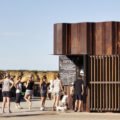 Third Wave Kiosk by Tony Hobba ArchitectsInstead of painting or refinishing them, Tony Hobba Architects left the sheet piles in their original weathered condition, which lends the new kiosk a raw, rustic look.4
 Third Wave Kiosk by Tony Hobba ArchitectsThe new 215-square-foot structure is both elegant and simple, and the irregular folded pattern in the facade -- a structural component that is typical of sheet piles -- provides visual interest.5
 Third Wave Kiosk by Tony Hobba ArchitectsBuilding the structure from recycled materials helped to cut down on the waste produced by the new kiosk, and it also kept costs down.6
 Third Wave Kiosk by Tony Hobba ArchitectsThe small building is large enough to fit 1-3 employees at a time. The kiosk, which opened in November 2011, provides a new public space where beach visitors can meet and enjoy the nearby alfresco seating area.7


