


Start Slideshow


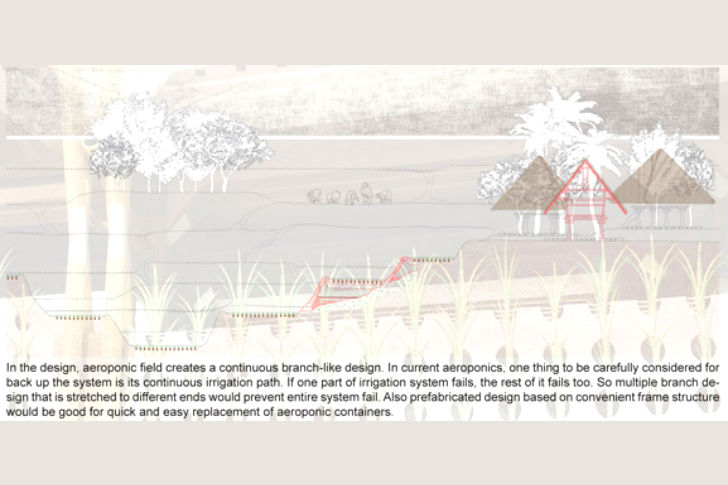


 eVolo 2013 Aeroponic Vertical FarmWith over 3 billion people around the globe relying on rice as their major food staple, there is high demand not only for the grain, but also the land on which to grow it. The Philippines is one of many countries that struggles to maintain food production while devoting land for housing and other industries. A solution, proposed by <a href="http://www.evolo.us/featured/aeroponic-vertical-farming/" target="_blank">Jin Ho Kim</a>, however, would see the construction of <a href="http://inhabitat.com/tag/vertical-farms" target="_blank">vertical farms</a> expressly designed for the cultivation of rice. Using aeroponic growing technologies, rice can be grown compactly with minimal water while creating jobs and supplying food for the area.1
 eVolo 2013 Aeroponic Vertical FarmThe <a href="http://www.evolo.us/featured/aeroponic-vertical-farming/" target="_blank">Aeroponic Vertical Farm</a> is made up of an array of bamboo parallelograms that are formed to create stepped terraces of rice fields.2
 eVolo 2013 Aeroponic Vertical FarmLocated in cities, these compact farms would not only help grow rice for the area, but also create jobs and provide space for the community to gather and interact.3
 eVolo 2013 Aeroponic Vertical FarmThe farm makes use of aeroponic gardening, which is different than hydroponic in that is sprays water directly onto the roots of the plants.4
 eVolo 2013 Aeroponic Vertical FarmThis greatly reduces the amount of water and energy needed for growing plants. Commercial aeroponic farms are expected to reduce water and energy use by 90-95%.5
 eVolo 2013 Aeroponic Vertical FarmWater is pumped up to the highest tier and then gravity fed down to the rest of the plants.6
 eVolo 2013 Aeroponic Vertical FarmThe terraced facility also provides places for children to play, as well as a place for adults to meet and socialize.7


