


Start Slideshow


 Keystone XL<a href="http://inhabitat.com/president-obama-expresses-doubts-about-keystone-xl-pipeline/">President Obama recently cast doubt on the benefits of the Keystone XL Pipeline</a> by narrowing in on the fallacy that the project will create a mountain of new jobs. Yet there are at least six more reasons to kill the proposed pipeline, which would evacuate roughly 830,000 barrels of sticky tar sands oil from Alberta, Canada to the Gulf Coast of Texas every day. Putting aside the obnoxious idea of building a pipeline that will traverse around 2,000 miles across six American states, extracting tar sands oil (<a href="http://inhabitat.com/alberta-tar-sands-have-been-leaking-for-nine-weeks-with-no-signs-of-stopping/">which has been leaking for weeks!</a>) and eventually burning it as fuel poses a grave threat to fauna, flora, water, and public health. Hit the jump to find out the six biggest reasons the Keystone XL Pipeline is such a perfectly terrible idea.1
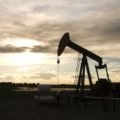 oil-pump<a href="http://inhabitat.com/co2-levels-pass-400-parts-per-million-for-first-time-in-human-history/">We recently surpassed atmospheric carbon dioxide levels of 400 parts per million</a> for the first time in human history. Burning the tar sands oil would send the earth's ecological systems, which are already in crisis, right over the edge. There's something like 360 to 510 billion tons of carbon locked up in tar sands oil, according to James Hansen, former NASA scientist turned <a href="http://inhabitat.com/billionaire-climate-activist-tom-steyer-launches-anti-keystone-xl-pipeline-campaign/">anti-Keystone XL pipeline activist</a>, which is double the amount ever burned. If you think today's droughts and storms are bad, imagine what they will look like when the tar sands are completely tapped.2
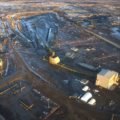 Wet tar sandsWater doesn't flow as freely as it used to <a href="http://inhabitat.com/united-states-is-experiencing-worst-drought-since-1956/">as a result of drought (the worst since 1956)</a>, pollution, and frankly too many people drawing on this finite resource, so remaining sources ought to be conserved. Ought to, but in Alberta, <a href="http://www.foe.org/projects/climate-and-energy/tar-sands/keystone-xl-pipeline">Friends of the Earth reports</a>, oil companies require three barrels of water (not to mention a toxic cocktail of chemicals and a lot of heat energy) to loosen just one barrel of sticky bitumen from the tar sands. How many barrels of oil are being extracted each day, you ask? Roughly 2.4 million barrels a day. That's a lot of water, but that's not even the worst of it. The byproduct of the extraction process, which contains such harmful substances as ammonia and cynanide, ends up in giant tailing ponds before eventually leaching into groundwater supplies.3
 Idle no More ProtestsIt's easy to get lost amid the rhetoric, but there was a time before the Keystone XL Pipeline became the center of attention that we worried about the First Nation communities in Alberta whose culture, health and safety are compromised by tar sands oil extraction. Nearly 10 percent of a small 1,200 member community from the village of Fort Chipewyan, just to cite one example, has died from cancer <a href="http://inhabitat.com/alberta-tar-sands-have-been-leaking-for-nine-weeks-with-no-signs-of-stopping/">since their land and water has been expropriated</a>. This is outrageous, and why isn't the Canadian government doing more to end this madness?4
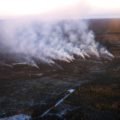 Burning forestThe Boreal Forest of Alberta serves a really important ecological function, several actually, but sucking up carbon emissions is one of the most important. As we continue to pump carbon into our atmosphere at the same time as we cut down forests, we have fewer trees to absorb carbon emissions. This is a fatal faux pas that will result in a hotter, drier, more dangerous planet. We've already seen what <a href="http://inhabitat.com/tag/superstorm-sandy/">superstorms like Sandy</a> can do, and how heat waves kill, but we'll see a lot more of this if we continue to commit the dual ecological crime of leveling forests and burning fossil fuels. But we're not the only species that want to live on a friendly planet. The area surrounding the tar sands field (<a href="http://www.foe.org/projects/climate-and-energy/tar-sands/keystone-xl-pipeline">roughly the size of Florida</a>!) supports the Caribou, an endangered species, among others.5
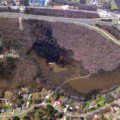 tar-sands-exxon-spillAccidents happen. That's just how it goes, but spilling tar sands oil is significantly more serious than spilling milk at home, and it's going to happen. It already has. Earlier this year, a 22 foot crack that appeared in an ExxonMobil pipeline leaked roughly 12,000 barrels of oil in Mayflower, Arkansas, where most people weren't even aware the pipeline existed. The chances are very good that similar incidents will occur again. And again. Naturally very controversial, that spill was kept insidiously under wraps, and <a href="http://inhabitat.com/exxon-will-not-pay-for-cleanup-of-12000-barrels-of-crude-as-arkansas-leak-is-not-oil/">an archaic legal loophole left Exxon unaccountable</a> for the ensuing environmental destruction. If constructed, the pipeline will threaten several important US rivers as well as the Ogallala Aquifer, which, according to <a href="http://www.foe.org/projects/climate-and-energy/tar-sands/keystone-xl-pipeline">Friends of the Earth</a>, provides drinking water to two million Americans.6
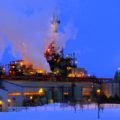 Alberta Petrochemical RefineryWe have a tendency to only see what is directly in front of us, but environmental catastrophes cost money. It costs money to clean up oil spills, to heal people who are become sick, and to restore communities devastated by increasingly powerful storms linked to climate change. There are so many hidden financial costs, yet somehow the companies that profit from environmental destruction are rarely held responsible. Instead, the taxpayer, already taxed to the gills, ends up footing the bill. A recent study found that global warming in just ten major cities <a href="http://inhabitat.com/global-warming-threats-in-just-10-major-cities-could-cost-9-percent-of-the-worlds-gdp-by-mid-century/">will usurp nearly 10 percent of the world's GDP by mid century</a>. Meanwhile, spending any amount of money, time or energy on a carbon intensive project like the Keystone XL Pipeline diverts those same resources from <a href="http://inhabitat.com/energy/">planet-savng energy sources such as solar, wind, and geothermal</a>. And that's just stupid.7
