







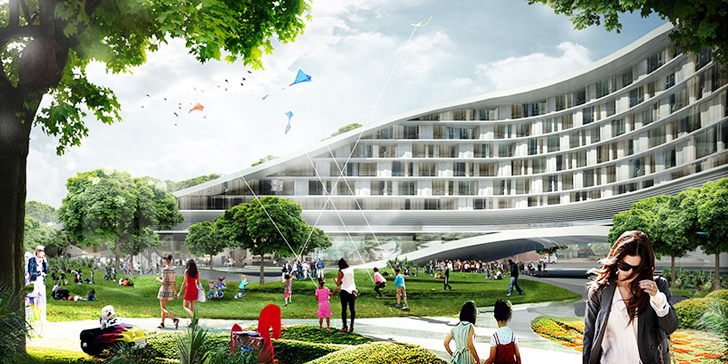
The building would be used for incinerating the city trash and turning it into power to meet the energy demands of multiple residential blocks. The architects claim that the process would be silent and safe, and the air produced would be of better quality thatEPA standards. Using data from a study conducted at Columbia University, the designers have calculated that the plant could meet the energy demands of around 26,000 homes, including the adjoining apartment building.
The designers found a location in Philadelphia—a large piece of empty land next to the waterfront and a highway which separates the land from the rest of the city. The land next to the water would be converted into a park, which would act as protection againstflooding and create an inviting space. The entire building would be sloped and covered in vegetation.
+ Perkins+Will
Via Fast Co.Exist


