


Start Slideshow


 12 quirky temporary structuresEindhoven has a reputation for being one of the world's most exciting design hubs, and we recently had the chance to experience why - firsthand. In its 14th iteration, <a href="http://www.ddw.nl/en/" target="_blank">Dutch Design Week</a> saw the construction of numerous quirky structures, located where the old Philips factory used to be. Curated by <a href="http://www.heyheydehaas.com/" target="_blank">HeyHeydeHaas</a>, each temporary shelter was conceived by a different designer, architect or institution and built with sustainable resources, including repurposed shipping containers, scaffolding, inflatable structures and low-impact materials such as scrap wood and cork. Click through our exclusive photos to discover 'the house of the future', modern workshops, a <a href="http://www.plugincity.nl/nl/home" target="_blank">Plug In City</a> and more. Each creation with its own personality invites viewers to imagine a new future where the built environment and society live in creative harmony.1
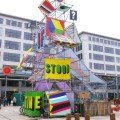 Dutch Design Week 2015 pop-up shelters<h1><a href="http://www.studiomyerscough.com/" target="_blank">Landmark Tower by Morag Myerscough</a></h1> To design the festival's central point <a href="http://inhabitat.com/londons-movement-cafe-is-a-pop-up-eatery-made-from-recycled-shipping-containers-in-greenwich/" target="_blank">studio</a> <a href="http://www.studiomyerscough.com/" target="_blank">Morag Myerscough</a> asked themselves <a href="http://www.ddw.nl/en/event/479" target="_blank">'What if we build a landmark?'</a> The result is a striking tower built from standard scaffolding with colorful banners. The landmark functions as a meeting point, hideout and bar.2
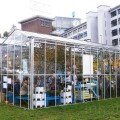 Dutch Design Week 2015 pop-up shelters<h1><a href="http://agrimeetsdesign.com/" target="_blank">De Kas by Agri Meets Design</a></h1> <a href="http://agrimeetsdesign.com/" target="_blank">Agri meets Design</a> is an initiative of ZLTO Province of Noord-Brabant and the Ministry of Economic Affairs in The Netherlands, and this year they showcased De Kas. Situated in a greenhouse. The shelter offered a platform for discussion and networking, displaying special projects addressing the intersection of agriculture, nature and design.3
 Dutch Design Week 2015 pop-up shelters<h1><a href="http://sustainerhomes.nl/" target="_blank">Sustainer Homes by Sustainer Homes</a></h1> <a href="http://sustainerhomes.nl/" target="_blank">Sustainer Homes</a> was founded by two sociologists, an architect, and an environmental engineer, who worked together with a systems engineer, a community designer and interior designer to create an off-grid shipping container home. Designed for nomadic living, the mobile shelter can be customized to anyone's taste and desired living location.4
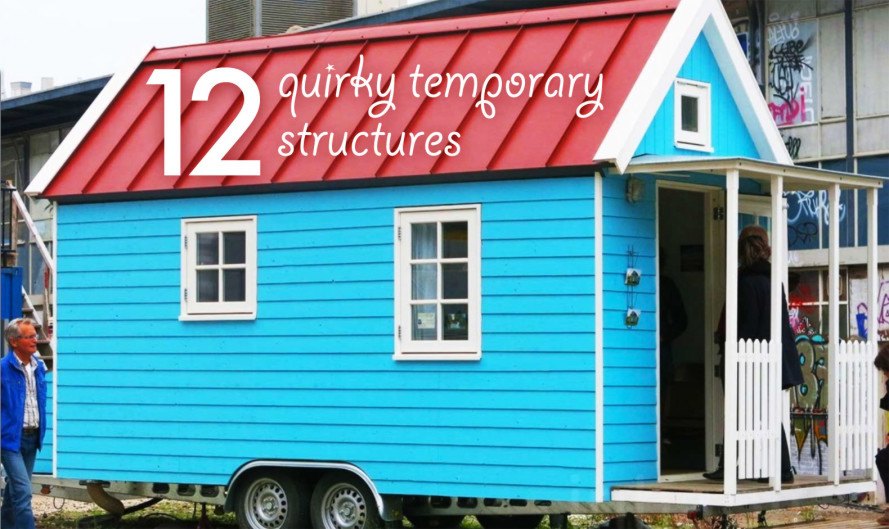
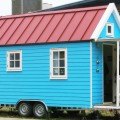 Dutch Design Week 2015 pop-up shelters<h1><a href="http://waterland-huisje.nl/" target="_blank">Waterland House No.1 by Reinoud, Peer and Teun</a></h1> Entrepreneurs Reinoud, Peer and Teun designed the <a href="http://waterland-huisje.nl/" target="_blank">Waterland House</a>, a small blue shelter on wheels that functioned as an inspirational workplace and a bed & breakfast. Inspired by the traditional architecture of the Zaanstreek, the cottage is a complete insulated and features a living room, kitchen, bathroom and sleeping loft.5
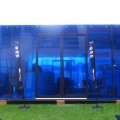 Dutch Design Week 2015 pop-up shelters<h1><a href="http://www.yksi.nl/" target="_blank">Press Room by Yksi</a></h1> <a href="http://inhabitat.com/design-academy-of-eindhoven-tackles-real-world-problems-through-innovative-thinking/" target="_blank">Design Academy of Eindhoven</a>'s graduates Leonne Cuppen, Kees Heurkens and Eduard Sweep from studio <a href="http://www.yksi.nl/" target="_blank">Yksi</a> designed this years' Press Center. Using inflatable, modular and prefabricated <a href="http://www.airclad.com/" target="_blank">AirClad system </a>units, they created a cool temporary blue <a href="http://www.ddw.nl/evenement/344" target="_blank">room</a> for journalists and bloggers to use throughout Dutch Design Week.6
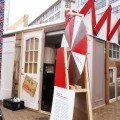 Dutch Design Week 2015 pop-up shelters<h1><a href="http://www.leerlokaalkvl.nl/" target="_blank">Pop-up Museum by Leerlokaal KVL</a></h1> <a href="http://www.leerlokaalkvl.nl/" target="_blank">Leerlokaal KVL</a> is an educational project for young people set at a restored 1930s factory near Eindhoven. They had a presence at this year's festival with a pop-up museum featuring students' works under a shelter constructed with recycled materials shelter.7
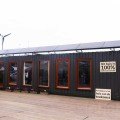
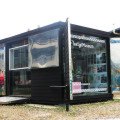 Dutch Design Week 2015 pop-up shelters<h1><a href="http://www.textielmuseum.nl/en/" target="_blank">By TextielMuseum by TextielMuseum</a></h1> By TextielMuseum is <a href="https://en.wikipedia.org/wiki/Tilburg" target="_blank">Tilburg's</a> <a href="http://www.textielmuseum.nl/en/" target="_blank">TextielMuseum</a>'s own brand, which this year set up camp as a shop in a big black box with reflective metallic panels. Featuring the craftsmanship of their TextielLab alongside new products by Simone Post, Joel Booy and Kate Booy, the project was designed under the exclusive leadership of <a href="http://www.jongeriuslab.com/" target="_blank">Hella Jongerius</a>. The space was used to sell sustainable furnishings for the home.8
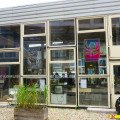 Dutch Design Week 2015 pop-up shelters<h1><a href="http://www.pluginpaviljoen.nl/" target="_blank">Glass Pavilion by Strijp-S' residents</a></h1> <a href="http://www.pluginpaviljoen.nl/" target="_blank">The Glass Pavilion</a> was made by the first <a href="http://www.mijnsas3.nl/veelgestelde-vragen/anton-gerard/" target="_blank">residents and business owners</a> of the Strijp-S area but it's not a community center. Crafted by donated, loaned and recycled materials harvested from demolition projects, this funky space sheltered workshops, lectures, exhibitions and performances inside.9
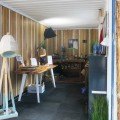 Dutch Design Week 2015 pop-up shelters<h1><a href="http://www.herso.nl/" target="_blank">Cabinetmaking by Herso</a></h1> Wooden furniture maker <a href="http://www.herso.nl/" target="_blank">Herso</a> assembled a pop-up workshop and shop called Cabinetmaking Herso. Set inside a shipping container and clad in rough timber, the space featured the company's delightful designs - all made using wood waste.10
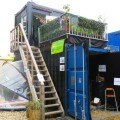 Dutch Design Week 2015 pop-up shelters<h1><a href="http://www.5dsolutions.nl/" target="_blank">Permaculture Home by 5dsolutions</a></h1> <a href="http://www.5dsolutions.nl/" target="_blank">5dsolutions</a> unveiled a sustainable home inspired by the ethics of permaculture. Filled with 'The No Panic Company's' greenest features like a living fence, a window farm made with recycled bottles, a vegetable garden planted on hay and a <a href="http://inhabitat.com/the-green-wheel-is-a-nasa-inspired-rotary-hydroponic-garden/" target="_blank">hydroponic garden</a>, the shipping container shelter also featured a pop-up bubble on the side for unexpected guests.11
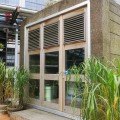 Dutch Design Week 2015 pop-up shelters<h1><a href="http://www.thecircularbuilding.com/" target="_blank">The Circular Building by Living Lab Partners</a></h1> The Circular Building by <a href="http://www.thecircularbuilding.com/" target="_blank">Living Lab Partners</a> is a working lab where designers produce crafts using the circular economy approach. This means that some materials are re-circulated, without compromising their high quality, while others nourish the ground with biological nutrients when they are finally discarded --like this cool cork shelter topped by a green roof.12
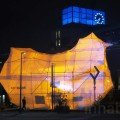 Dutch Design Week 2015 pop-up shelters<h1><a href="http://www.sintlucas.nl/" target="_blank">Brooding Chicken by Sint Lucas School</a></h1> Representatives from the local <a href="http://www.sintlucas.nl/" target="_blank">Sint Lucas school</a> presented a giant glowing chicken. Crafted from scaffolding and wrapped in white plastic sheeting, the space was used as a creative lab for new ideas while informing visitors about the educational facility.13
 12 quirky temporary structuresCarousel image14

