


Start Slideshow


 Maeslantkering Rotterdam Flood BarrierIt has been over three weeks since <a href="http://inhabitat.com/tag/hurricane-sandy">Hurricane Sandy</a> blew through the mid-Atlantic states, and since then the public and officials have begun to question <a href="http://inhabitat.com/how-americas-infrastructure-can-be-strengthened-against-future-natural-disasters/">New York's crumbling infrastructure</a> as well as our affinity for building houses where they don't belong. Matt Chaban over at the New York <a href="http://observer.com/2012/10/new-new-amsterdam-should-new-york-do-like-the-dutch-and-building-some-skyscraper-sized-sea-gates/">Observer</a> recently spoke to some urban planners who say that if development is to continue in low-lying areas like Lower Manhattan and the Brooklyn and Queens waterfronts, New York City should take a hint from Rotterdam and consider building giant floodgates to protect our property. So what can New Yorkers learn from Rotterdammers about rising tides?1
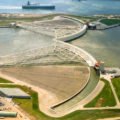
 Maeslantkering Rotterdam Flood BarrierChakrabarti suggests there's something we could learn from the Dutch, who built sea gates twice the size of the Eiffel Tower at the mouth of the Rhine to Rotterdam and its vital port from storm surges.2
 Maeslantkering Rotterdam Flood BarrierBuilding a skyscraper-sized sea wall to protect high price condos in lower Manhattan might sound ridiculous, but it's a serious proposal coming from the former director of the Department of City Planning’s Manhattan office.3
 Maeslantkering Rotterdam Flood Barrier“The thing we as a city have to understand is, we’ve been promoting all this waterfront development, and most of that waterfront development is happening in the zone that is getting evacuated right now,” said <a href="http://observer.com/2012/10/new-new-amsterdam-should-new-york-do-like-the-dutch-and-building-some-skyscraper-sized-sea-gates/" target="_blank">Vishaan Chakrabarti</a> in a telephone interview with <a href="http://observer.com/2012/10/new-new-amsterdam-should-new-york-do-like-the-dutch-and-building-some-skyscraper-sized-sea-gates/">Observer.com</a>.4
 Maeslantkering Rotterdam Flood BarrierIt has been over three weeks since <a href="http://inhabitat.com/tag/hurricane-sandy">Hurricane Sandy</a> blew through the mid-Atlantic states, and since then the public and officials have begun to question <a href="http://inhabitat.com/how-americas-infrastructure-can-be-strengthened-against-future-natural-disasters/">New York's crumbling infrastructure</a> as well as our affinity for building houses where they don't belong. Matt Chaban over at the New York <a href="http://observer.com/2012/10/new-new-amsterdam-should-new-york-do-like-the-dutch-and-building-some-skyscraper-sized-sea-gates/">Observer</a> recently spoke to some urban planners who say that if development is to continue in low-lying areas like Lower Manhattan and the Brooklyn and Queens waterfronts, New York City should take a hint from Rotterdam and consider building giant floodgates to protect our property. So what can New Yorkers learn from Rotterdammers about rising tides?5
 Maeslantkering Rotterdam Flood BarrierStill, New York is a city of investors, right? They should recognize a good venture when they see one. “Climate change is here, and we clearly have to acknowledge that these unusual weather events are going to become more and more frequent, and we’re going to have to do something about it because we could lose much more than we’re going to save if we don’t invest in the right infrastructure,” Mr. Chakrabarti said.6
 New York Underwater from "Weather of the Future" by Heidi CullenPhoto "<a href="http://www.amazon.com/Weather-Future-Extreme-Storms-Climate-Changed/dp/B0058M5I4I">Weather of the Future</a>" by Heidi Cullen, which can be purchased <a href="http://www.amazon.com/Weather-Future-Extreme-Storms-Climate-Changed/dp/B0058M5I4I">here</a>.7
 Maeslantkering Rotterdam Flood BarrierDutch flood gates called Maeslantkering8
 Maeslantkering Rotterdam Flood BarrierCalled Maeslantkering, or the "Maelstrom Barrier", the gates can be closed when storms close in while still allowing ships to take shelter in the harbor. When the storm passes, the gates can be opened to allow for business as usual.9
 Maeslantkering Rotterdam Flood BarrierIt's a clever idea but it comes with a big price tag. It cost the Dutch $4 billion to build the sea gate, and that was back in 1997. Since New York would probably need three different gates to fully protect waterfront developments, potential costs could be closer to $10 billion.10


