


One of the many consequences of climate change is rising sea levels across the globe. This is already negatively impacting coastal cities through flooding and storm surges. Unfortunately, these adverse effects are expected to continue growing in intensity and thus change the contour of the coastline.


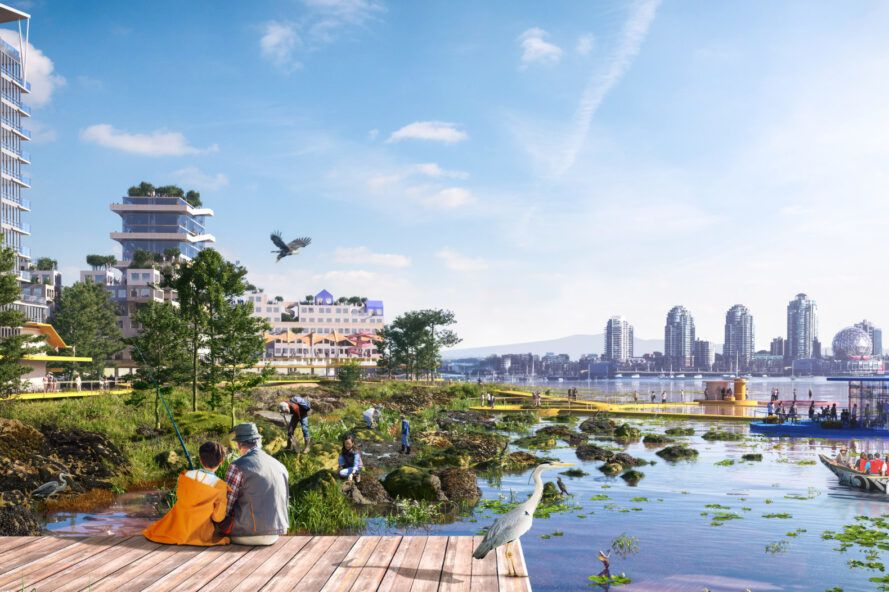
In order to make cities more resilient to the effects of rising sea levels, architecture firm MVRDV collaborated with other teams to form the North Creek Collective. The collective has proposed a coastline revamp for the city of Vancouver, Canada. This new infrastructural development would adapt to the changing waterfront and be more resilient to rising sea levels.
Related: With rising seas, is it time to consider floating buildings?
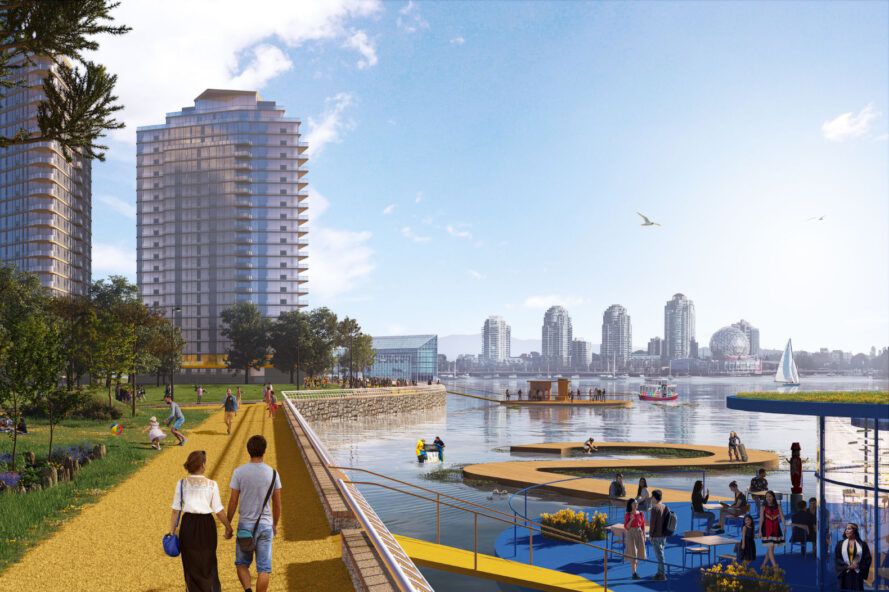
The area that the North Creek Collective has devised solutions for is known as False Creek, a waterbody in the heart of Vancouver. This stretch features many of the city’s main attractions. Oftentimes, the most common infrastructure-related responses to rising sea levels are to build higher flood barriers and dikes. Unfortunately, in the long term, these strategies can worsen flooding as they limit the ability of the shore to absorb wave energy, storm surges and run-off. Hence, the North Creek Collective has come up with approaches that work with the water, rather than against it.

The Sea Rise Catalogue
As part of the City of Vancouver’s Sea2City Design Challenge, the North Creek Collective put together The Sea Rise Catalogue. This features possible interventions that adapt the area’s current waterfront buildings and infrastructure to mitigate the encroaching water. Hence, these strategies would work with the rising sea levels to make the city more resilient to these natural phenomena in the long term.
To adapt existing structures to inevitable sea level rises, the North Creek Collective proposes vertical extensions of flood-adaptive townhouses with community terraces. Additionally, mid-rise buildings can be revamped to allow for flexible public spaces. Meanwhile, existing high-rise spaces can serve as mobility hubs that would connect land and water-based transport.

For new construction, the design team proposes infrastructure that does not compromise the natural floodproofing mitigation of the coastline. This includes floating habitat islands and stilted mixed-use spaces and neighborhoods that include housing, offices and recreational spaces.
The North Creek Collective has also planned out tactics for inland construction. These strategies boost the city’s flooding resilience through permeable ground covers and rainwater buffers. Through these strategies, cities can ensure their infrastructure adapts to the risks posed by rising sea levels. These strategies also prepare urban environments to accommodate for other natural phenomena, including high tides and storm surges.

An inspiration for coastal cities
The North Creek Collective put together this project with the aim to inspire coastal cities around the world to take immediate action by adapting to the effects of a changing coastline. This includes tactics to enhance biodiversity, adopt more renewable energy sources and increase waterfront housing. These long-term strategies can be used as a guide for other cities along the coast to make their infrastructure more resilient in a sustainable manner.
Images via MVRDV


