


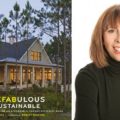
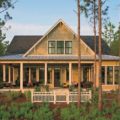
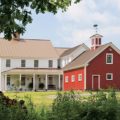
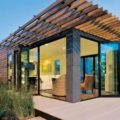
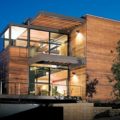
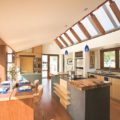
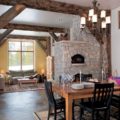

Typically, on Inhabitat, we call a prefab home one that is mostly manufactured in a factory setting, but Koones expands the definition to include any home built with prefabricated materials. While she certainly has a valid point, we couldn’t but help question a few of the homes prefab qualification. Regardless though, the book was great fodder for our prefab obsession and a good book for anyone out there looking for good examples. The homes were beautiful, thoughtful and definitely not cookie-cutter by any means. We also had a chance to ask Koones a few questions about her book and her thoughts on prefab construction.
Q. You’ve authored a number of books on architecture and design, how did you get so interested in prefab construction? Any personal experience with it?
When I was remodeling my own house about 13 years ago, I had no knowledge of construction. Being an avid researcher, I took out of the library every book I could find on the subject. Since I wasn’t able to find the information I felt I needed, I decided that when I was finished building my house, I would write a book for other homeowners with all the information I wish I’d had before I began my own construction. I spent another year researching, and then my first book––From Sand Castles to Dream Houses–– was published. My next book was House About It, with chapters on roofing, siding, windows, doors and so on. I also included a chapter on various types of construction, which inspired me to pursue this with my next book––Modular Mansions. During this period I was invited to watch a friend’s modular house being set in my town. I was totally mesmerized as I watched a large section of the house lifted with a crane and set on the foundation. The next day, I was invited back to walk through this absolutely beautiful house. The setting of this house was magical to me and I was really hooked on the concept. I am still amazed every time I have the opportunity to experience a prefab house being erected.
I began to be interested in additional types of prefab construction and later wrote Prefabulous. Many of the homeowners in that book were incorporating sustainable features into their home designs and that made me think seriously about how important it is to conserve energy and build more healthy homes. Prefabulous + Sustainable has been a labor of love; the houses in the book all inspired me and made me so optimistic about the future of construction. In recent years, I’ve grown more and more committed to preserving the environment, preserving our natural resources, limiting our energy use and considering ways of making home environments healthier.

Q. After writing this book, what surprised you most about prefabricated construction?
I am always surprised and pleased to find out all the creative ways that people have found to build their homes sustainable that’s why I included a sidebar on select pages to point out the unique aspects of each home. There is also a resource list in the back of the book that includes architects, designers, landscapers, builders, among others. The book is truly a hands-on guide for homebuilders.
Q. Do you have any sense of which prefab construction methods are more economical? And which methods do you think generally create a more energy efficient and sustainable home?
In the book, I walk readers through each home to explain the materials, strategies, and systems used to create a sustainable living environment. Due to the level of completion of modular housing, it is probably the most economical type of prefab construction, if you’ve got to choose one. But, that’s not to say that panelized construction isn’t economical as well. Proof there being that many of the production homebuilders, often focused on economics, are panelizing part or all of the homes they build.
While not the most economical method, structural insulated panels (SIPs) likely create the most energy efficient and sustainable home. But, like any construction practice, including conventional construction, the most important aspect is the knowledgeable and proper use of the materials. A SIPS home, built properly, is extremely energy efficient; many green building advocates argue that you can’t truly build a true ‘green’ home unless you incorporate SIPS.
Q. Which house were you most impressed by and why?
Like ones children, I have no favorites. All of the houses are charming in a different way. I selected the homes in this book from over 200 houses. I chose houses that I thought had the best green features, were the most attractive, and represented a good cross section of the houses in North America. I was so impressed with all of the architects, builders, manufacturers and homeowners of these houses who were very practical and tried to build the healthiest, most sustainable and energy efficient homes. Many of the houses are built on in-fill lots and in areas that some people consider less than prime locations. Many of the homeowners invested in areas with great potential, close to work, restaurants and other amenities. They are suburban, rural and city houses, but all have a special “charm.”

Q. Why did most of the homeowners choose a prefabricated home? Was it for environmental reasons, costs, short construction times, or what else?
I believe that most of the homeowners built their homes prefabricated because of environmental issues. They appreciate how strongly they’re built and their lack of vulnerability to the elements. Other factors include the speed of construction; they are built faster and are not delayed by poor weather conditions. In general, I think people are building prefab because they believe they will get a better house.
Q. Since prefab is still relatively unknown to the general public, how does the prefab construction industry need to change or adapt in order to become more main stream? What challenges do you see that still lie ahead for prefab?
The main detriment the prefab industry has is their lack of advertising and promotion. Prefab construction is one of the best-kept secrets in America. I hope my book helps to demystify and dispel any negative myths about prefabricated homes and shows readers how beautiful and how green these homes can be. For all of the houses featured in the book, I have included a list of its “Green Aspects.” Each and every home demonstrates that green living is not as complicated as you might think, and is attainable by everyone. It also shows readers that you don’t have to sacrifice luxury to go green.
Q. There’s a bit of a stigma out there in the design world, that prefabs are only for people who have a lot of money. Do you think that’s true?
I think the stigma has been that they are small and boxy and this is easily dispelled by Prefabulous + Sustainable. Building a system’s built home can actually save the homeowner up to 15%, which I discuss in the book. Factory-built homes are greener, more efficient, sturdier, and more cost-effective than site-built homes. In addition, many prefab manufacturers offer a limited 10-year warranty, which is much more than any site builder provides.
Q. Who would you want to build your prefab home for you?
I would be happy with any of the builders profiled in the book. They are all extremely knowledgeable and dedicated to building an efficient and comfortable house.
Thanks Sheri, we loved checking out the homes you profiled!
Copyright Abrams; April 2010 Photo of Sheri Koones: © Annie Watson


